
Teaching mindfulness to kids doesn’t have to be to just boring sitting still and breathing.
In fact, mindfulness games for kids are an engaging and fun way for kids to get excited about practicing awareness. Introducing mindfulness activities at a young age can help kids build lifelong skills, taking advantage of their natural curiosity and adaptability.
It should feel like it’s something they can relate to.
I have taught mindfulness to kids at my school for many years. These games are also highly effective for improving focus in kids, supporting their attention and cognitive development.
Every class I teach that includes these mindful games and activities are some of their favorite lessons.
It helps to play each mindful game a couple of times throughout the year to reference how it felt when they tried it the first time versus the second time.
Use these mindfulness games for kids and yoga games to help teach kids self-awareness, self-regulation, and calming strategies.
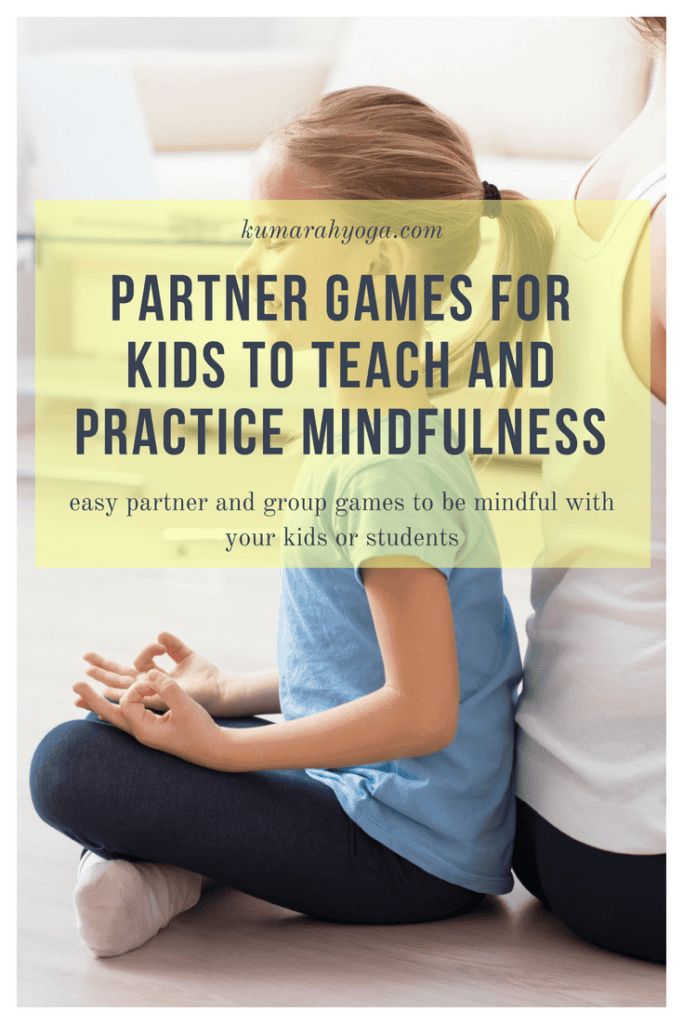
How Start Teaching Mindfulness to Kids
Teaching mindfulness to kids should start small.
You can teach them about breathing techniques when they are calm to use when they feel frustrated.
We use a method of tracing our fingers and breathing in and out while tracing up and down each finger. These mindfulness exercises for kids help students learn to manage their emotions and focus. I have also taught them breathing with a Hoberman Sphere.
This post has a little more detail on calming techniques: How to Calm a Class or Kid Using Mindfulness.
Another great technique for mindfulness is teaching kids how to be aware of their surroundings and actions by changing your language.
This practice of honing your attention to detail helps you notice when things change and help you anticipate your reactions to situations.
Check out the Mindful Language Teaching Prompts included in the Kid’s Yoga Flow Pose Cards. There are many other exercises available to further support mindfulness development.
Just by BEING more mindful yourself, you are able to show kids what mindfulness looks like in action, which is one of the best ways to teach it!
Pro tip: practice mindfulness yourself, every day! If you start with the experiences you know, you can expand and include those stories to the lives of others with ease.
I took this online mindfulness course to help immerse myself in the practice.
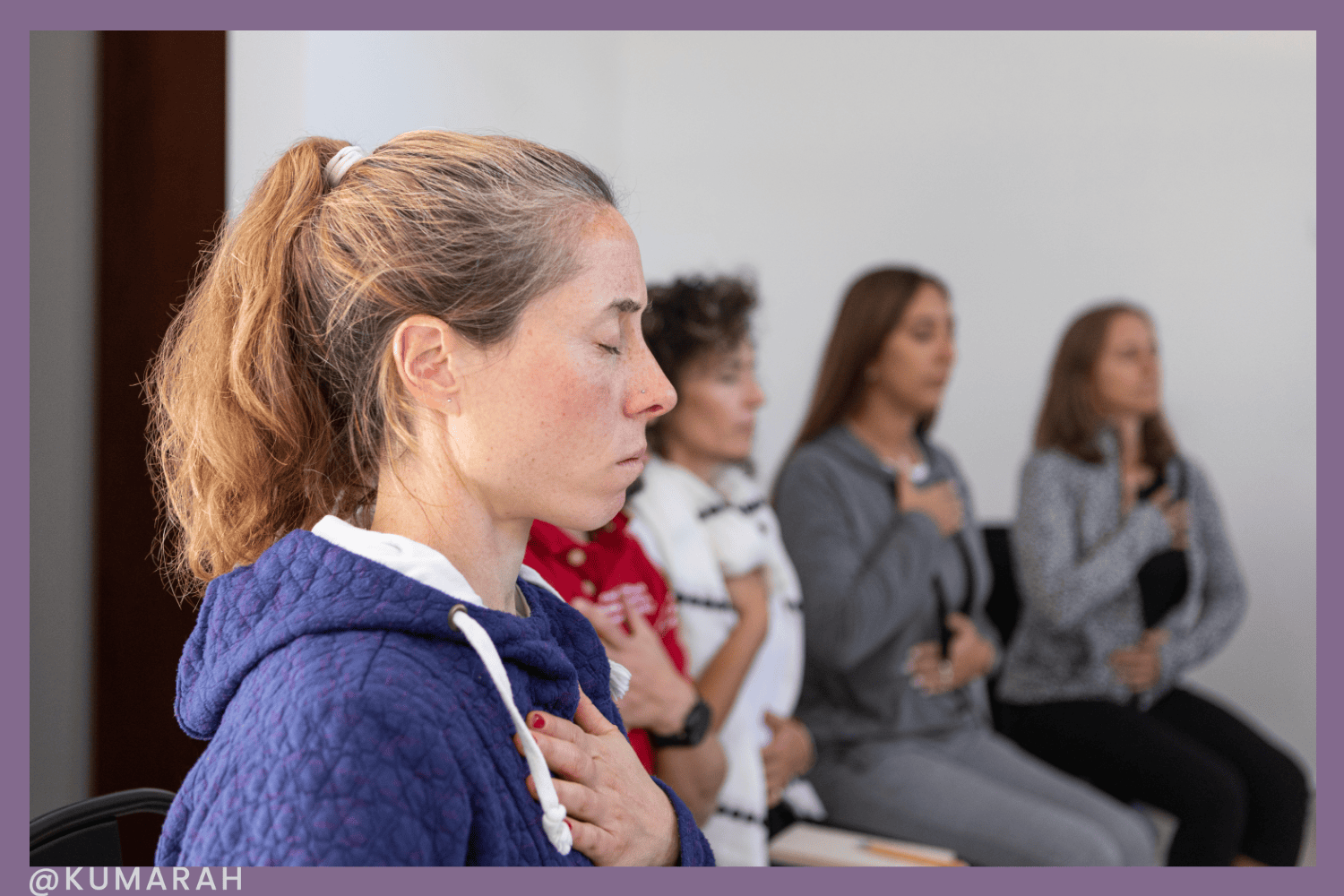
Mindfulness in a Class
Teaching a whole class of kids to be mindful and quiet and listen to specific sounds can be a little more tricky.
It honestly sometimes creates a great space for making fart sounds. Which doesn’t feel like mindfulness 🙄
One way to combat this is to use a beautiful-sounding bell, like this Tibetan singing bowl.
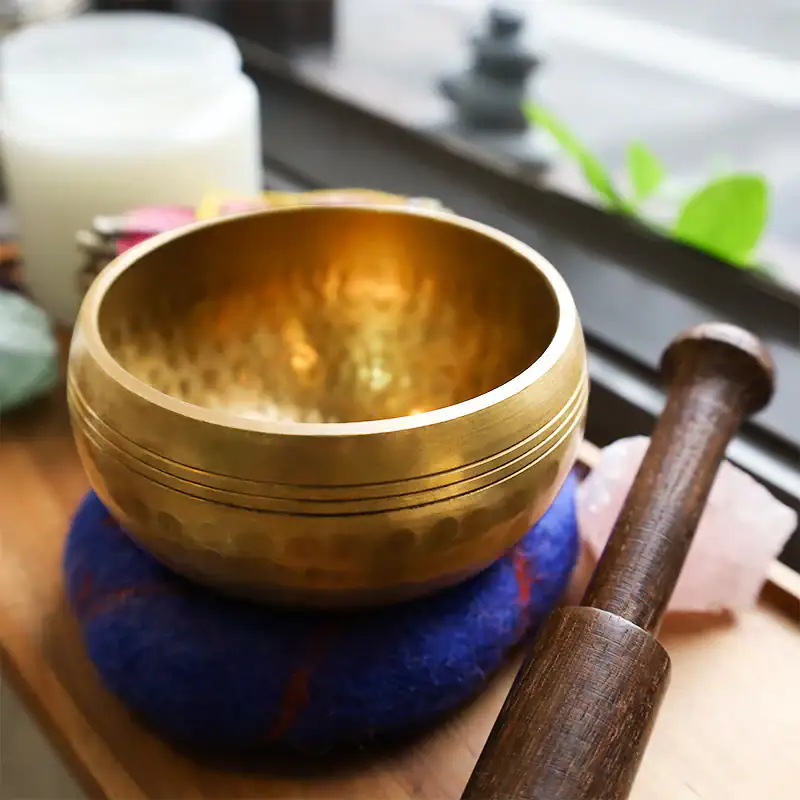
A wonderful starter singing bowl with a pleasant mid range sound. This bell will ring for a while and is nice to listen to while practicing mindfulness.
Also, I have taught my students to come into class, rest in child’s pose for 1 minute, and then sit up and listen when I ring the bell. During this activity, I instruct them to notice all the sounds in the environment, not just the bell, and to focus on what can be heard around them.
As we are listening I will be modeling a breathing technique and they can choose their own or copy mine, making sure to engage their sense of hearing as they notice the sounds during the activity.
We learn about 14 different techniques in the first few weeks, they are listed in this post:
14 Clever Ways to Breathe with Your Kids to Calm Down
Grab your free printable of mindfulness breathing poems with images from my Free Resources Library!
Plus, get kids yoga lessons, games, and more… all available for instant download! Remember, paying attention to the sounds and sensations during mindfulness activities helps children develop greater awareness and focus.
Mindfulness and Mental Health
Mindfulness is more than just a calming activity—it’s a powerful tool for supporting children’s mental health and emotional wellbeing. When you teach kids mindfulness exercises, such as mindful breathing, body scan, or a mindful walk, you’re helping them build essential mental skills like self-awareness, emotional regulation, and focus.
These mindfulness activities for kids are not only fun, but they also provide lifelong benefits by helping children learn how to manage stress, reduce anxiety, and stay present in the moment.
Practicing mindfulness can be easily woven into daily routines, whether at home, in school, or during transitions between activities. Simple breathing exercises, like taking deep breaths or using “balloon breaths,” are perfect for younger children, while older kids might enjoy guided meditation or mindful listening activities.
These mindfulness exercises encourage kids to pay attention to their physical sensations, thoughts, and feelings, helping them develop greater self-regulation and resilience.
Research shows that mindfulness-based stress reduction (MBSR) programs and mindfulness training in schools can lead to improved focus, better emotional regulation, and reduced stress and anxiety in elementary school students.
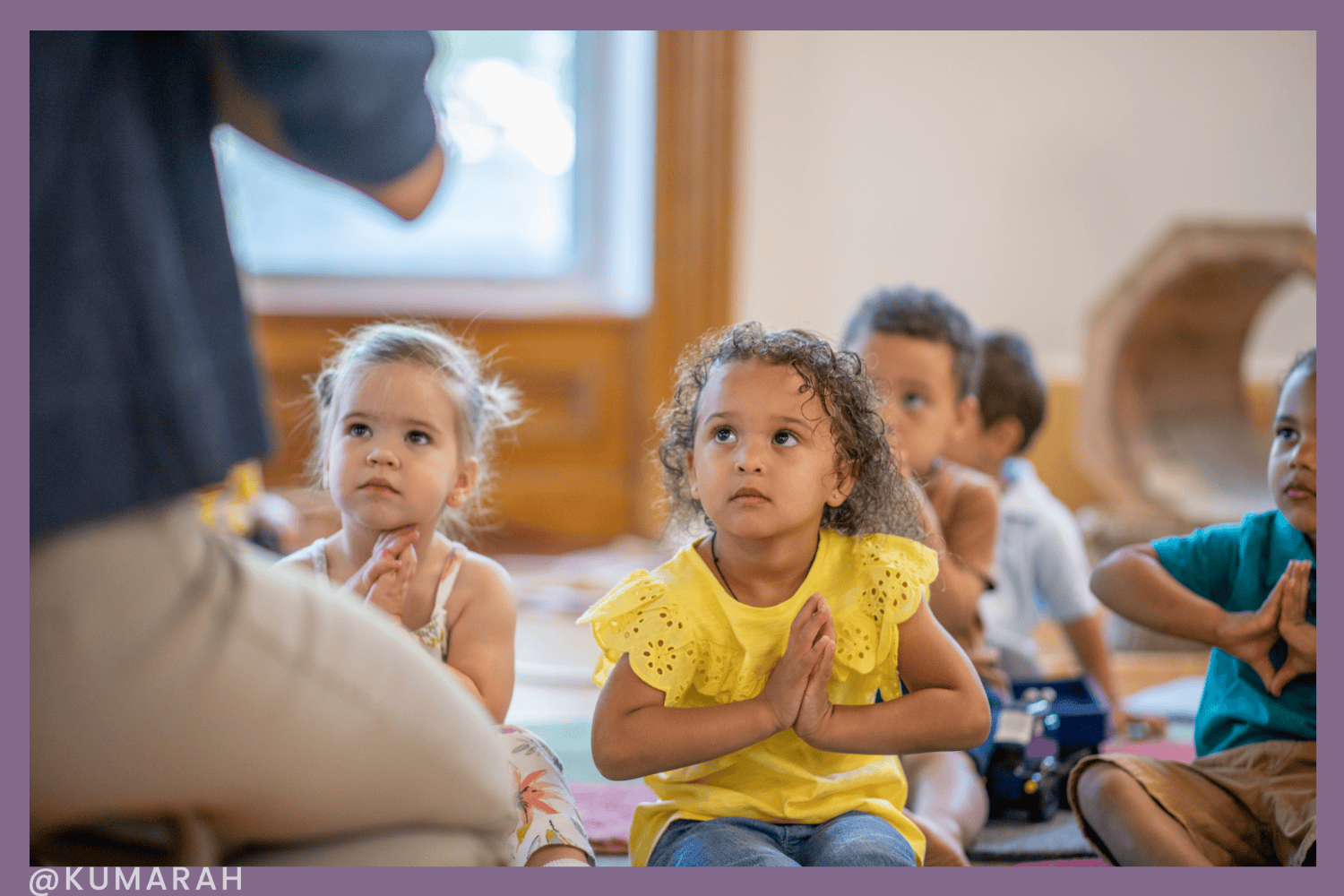
By practicing mindfulness regularly, kids can strengthen their executive function skills, improve their ability to pay attention, and develop a greater sense of calm and confidence—skills that are essential for both academic success and overall mental wellbeing.
Parents and educators play a key role in teaching mindfulness to kids. By modeling mindful behaviors and incorporating mindfulness activities into family or classroom routines, adults can encourage kiddos to practice mindfulness in a supportive environment.
Activities like “spidey senses” or “five senses” games help kids tune into their surroundings and become more aware of their bodies and emotions, while fun brain games like “Simon Says” or “Red Light, Green Light” can teach self-regulation and focus in an age-appropriate way.
The beauty of mindfulness is that it’s accessible to all age groups and can be adapted to suit different needs and abilities. Whether you’re using games, breathing exercises, or guided meditation, the key is to make it a regular practice and to celebrate each child’s progress.
Over time, kiddos who practice mindfulness develop stronger self-awareness, better emotional regulation, and improved mental health, setting them up for success both in and out of school.
By making mindfulness a part of everyday life, you’re giving your kiddos the tools they need to navigate strong emotions, reduce stress, and thrive in any environment. With patience, encouragement, and a little creativity, mindfulness can become a fun and meaningful part of your child’s journey toward greater wellbeing and happiness.
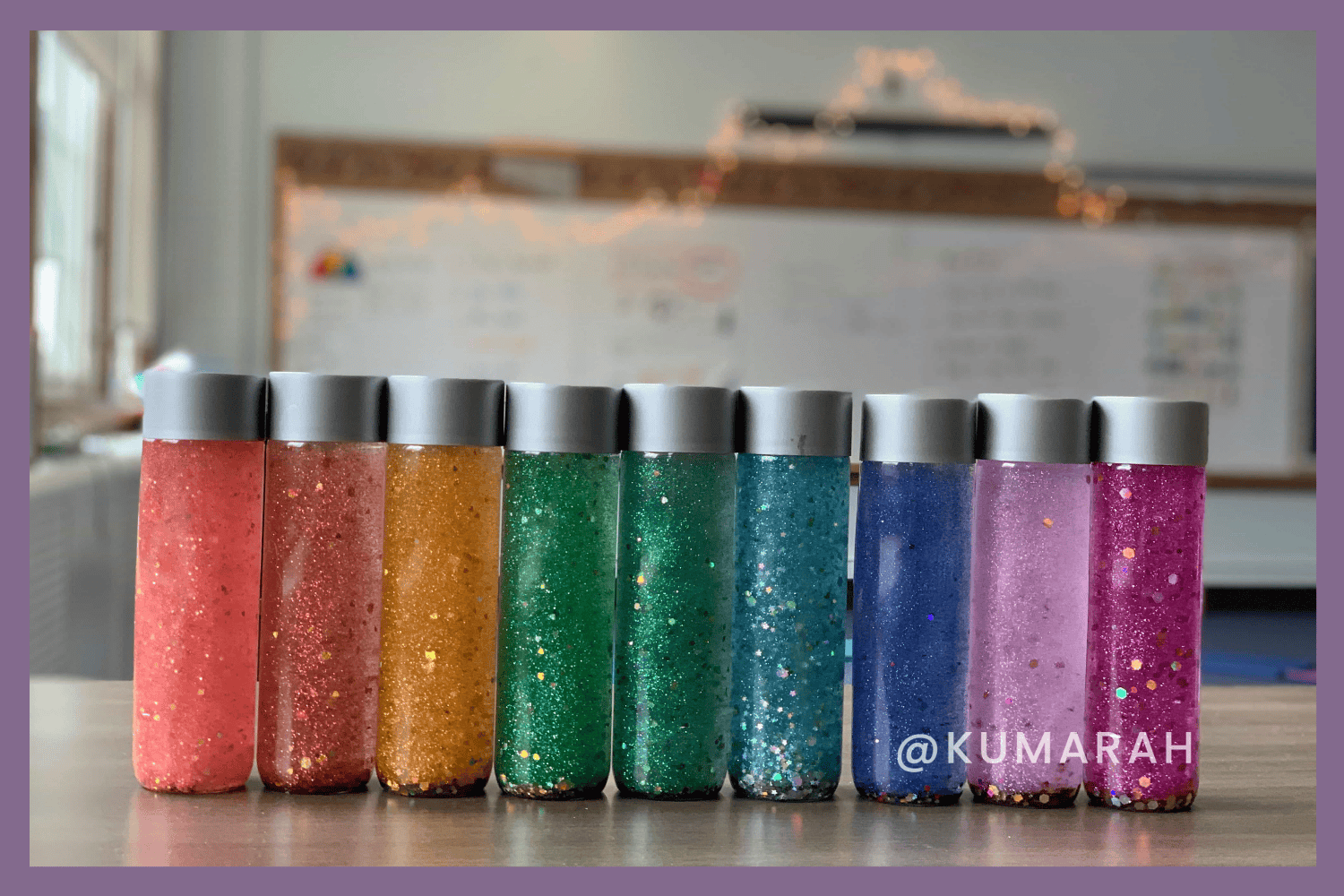
Calm Down Mindful Glitter Jar
One of the absolute best ways to keep my kiddos focused and calm before, during or after a meltdown is what I call a Glitter Jar. They are actually plastic bottles now, but the first few times I used mason jars, they worked okay too.
The Glitter Jar is a helpful tool for teaching children to recognize and regulate their emotions by observing how their feelings can settle, just like the glitter.
Check out my recipe for making your own glitter jars in this post here:
How to Make a Mindfulness Glitter Calm Down Jar
Once they are made (and you can have your kids help you too for added learning and focus) teach your kids how to use the glitter jar by shaking it up and then slowly watching the glitter settle.
It’s important to model taking deep breaths, thinking aloud about what you see, how you are feeling, and describing how it feels to watch the glitter settle. This helps kids connect the activity to their own emotions and become more aware of how they feel in the moment.
Partner and Group Mindful Games
Another way to get kids more interested in being mindful and developing focusing skills is to play some partner or group mindful based games, each of which is a fun game for kids. Model exactly what you’d like to see and hear while you are showing them the game.
Once they have watched you and a partner show what it looks like, let them practice together with a partner. Each activity is a mindfulness activity designed to build focus and awareness.
If you are in a class, make sure you walk around and give them praise, but specifically say out loud what you notice them doing that is mindful: “I see Miranda has her eyes closed and is breathing slowly,” or “I notice that Juan is watching his cotton ball closely and not worried about anyone else’s.”
This helps them to internalize what they are doing that is specifically related to mindfulness. These group games are also examples of mindfulness practices that can be used in classrooms or at home.
These are our favorite mindful games for kids
Cotton Ball Tennis (or soccer)
Group students into pair or groups of 4. Each kid gets a straw. Give out a cotton ball to each group, and a piece of string (or a small stick like from pick-up sticks).
The game is to carefully blow the ball back and forth over the string, or into a small “goal” like a cup. Encourage them to keep the cotton ball in the boundaries. This activity helps develop body awareness as kiddos control their movements to keep the cotton ball in play.
Cotton Ball Relay
All students start on one side of the room, in teams. Place tape on the floor, or a similar way to mark a line.
Students must hold a cotton ball on a spoon and carefully walk to the end of the line, turn around and come back.
If their cotton ball falls off, they should go back to the beginning and start again.
Encourage slow and steady walking!
Before starting the relay, suggest that kids do a few jumping jacks to help them become more aware of their heartbeat and breathing.
I Spy
A classic game to look around the room and try to figure out what the “spy” sees! It helps to play this game by giving an extra clue after a couple guesses.
If you just say “I spy something round” they could keep guessing for several minutes and never get it right.
Instead, add in extra clues like, “I spy something round and up high.” “I spy something round, up high, and that has black.” So on and so forth. Then make sure you let them have a turn!
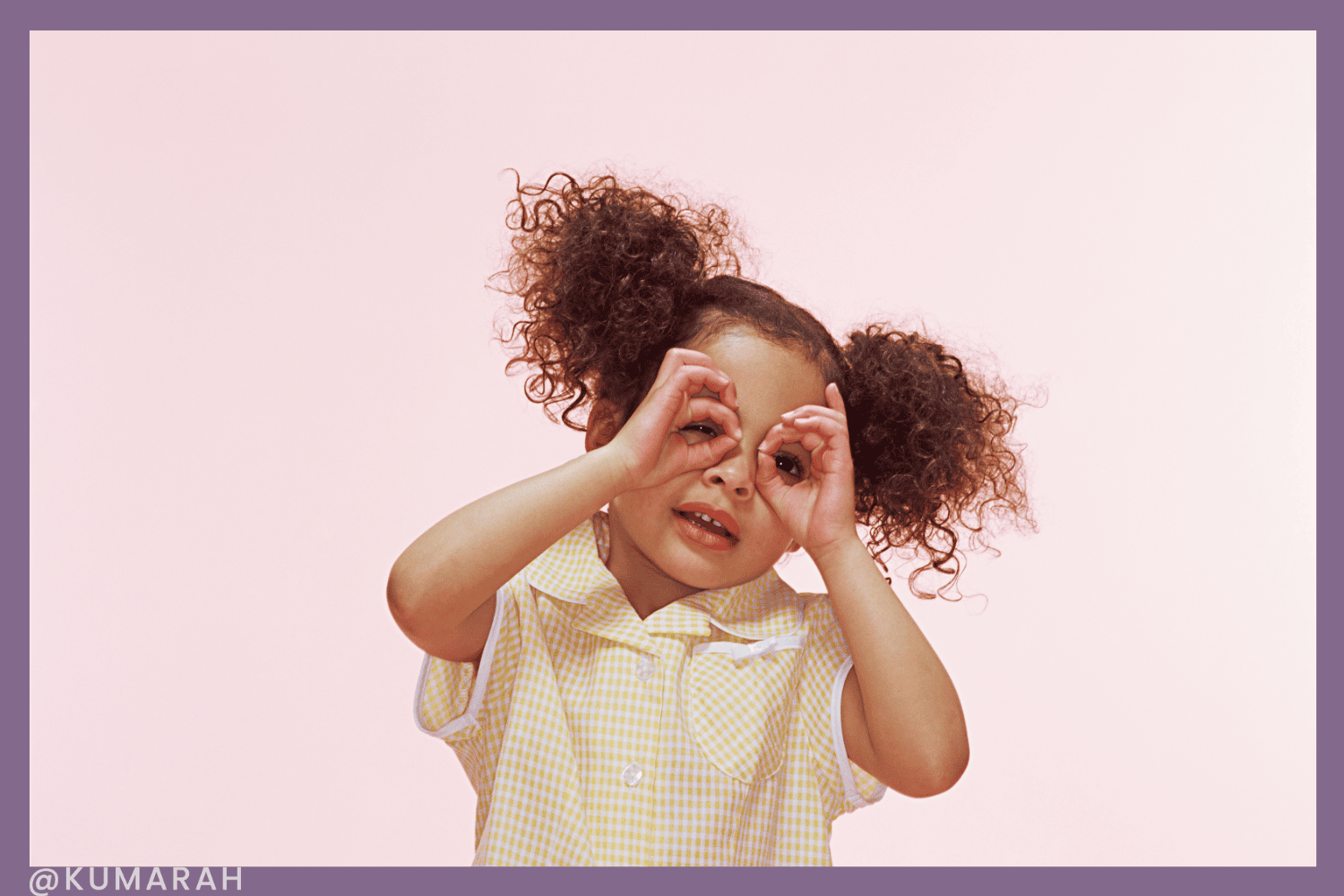
Guided Block Walk
If you have enough yoga blocks, this is a great balancing and activity with the bonus of mindful walking.
Line up a bunch of yoga blocks in stepping distance across the room. Students get into pairs. One child is blindfolded, and the other child has to hold their hand and help them walk across the blocks without looking.
They should be using encouraging and descriptive language to guide their partner safely to the other side of the “creek”.
Mirror Me
This is a good copying, or mirroring game that helps build mirror neurons (these aid people in experiencing empathy!).
Students get into pairs and one person is the leader. The follower has to move in exactly the same way as the leader as if they were looking at their reflection in the mirror.
Model this first several times so they know to go slow and help the partner by being predictable. I even use slow and calming music to encourage a leisurely pace.
Hula Hoop Pass
A fun cooperative game for a large group, the hula hoop pass game is a good challenge.
- Stand in a large circle and link hands.
- Instruct the kids not let go of each other’s hands.
- Insert a hula hoop into the game by putting it on your arm and then re-linking hands with the child next to you.
- The goal is to pass the hoop around the whole circle by sliding it down your arms, ducking through, and stepping through.
Encourage helping each other, talking partners through the hoop, etc. For an added challenge add more hoops of various sizes!
Keep the balloon up
Another great game for a group, start with one balloon and all students in a defined area (like on a rug or in a circle space). Tell them they should HELP the team by keeping the balloon up the air.
With kindergarten, they are instructed to stay in their own spot and only use one finger to push the balloon back up. You can alter the instructions for older kids and make the designated space a little bigger.
Add in more balloons for a greater challenge, or have specific students on specific teams according to which color balloon they have.
Back Doodles
Kids sit with a partner, one person is facing the other person’s back. Either from a list of prompts spoken or written on the board, or using their imagination, the child facing their partner will gently and silently draw a picture on the other person’s back. They can do the same drawing a couple times and let their partner guess what they drew!
Partners can change roles after every picture or only when they get it right. Older students can write words, too (though this is harder to monitor in a class if they decide to be inappropriate). The partner guessing should put a thumbs up or raise a hand when they have a guess to keep things calm and structured in a class.
Back Breathing
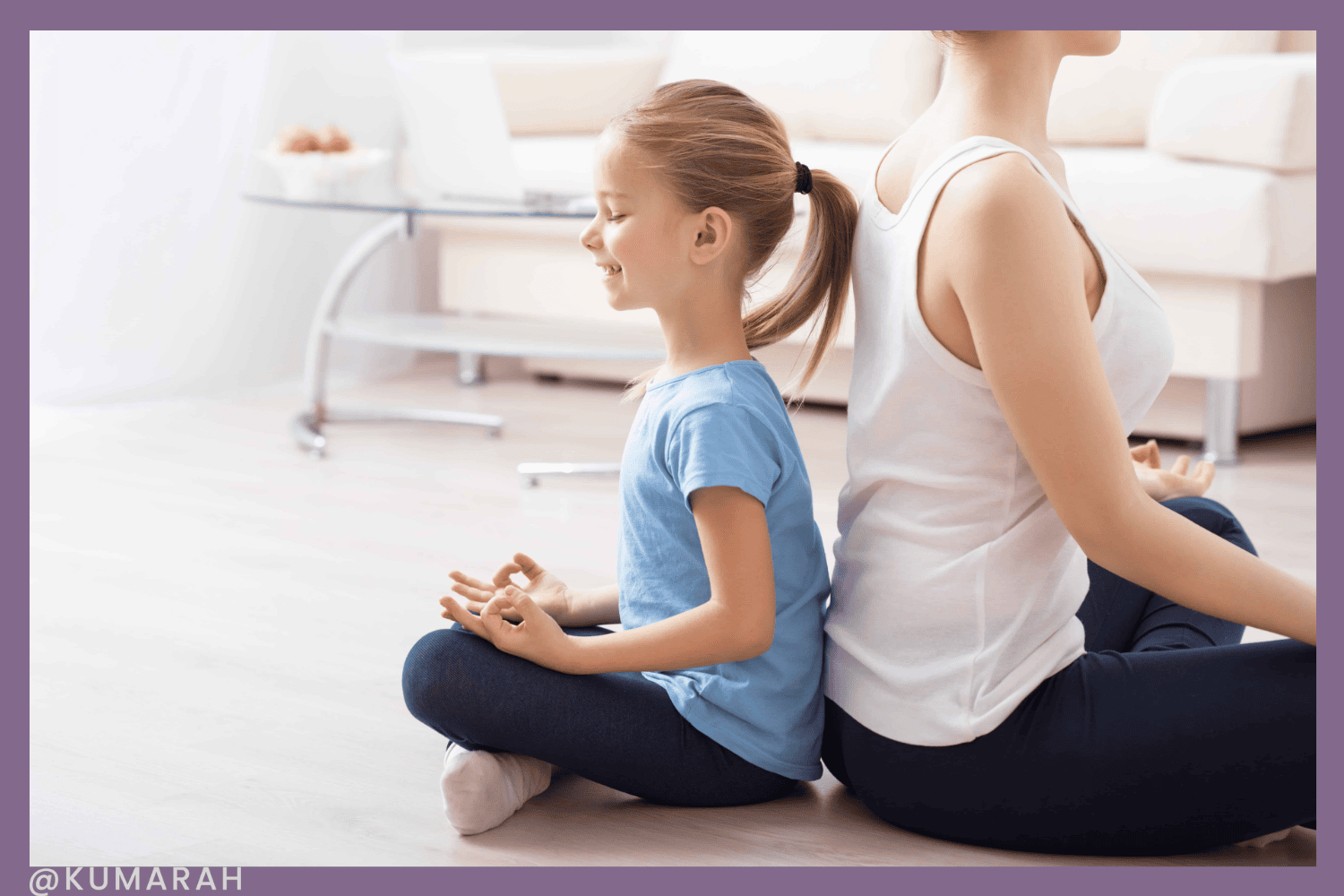
This is a great “calm down” mindfulness game. Students sit back to back with a partner and try to match each other’s breathing. Matching breathing with a partner is a successful practice for building mindfulness and calm. No voices or communication needed, just notice each other’s breath.
Tell one partner to breathe normally and the other should listen and try to match. They should put their thumbs up on their knees when they think they have matched each other. Then make sure you come over to confirm!
Well, there you have it, my favorite partner and group mindfulness games for kids!
Don’t forget to talk up the mindful actions and really build positivity. Even in the slightly competitive games, make sure you tell kids to be helpful and work as a team!
Check out these kids yoga cards that are also excellent for classes working on mindfulness.
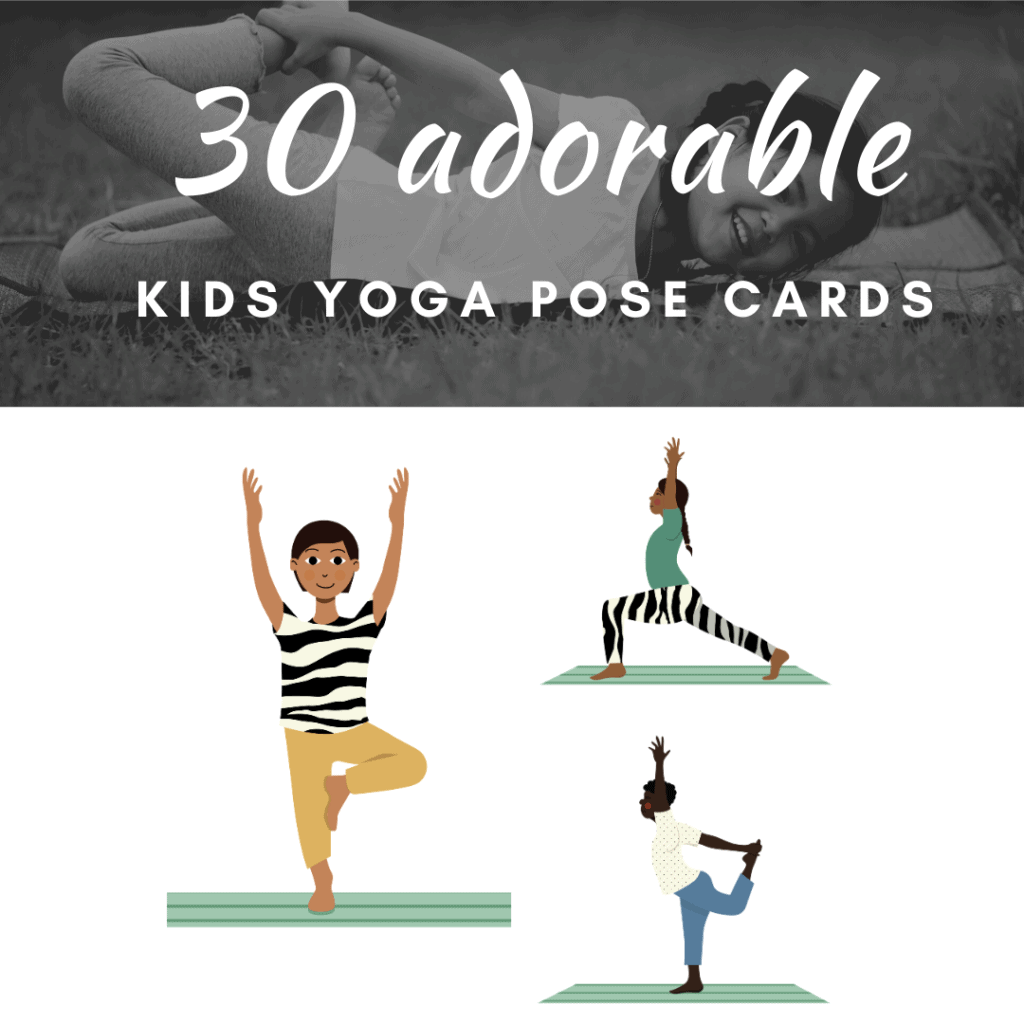
Mindful movement is a great way to add some exercise and concentration to your day!
Thank you for being here!
Let me know what else you are looking for in your quest to help kids learn yoga and mindfulness.

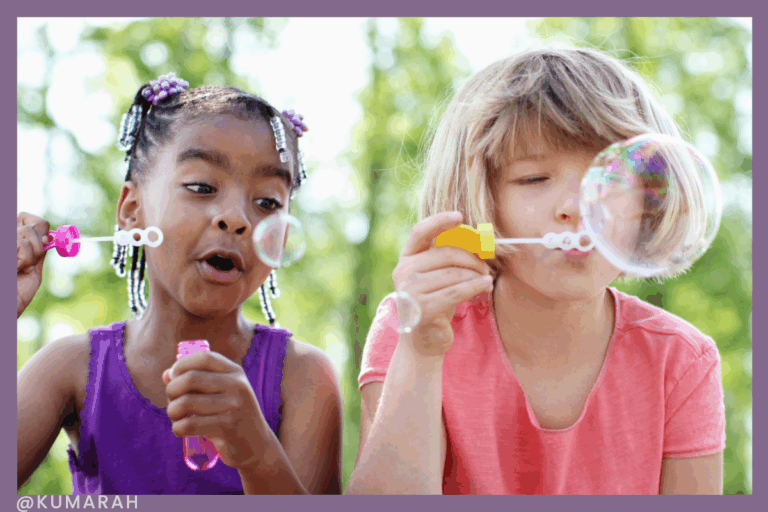
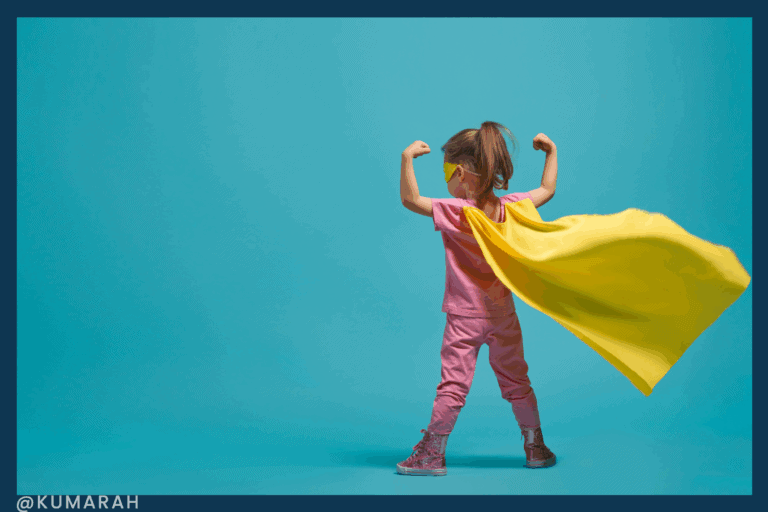
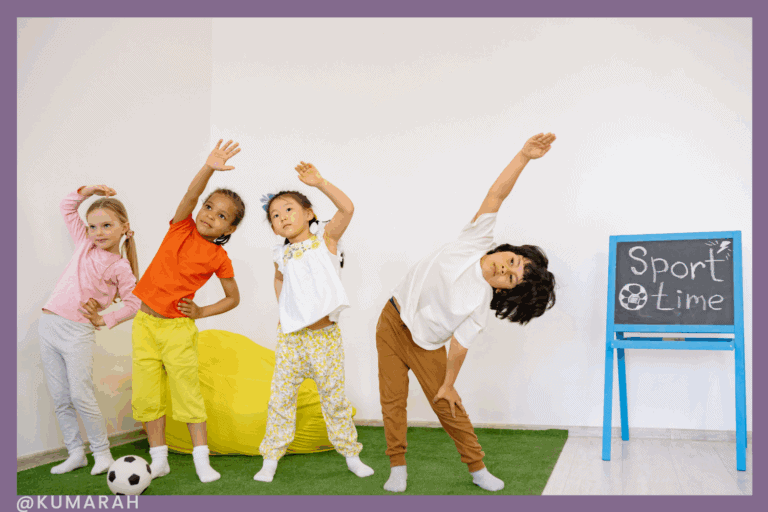


I am so excited to begin your mindfulness activities with my preschoolers. As a breast cancer survivor, I have been participating in a weekly restorative yoga class for five years, and I am constantly doing yoga poses with my students. It is part of our company’s monthly curriculum anyway. Your lessons tie in very well to our new training on conscious discipline and mindfulness. Thank you for sharing your freebies!
Hi Cheryl,
Wow, thank you so much for sharing your story. Way to go!! As a niece to several breast cancer survivors, I know the struggle you have been through. I am glad you are finding yoga to be beneficial to you and are passing it on to your students. Good for you! Let me know if you need anything else at all, and keep up the good work <3 🙂
Best,
Maia
Thank you so much for your generosity in sharing your wonderful ideas, things you have learnt work-though trial & error and practical games. I have been teaching mindfulness in my classrooms for many years and am in the midst of starting my own business, going to preschools and primary schools. I am constantly learning and developing new skills and am very grateful to have found your amazing resources. When I am set up I would love to add you to my list of recommended sites if that’s ok.
With kindness…
Hi Terina,
Thank you so much for your kind words! I’m happy to hear you are able share some mindfulness with your classes and kids in your area, that is wonderful to hear. Best of luck to you in the business side of your journey, and yes, please feel free to share this with others!
Be well,
Maia