It’s officially back to school, and everyone’s carrying a lot into it. I love a routine once it exists. It’s the building of one I dread — it only ever happens in slow steps.
Kids swing between eager and anxious, sometimes in the same morning. Parents and caregivers are managing their own version of that. So are teachers — I’ve never met one who walks into a first week feeling completely ready.
None of that needs fixing. It’s just what the transition feels like, no matter how old your kids are or how solid their routines looked in June.
What helps is having something steady to come back to. A few minutes of movement and breathing, repeated in the same order, until the days start to have a shape again.
Here are some yoga and mindfulness tips for making back-to-school routines a little easier for both kids and adults alike.
Morning Meditations for Kids to Wake Up and Get Focused
Mornings are where most family routines fall apart, and school mornings are the hardest version of that. Everyone’s rushed, someone can’t find a shoe, and the day starts at a run.
A few minutes of something quiet, before the rushing starts, changes the tone of what follows. Not because it fixes the morning — because it gives everyone one predictable thing before the unpredictable part.
A few different kinds work for different kids. Try one for a week before deciding it isn’t for you.
- Walking: Movement first, quiet second. Walk to the bus stop or once around the block and name what you notice — three sounds, three things that moved. Kids who can’t sit still for a meditation will do this one without realizing it counts as one.
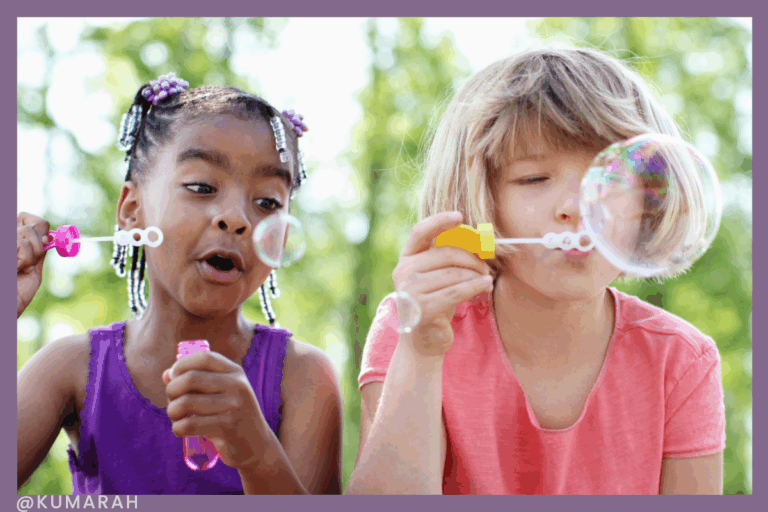
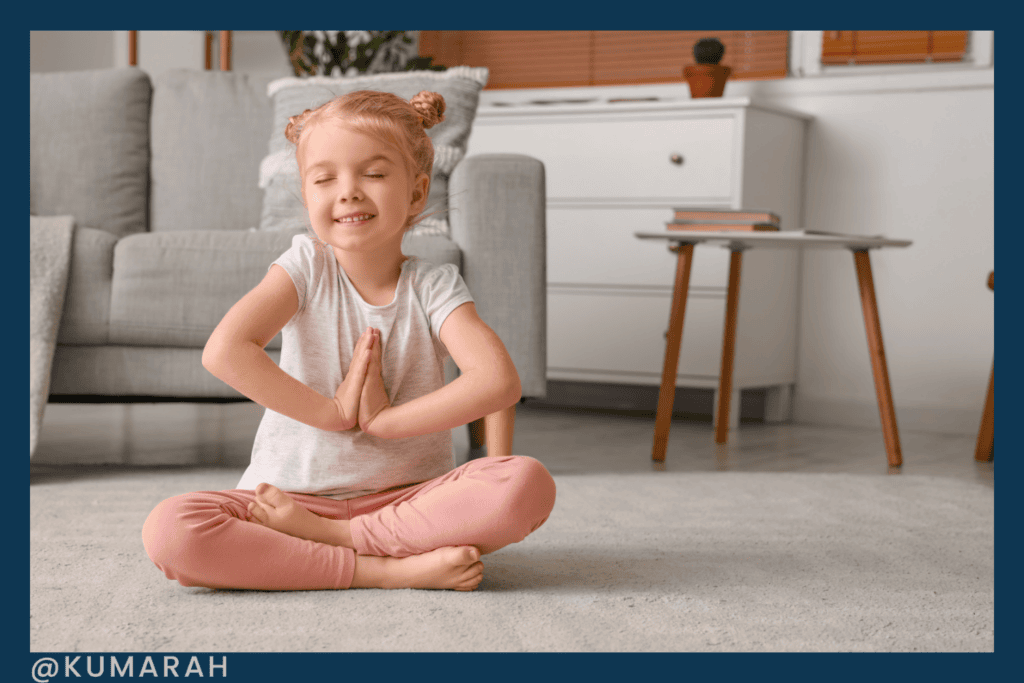
- Breathing: Sit down and follow the inhale and the exhale. Short is fine — a minute of real attention beats five minutes of squirming. Try a few fun breathing exercises with your kids too.
- Mantra: A short phrase, repeated. Kids take to this faster than adults do — they don’t find it embarrassing yet.
- Guided: Someone else’s voice doing the work, which helps on the mornings you don’t have it in you to lead. Music by itself counts. Smiling Mind is free and built for kids. Headspace has a kids section too, and their animated videos hold up better than you’d expect with middle and high schoolers. Both Headspace and Calm run educator programs — worth checking before you pay for either.
Start With Yourself, Not the Kid
The instinct, when a kid is coming apart, is to tell them to take a deep breath. In my experience that rarely lands — especially with middle schoolers, who hear it as one more thing an adult wants them to do.
What works better is doing it yourself, out loud, without making it about them. Slow your own voice down. Sit down. Breathe where they can see you. Then say what you’re doing and why:
“I’m taking a deep breath to gather my thoughts. Give me a second.”
“I need it a little quieter, so I’m going to put some music on until things settle.”
Kids co-regulate off the nearest calm adult. You don’t have to announce that’s what’s happening — they pick it up either way. In the first weeks of school, when everyone is running a little high on energy and excitement, your own state is the intervention.
This is also the hardest thing to do in back-to-school season, because you’re stretched thin too. Which is the honest reason the routines below are written for you and your kids together, rather than a list of things to hand off.
If your child has an IEP or 504 plan
A kid who already gets pulled out of class, or works with a different adult, or has a chart taped to their desk, is extremely aware of being the one who does things differently. A strategy that adds one more visible difference usually won’t get used, no matter how well it works.
So the ones worth teaching are the invisible ones — finger-count breathing, shoulder rolls, pressing both feet into the floor. Being able to use something without anyone noticing is a large part of why it gets used at all. Some kids describe it as having a secret, which is exactly the right feeling for it to have.
Two other things that help:
Do it with them, every time. Not standing over them talking about it — actually doing the finger mudras or the poses and the breathing alongside them. Kids see through an adult who is instructing rather than participating, and kids who’ve had a lot of adults working on them see through it fastest.
Lead with rhythm and story instead of instruction. Anytime you teach with a rhythm or a storytelling voice, you hold more kids’ attention. Not everyone will participate all the way, but most will stay with you — and staying with you is the part that matters.
Practice a Few Mantras to Focus your Mind and Create a Positive Energy
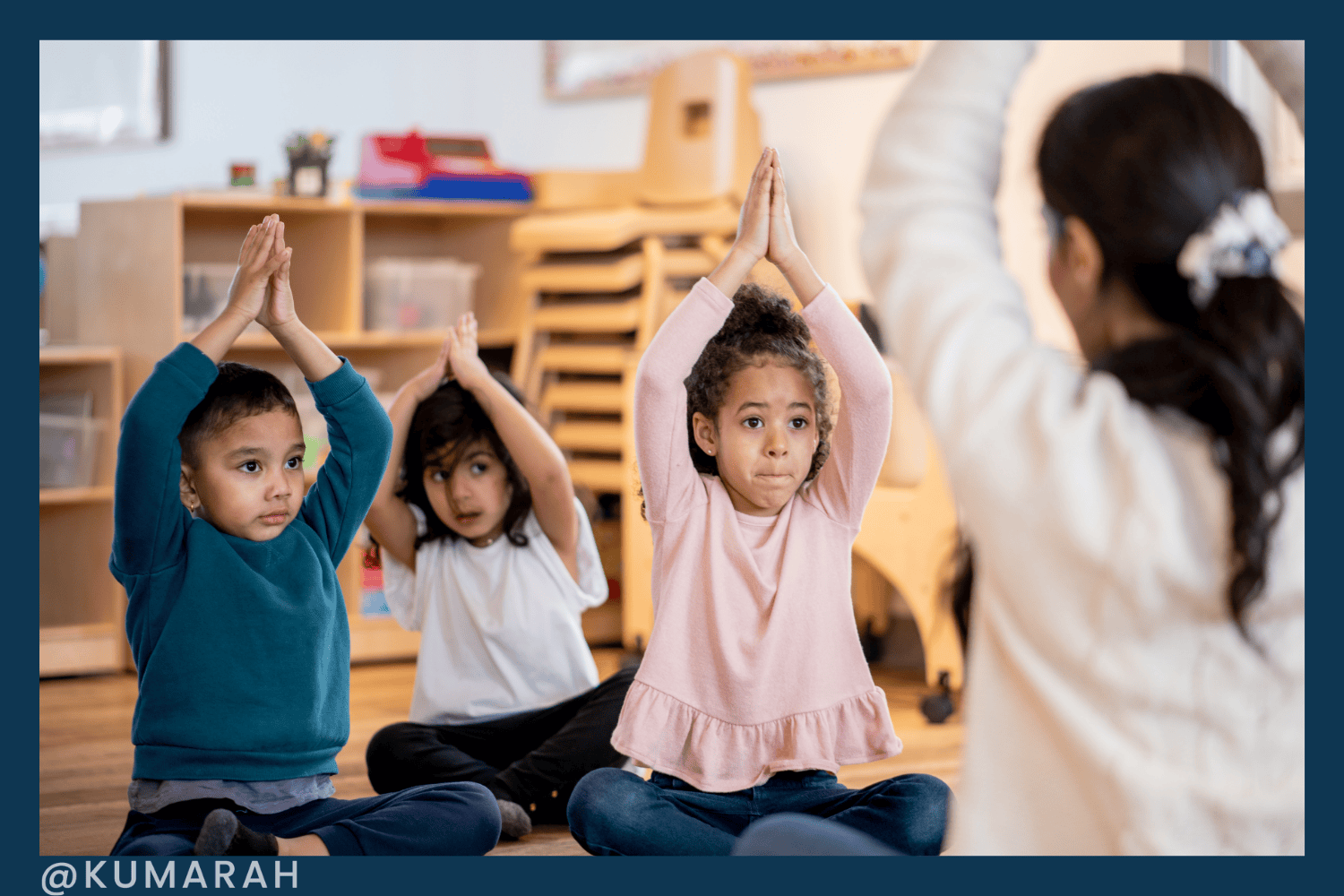
Using a mantra, or a repeated calming phrase, is super easy to do and can help get your morning on track. Create a calm environment and focus by practicing mantras during your meditation. Try pairing these with positive affirmation cards for kids.
- Sit or lay in a comfortable position. Close your eyes and clear your mind.
- Breathe slowly in through your nose and out through your mouth.
- Repeat these out loud or in your mind as you breathe.
“I am kind”
“I am smart”
“I am enough”
“I believe in myself”
“I am confident in myself and my abilities”
“I choose to think positive”
“I am strong and capable”
“I deserve to be loved”
“I am open and ready to have a great day”
Let kids pick the ones they actually like, or write their own. The ones they choose get repeated; the ones you assign don’t.
Morning Yoga Routines to Stretch and Get Out of Bed
An excellent way to start your day is to do a little yoga. It helps shake off sleepiness and get you focused for the day ahead. You can even incorporate meditation into your yoga. Another great morning meditation is doing sun salutations with kids!
- “Hello Sun!” (Mountain Pose)
- “Hello Rain!” (Waterfall)
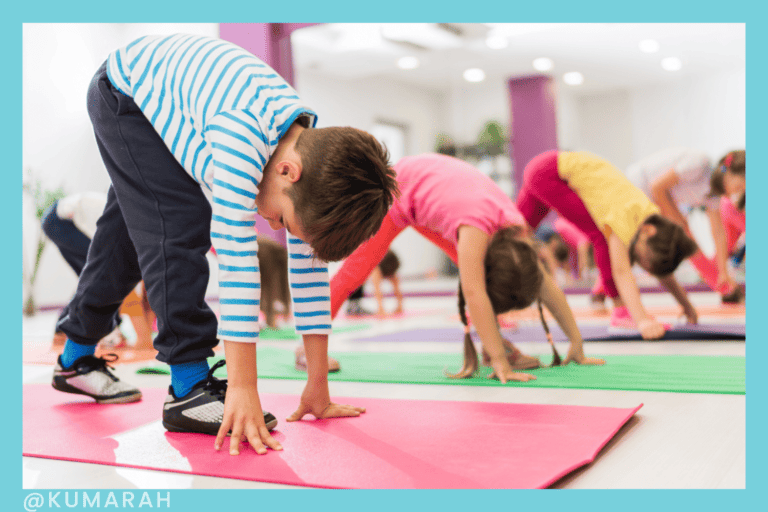
- “Hello Earth!” (Forward Fold)
- “Hello Wind!” (Low Lunge)
- “Hello Ocean!” (Downward Dog)
- “Hello Grass!” (High Plank)
- “Hello Ocean!” (Downward Dog)
- “Hello Wind!” (Low Lunge)
- “Hello Earth!” (Forward Fold)
- “Hello Rain!” (Waterfall)
- “Hello Sun!” (Mountain Pose)
- “Namaste”
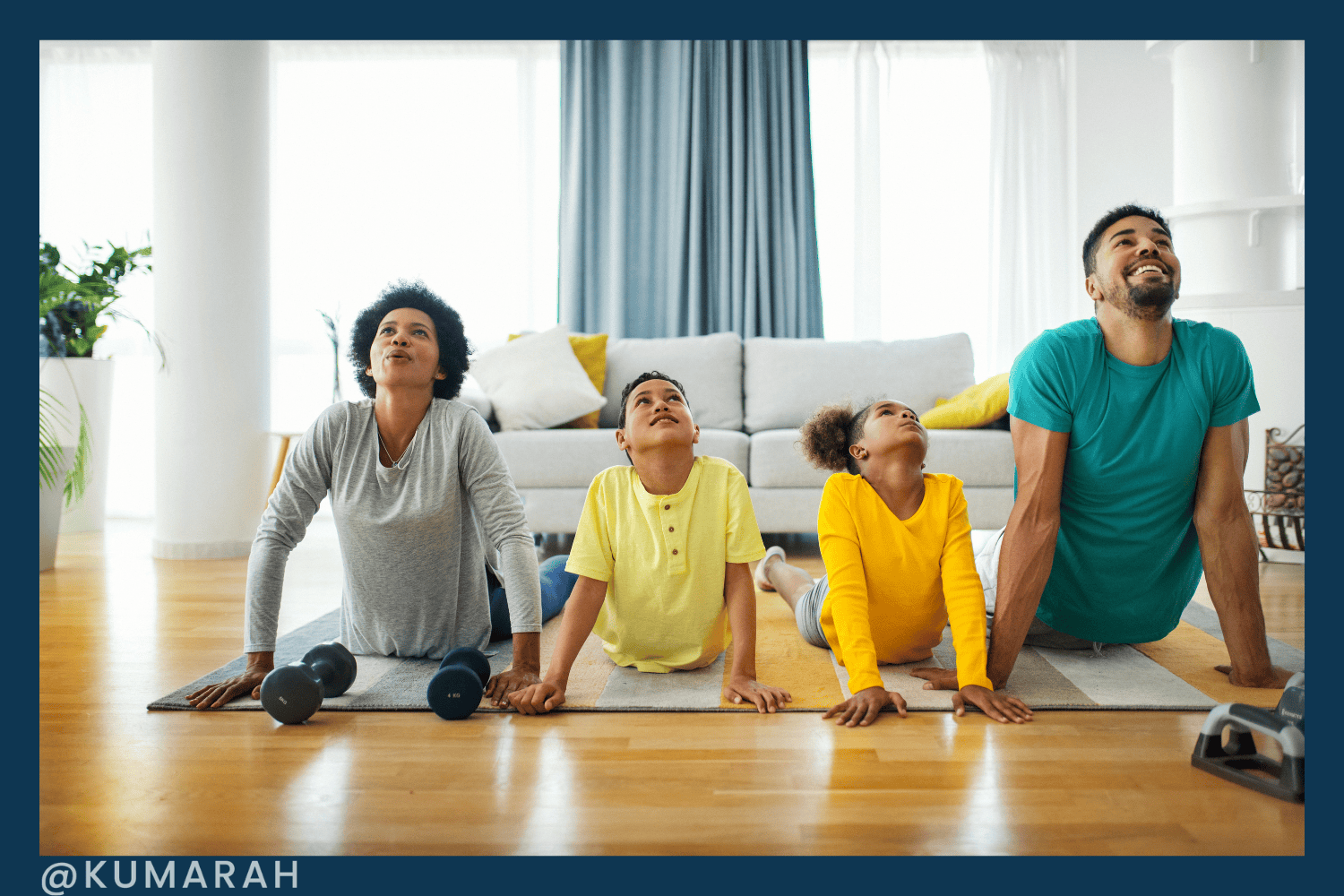
This one starts on the floor, which matters — nobody wants to stand up and balance thirty seconds after getting out of bed. It works its way up to standing by the end.
Cat and Cow: Start on your hands and knees. Drop your belly and look up — that’s Cow, and you can moo if you want to. Then round your back up high, like a cat stretching after a nap. Go back and forth a few times, slowly.
Baby Cobra: Lie down on your belly with your hands under your shoulders. Press up just a little, elbows bent and tucked close to your sides. Look forward, like a snake lifting its head out of the grass.
Up Dog: From baby cobra, press your hands all the way down and straighten your arms. Let the tops of your feet rest on the floor and lift your chest. Now the snake is all the way awake.
Down Dog: Tuck your toes and lift your hips up and back into an upside-down V. Plant your palms and push the floor away. Pedal your feet if your legs feel tight — for most kids this is the first real stretch of the day.
Dragon: Step one foot forward between your hands and let your back knee come down. Sink your hips low, lift your chest, and breathe out through your mouth like a dragon. Switch sides.
Monkey: From dragon, push your hips back over your back knee and straighten your front leg. Flex your front foot and fold gently over it. Switch sides.
Warrior 1: Step your back foot up partway and turn it out a little, then rise up with your arms overhead. Front knee bent, back leg strong. Three breaths on each side.
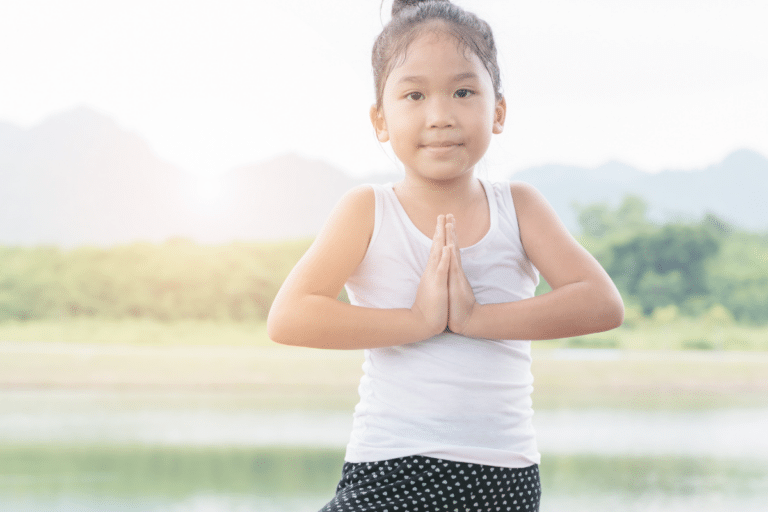
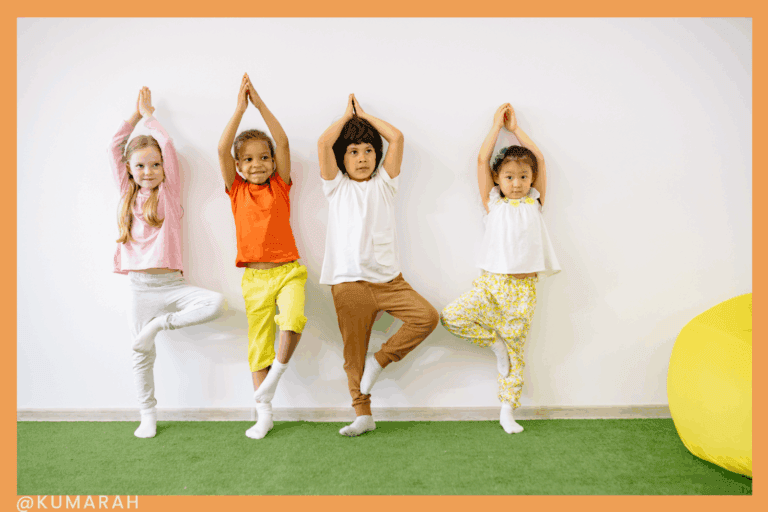
Tree Pose: Feet together. Rest one foot on your ankle, your calf, or your inner thigh — never on the knee. Pick something across the room and stare at it; balancing is much easier when your eyes hold still. Switch sides.
Mountain Pose: Stand tall, feet flat on the floor, arms at your sides. This one looks like nothing is happening, which is the point. Close your eyes if you want to and notice that you’re awake now.
Skip whatever doesn’t fit your morning. The order matters more than the list — same sequence every day is what makes it a routine instead of an activity.
You might want to check out a few awesome kids yoga videos if you prefer visual learning instead.
- Kumarah Yoga YouTube Check out a few videos from Maia with themed poses and yoga story adventures!
- Sit and Stretch (Jaime’s Brain Breaks) by Cosmic Kids
- Kids Yoga Freeze Dance (Twist Like Spaghetti & Other Silly Yoga Poses) by GO WITH YOYO-Fitness Fun for Kids
- 5 Minute Yoga Routine for Kids- Safari Adventure! by Channel Mum
- Yoga for Kids with Animals by Smile and Learn
- Yoga for Kids-Children Yoga-Brain Breaks-Kids Songs by the Learning Station
- Superhero Yoga For Kids by Moovlee
Breathing Exercises for Stressful Moments at School
The hard moments at school are rarely the ones you can plan for. What helps is having something already practiced — so it’s available before anyone has to think about it.
The three below all work at a desk, which matters more than it sounds like it should. Elementary and middle schoolers won’t use a strategy that makes them look different from everyone else.
Take a look at the video for more ideas!
Shapes Breathing
When stress becomes too much, try using this technique to calm down and relax.
- Breathe slowly in through your nose and out through your mouth.
- Depending on what shapes you use, trace them with your finger on something in front of you, like a table or your skin.
- As you trace on edge, breathe in and count 1,2,3,4 before a slight pause.
- On the next edge, exhale and repeat.
Finger Count Breathing
This exercise is a great way to ground yourself and calm down. It uses sensory motion techniques as well!
- Begin breathing slowly in through your nose and out through your mouth. I like to count to 4 as I do this!
- As you breathe, use your thumb to lightly touch each of your fingers.
- When you get to your pinky finger, go backwards to return to your pointer.
- After going back and forth once, exhale as you do the next set. Repeat and remember to concentrate!
- This forces you to focus on tapping each of your fingers and on your breathing.
Shoulder Roll Breathing
Using yoga poses while breathing, this exercise helps reduce tension and anxiety.
- Breathe deeply through your nose and relax
- As you count to 3, inhale and roll your shoulders up to your chin.
- Exhale and roll your shoulders down as you count to 4
- Repeat and focus on your breathing
For more breathing exercises for kids, check out the free breathing printables here:
Movement and Yoga Breaks for Kids at School
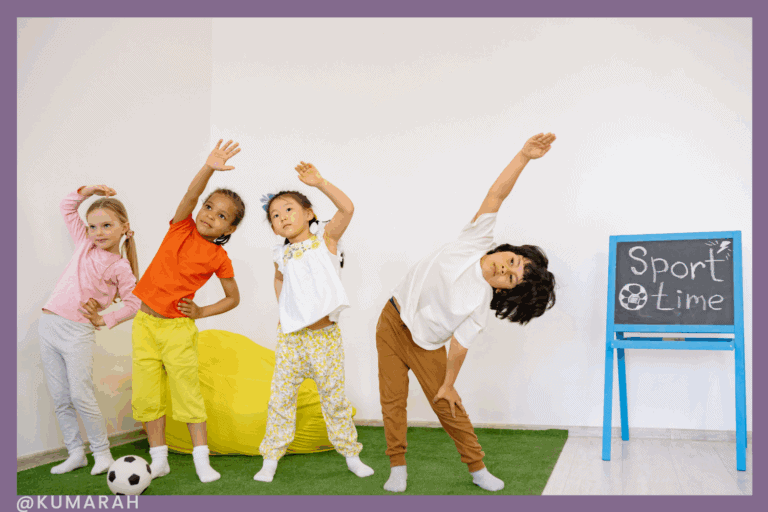
By mid-morning most kids have run out of sitting still. A movement break isn’t a reward for good behavior — it’s necessary brain-body maintenance.
Here are some great tips and ideas for Introducing Yoga and Mindfulness to kids in a school classroom.
Try these simple exercises to shake off the tension before starting the yoga poses:
- Jumping jacks, high knee jumps, or jump rope
- March, run in place, or skip in a circle
- Dancing is a great way to get the giggles out during a brain break. Put on some fun music and dance!
- Here’s another huge list of awesome movement and brain breaks for kids!
If you teach, here’s a full back to school kids yoga class built around focus and confidence.
Do a few easy yoga poses next to desks
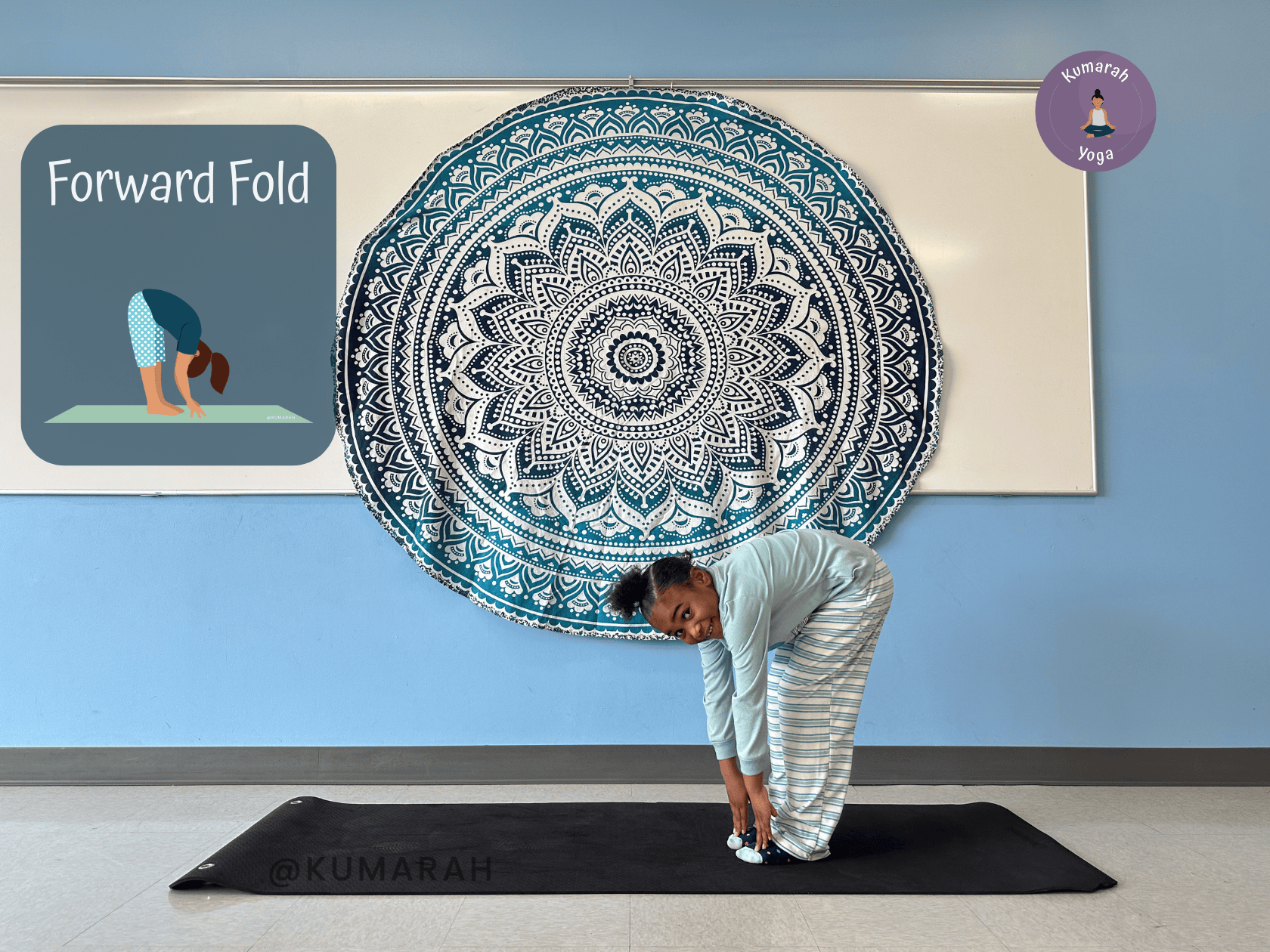
Forward Fold: Stand tall, then fold all the way over your legs like a rag doll. Let your head hang heavy and your arms dangle. Bend your knees as much as you need to — nobody’s checking. Shake your head yes, then no.
Eagle: Stand up and bend your knees a little. Cross one leg over the other and hook your foot behind your calf if you can. Then cross your arms in front and wind them together. Eagles hold on tight. Switch sides.
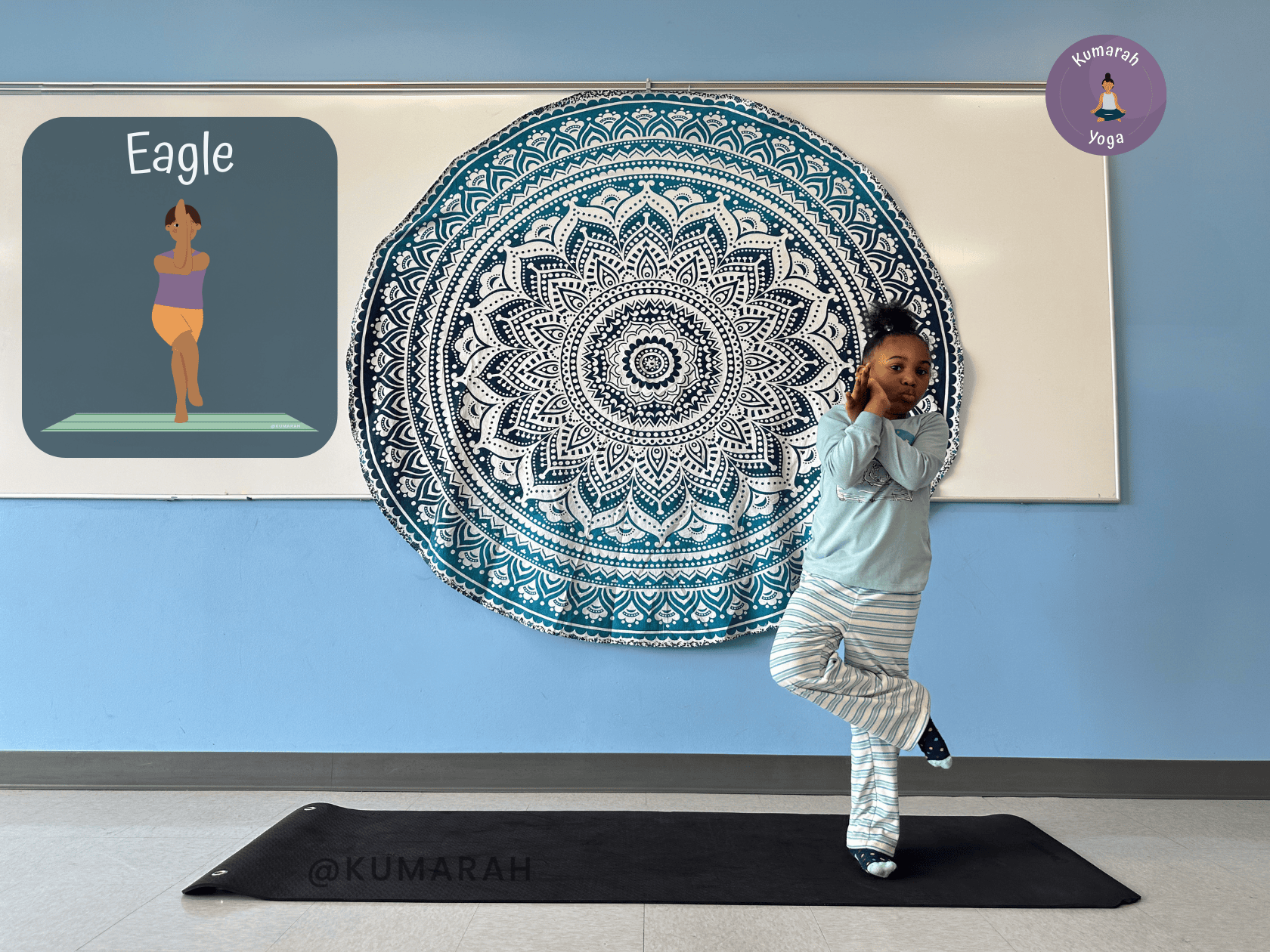
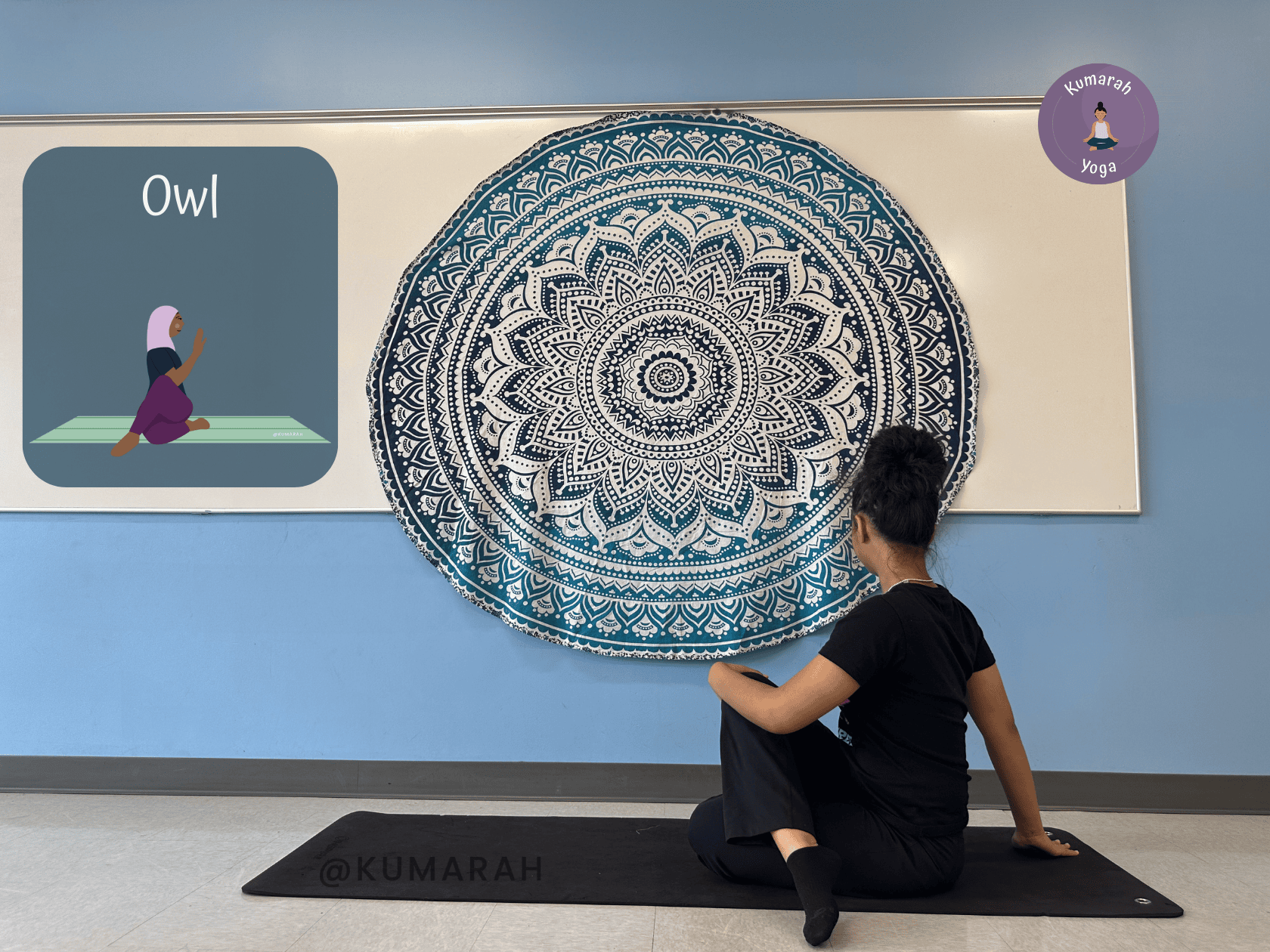
Owl Pose: Sit with your legs out in front of you. Bend one knee up and put your foot on the other side of your opposite leg. Put your opposite arm on your bent knee and twist. Sit up tall and hoot like an owl. Switch sides.
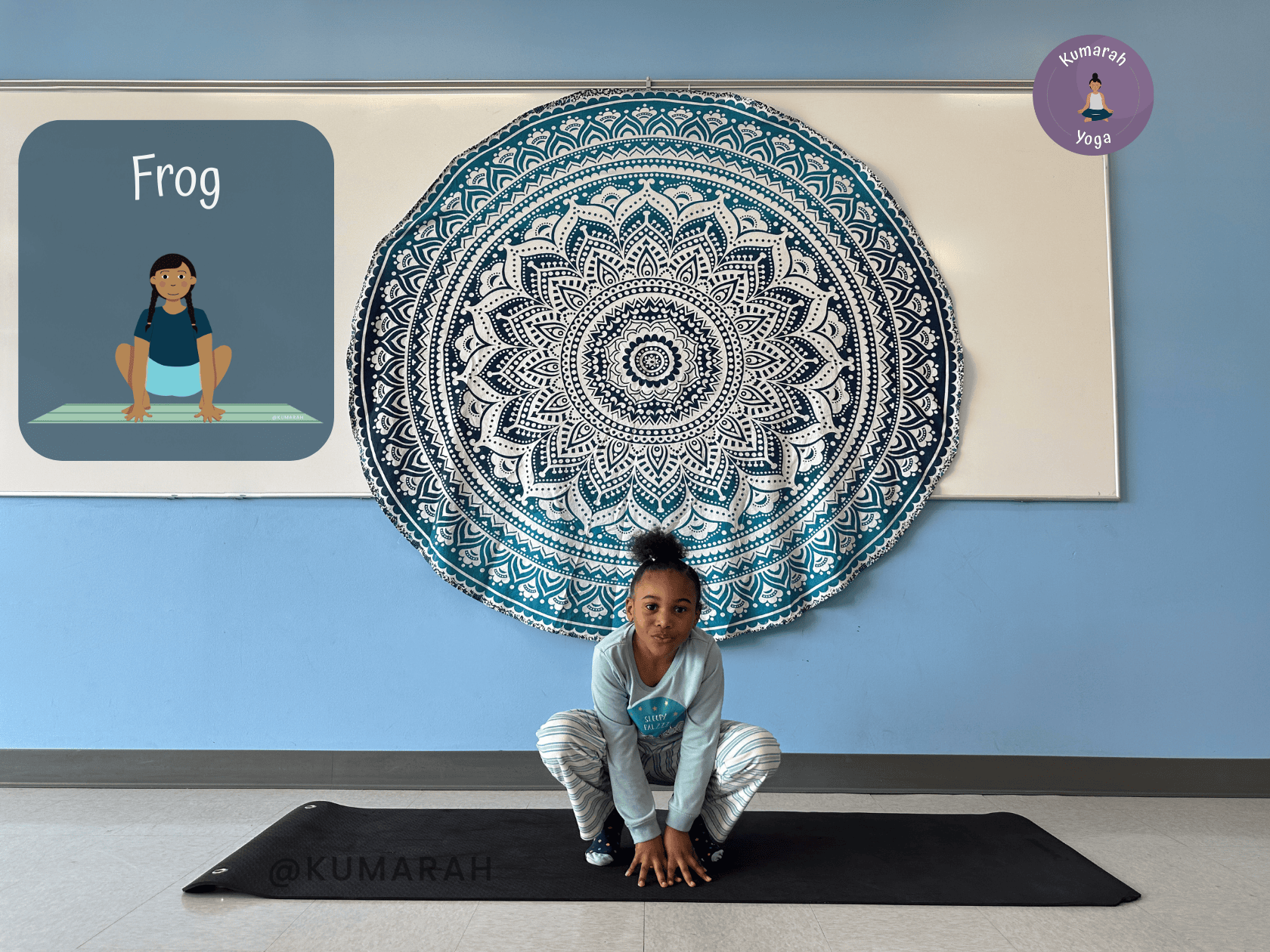
Frog: Squat down low with your feet wide and your hands pressed together between your knees. Bounce a few times. Hop if you’ve got the space for it.
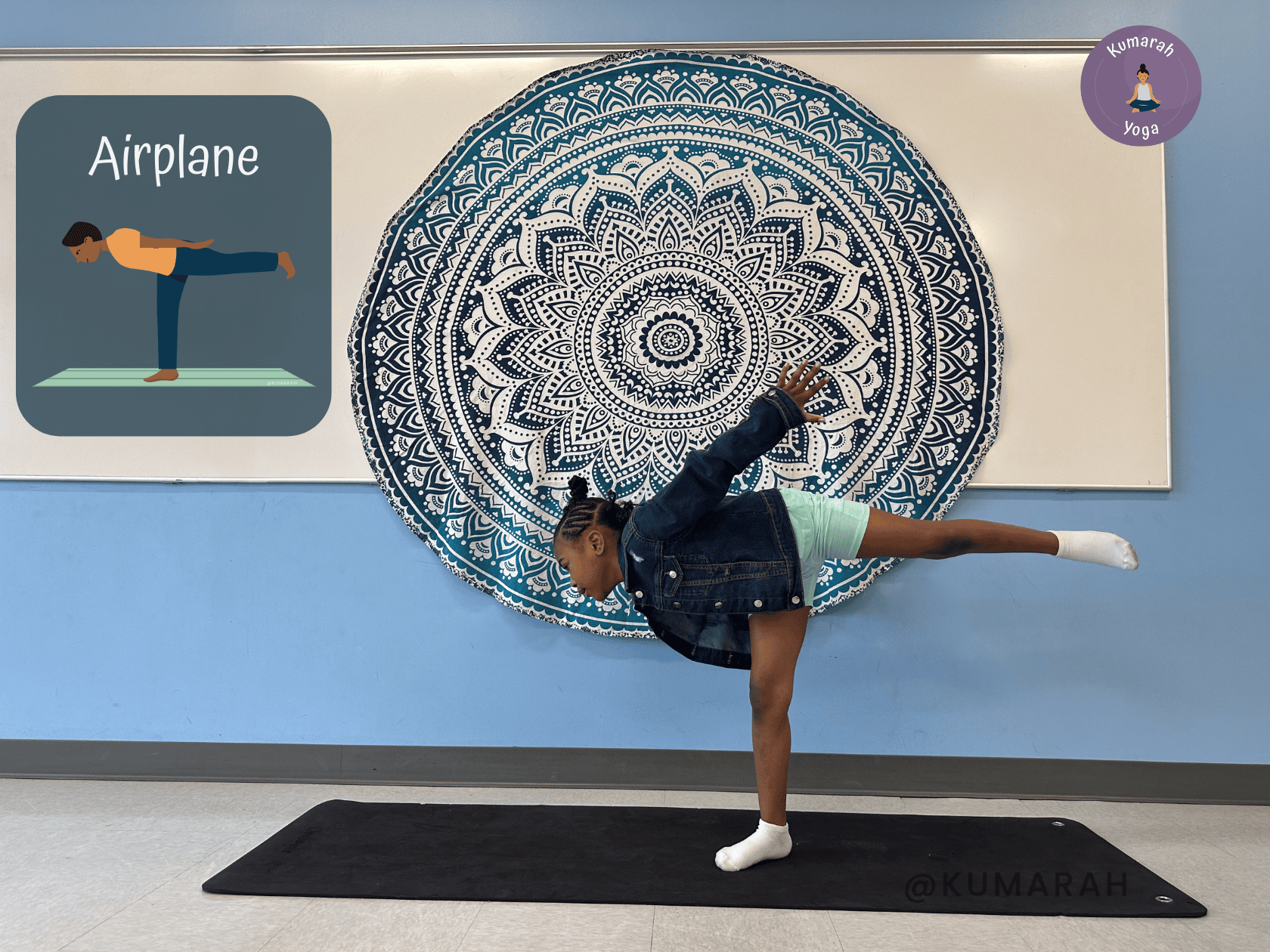
Airplane: Stand on one leg. Lean forward, stretch your arms out to the sides like wings, and lift your other leg behind you. Pick a spot on the floor ahead of you and keep your eyes there. Switch sides.
Warrior 2: Step your feet wide apart, turn one foot out, and bend that knee. Stretch your arms out in both directions and look out past your front hand. Hold it a little longer than feels comfortable — that’s the part that builds focus.

Make your own pose! Ask kids to invent their own pose that helps them feel strong and confident. They’ll commit harder to a shape they made up than one you named for them.
After School Mindfulness Activities and Crafts for Kids
The stretch between pickup and dinner is when the day catches up with kids. These are quiet enough to wind down but active enough that nobody has to sit still and talk about their feelings.
Emotions Stones:
Have fun with this simple and silly activity that helps kids recognize their emotions. It’s like a rock version of Mr. Potato Head and you can put it in a bag and carry it with you.
Materials: rocks, acrylic paint, and a piece of paper with an oval drawn on it.
- Use the paint to draw parts of a face onto the rocks
- Only one part on each rock.
- One rock is an eye
- One rock is a nose
- Make different emotions on the rocks
- A ‘happy’ smile
- Crying eye
- Different noses
- Have the rocks dry and then make faces on the paper with your rocks
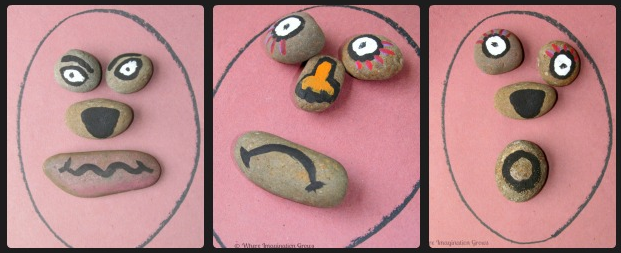
Image and Craft by WhereImaginationGrows
Freeze Dance Game:
This classic game gives kids the chance to express themselves, release energy, and this added element of noticing our bodies helps with the mindfulness portion.
Materials: playlist of music (with a variety of songs), space to move, and questions.
- Before beginning, ask your kids what their current feelings are.
- Start the playlist. I usually start with a classic “happy song”, then move to a loud angry one, a quiet calm one, a soft moody song, a bouncy crazy one, etc.
- As you dance, let the music really get into your bones. Feel how you are feeling- and shout it out if you want!
- At some point, stop the music and freeze.
- Then, ask questions so they can reflect.
- What did that song make you feel?
- Why did it feel like that- the sounds, or the words?
- Did it change how you felt before we started?
- Fun prompts to use during the music or the freeze:
- Freeze/move how the song makes you feel
- Freeze in a yoga pose of a superhero, animal, letter, etc
- Dance like an animals, ballerina, etc
- Have fun and be yourself!
Rainbow Walk:
Get moving and mindful with this fun and simple activity. This is perfect for any time of the year and you can bring supplies or just use a camera to take pictures and make a collage later.
- Talk a walk (indoors or outdoors)
- Look for something in each color of the rainbow
- Point them out (red, orange, yellow, green, blue, and purple) and talk about how they make you feel. What emotions do you recognize?
- Take a picture, draw them, or journal about what you see (if wanted)
- Discuss what each person saw. Did you see the same things? What kind of things?
Idea from Mindful Teachers
Mindful Coloring:
I love coloring and it’s a great way to practice mindfulness. If just coloring in the quiet feels good, go for it. If you want to add a little extra element to the activity try these ideas:
- Go slow at first, starting at the center and work your way out
- Make patterns with your favorite colors
- Put on some music and color along with the beat, or use colors that match the sounds you hear
- Color with your non-dominant hand, or one eye closed for an extra challenge
Here is a great collection of printable coloring sheets for adults and kids!
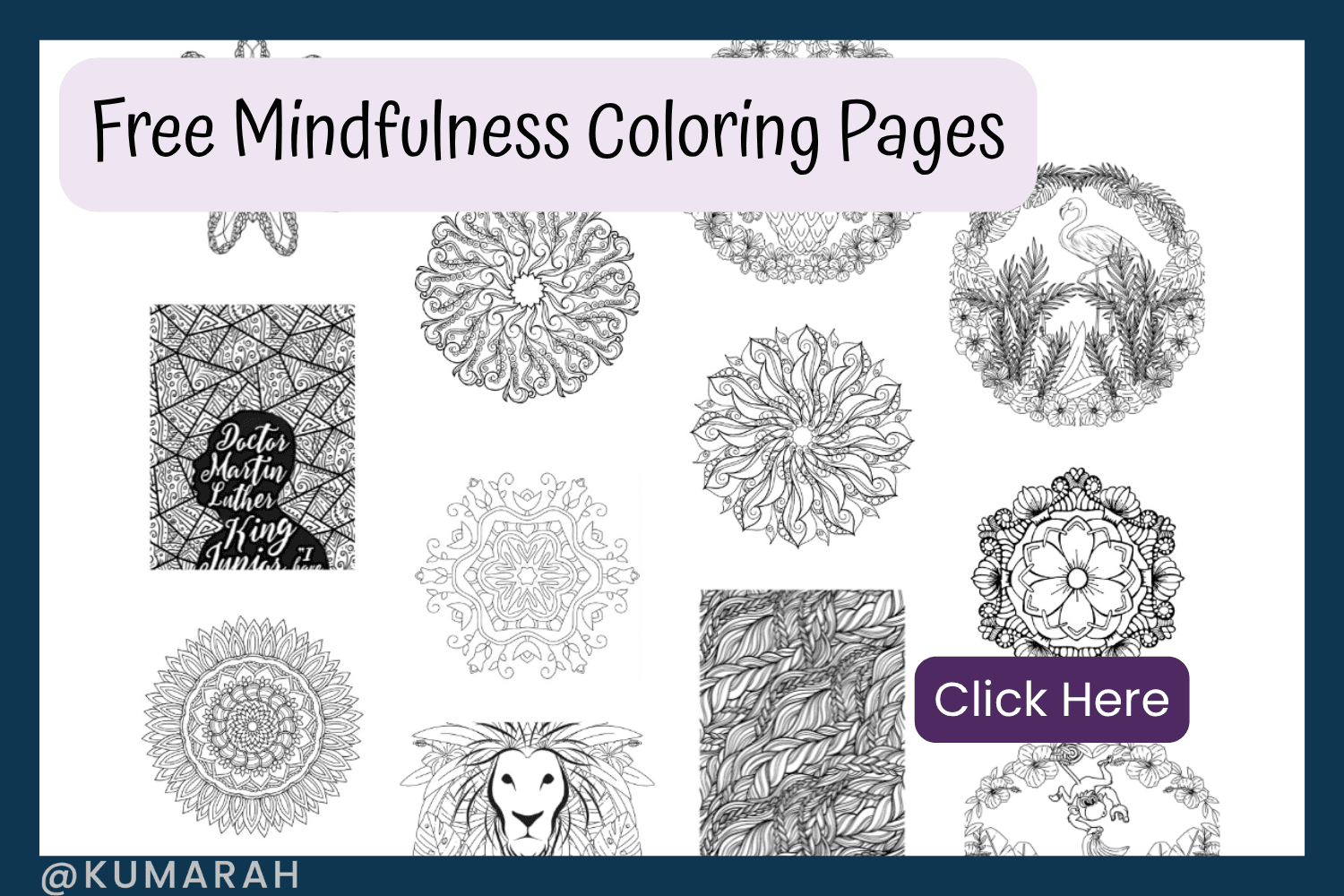
Here are some fun mindfulness coloring books for kids too.
- Mindful Coloring for Kids by Insight Kids
- A Yogi’s Heart Coloring Book by Hannah Bacaron
- I Am Awesome: Coloring Book for Girls by Creative Affirmations Publishing
- Yoga Coloring Book for Kids: Mindful and Stress Relieving Activity Book by Feliciano Ramírez Rodríguez
- Mandala Animals: Coloring Book for Kids by Chris Livingston
- Cute and Playful Patterns Coloring Book for Kids by Young Dreamers Press
Mindfulness Journaling Prompts:
Journaling is an excellent way for kids to understand and recognize their emotions. It also encourages confidence, stability, and promotes creativity and reflection.
This is not just for kids either… I love to journal and use my Silk and Sonder journal every day. (They have mindfulness journals for kids too!)
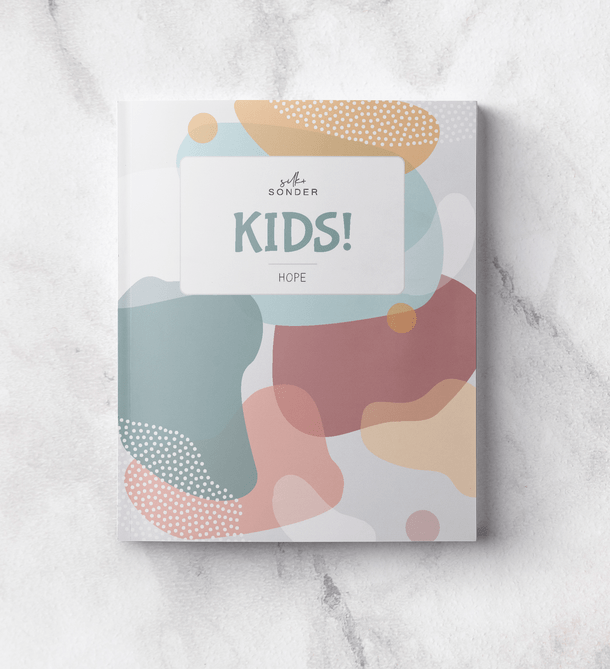
Sonder Kids is a monthly wellness journal for kids aged 6-12, packed with fun themes, interactive activities, and space to reflect and set daily goals. It helps kids explore their feelings, build confidence, spark curiosity, and develop important life skills—all while having a great time!
Try these fun prompts to write about.
- Name three qualities you like about yourself
- What makes you feel like a strong person?
- Why is it important to congratulate someone when they’ve done well?
- How do you think confidence relates to happiness?
- What makes you happy?
- Make a list of ten things you are good at.
- How can you help other people feel confident?
- Think of something you would like to do better. How do you achieve this?
- What is the bravest thing you’ve ever done?
- Write about someone you admire. What qualities do you share with them?
Prompts from Journal Buddies
Yoga Routine and Poses to Calm and Wind Down
If you’re noticing sleep problems in kids, some calming strategies and yoga may be a good addition to your nightly routine.
Doing a little yoga before bed is an excellent way to relax and get ready to sleep. Combined with breathing exercises and mindfulness, this is the perfect thing to get your kiddos to wind down.
Use animal themed poses, or choose a different theme that fits your child’s interests.
Bird Pose: Stand up tall and find a point ahead of you to focus on. Lift a foot behind you and balance.
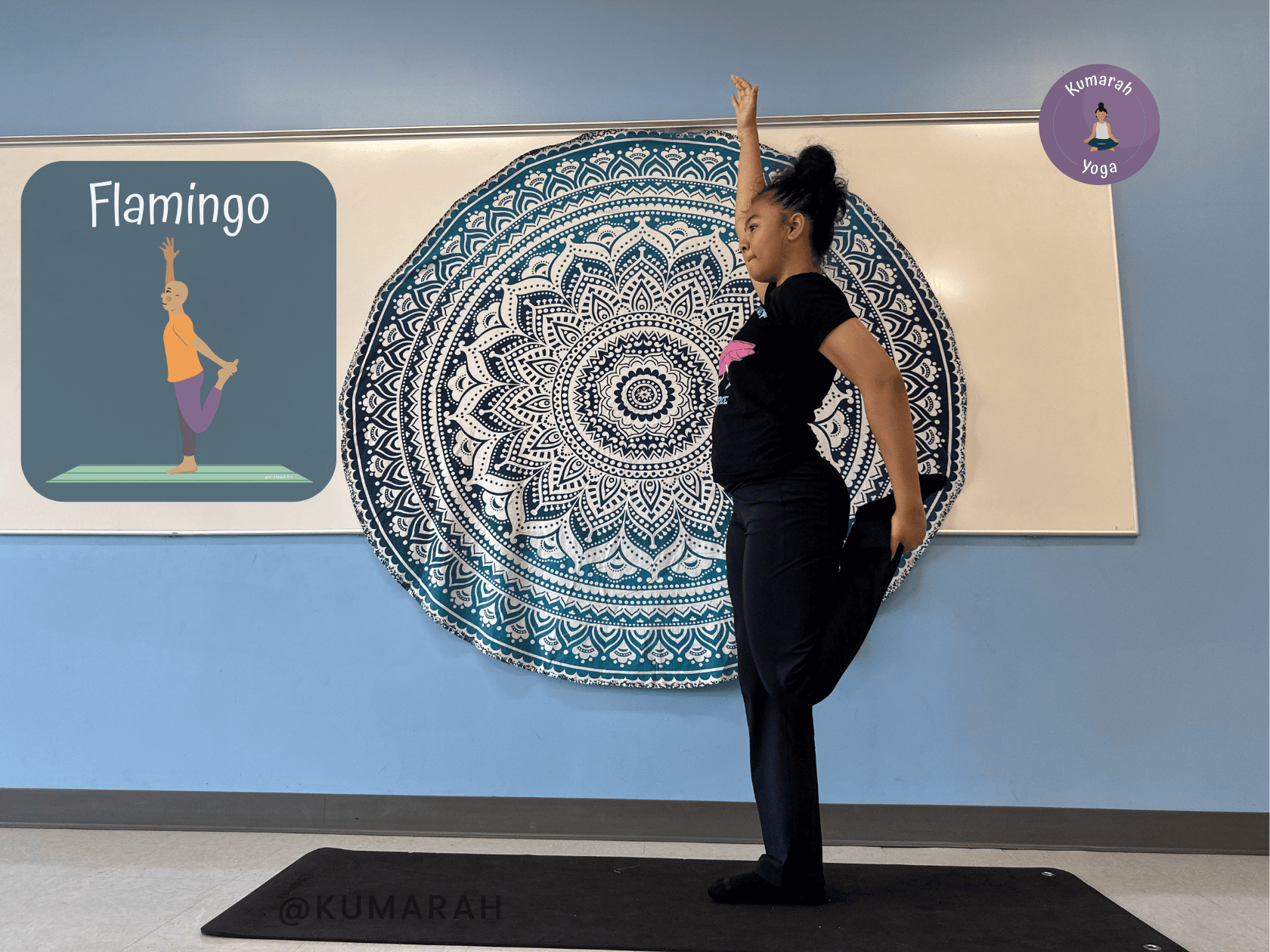
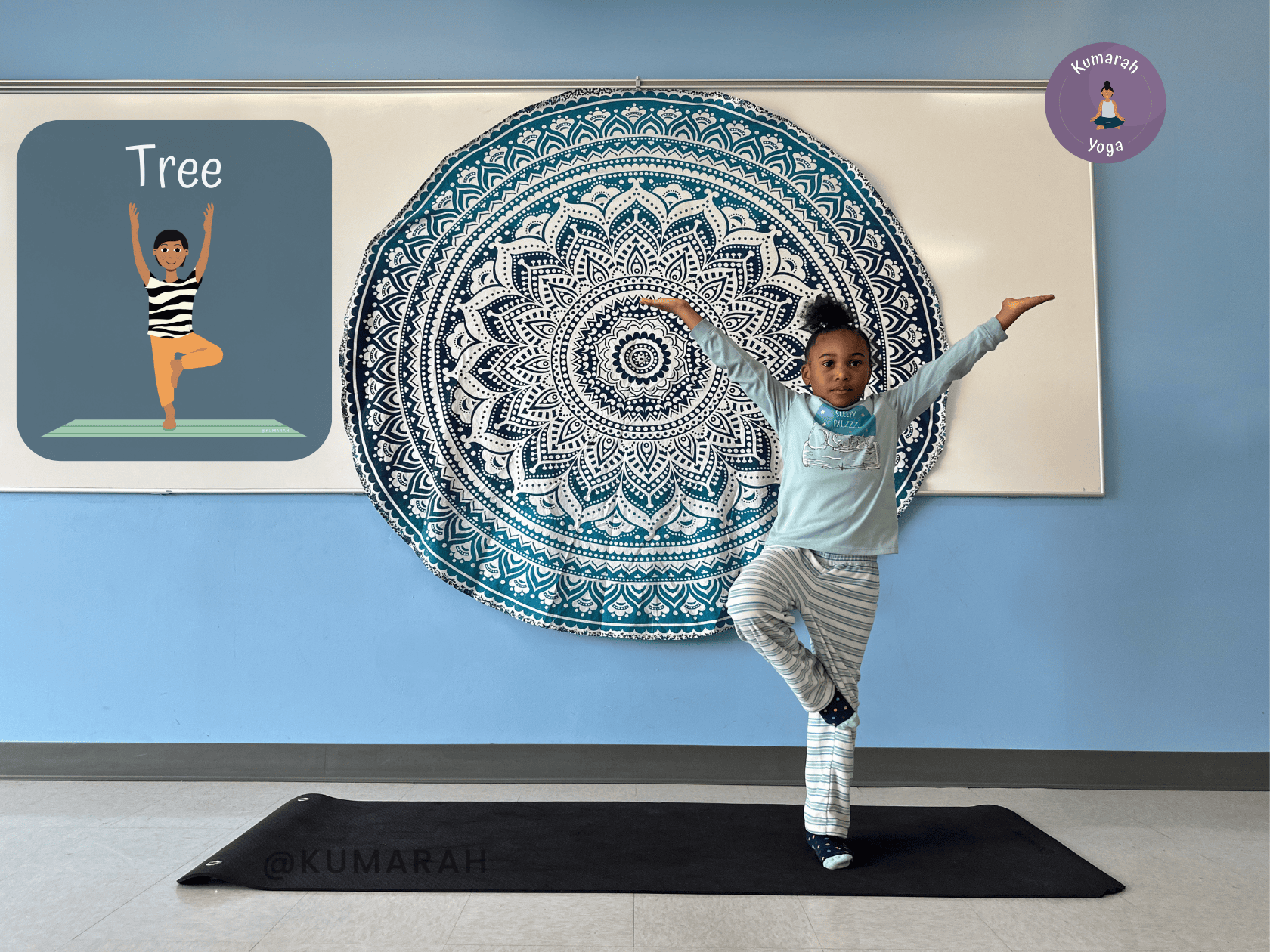
Tree Pose: Still standing, rest your foot on the side of the opposite leg. Balance and switch after a minute.
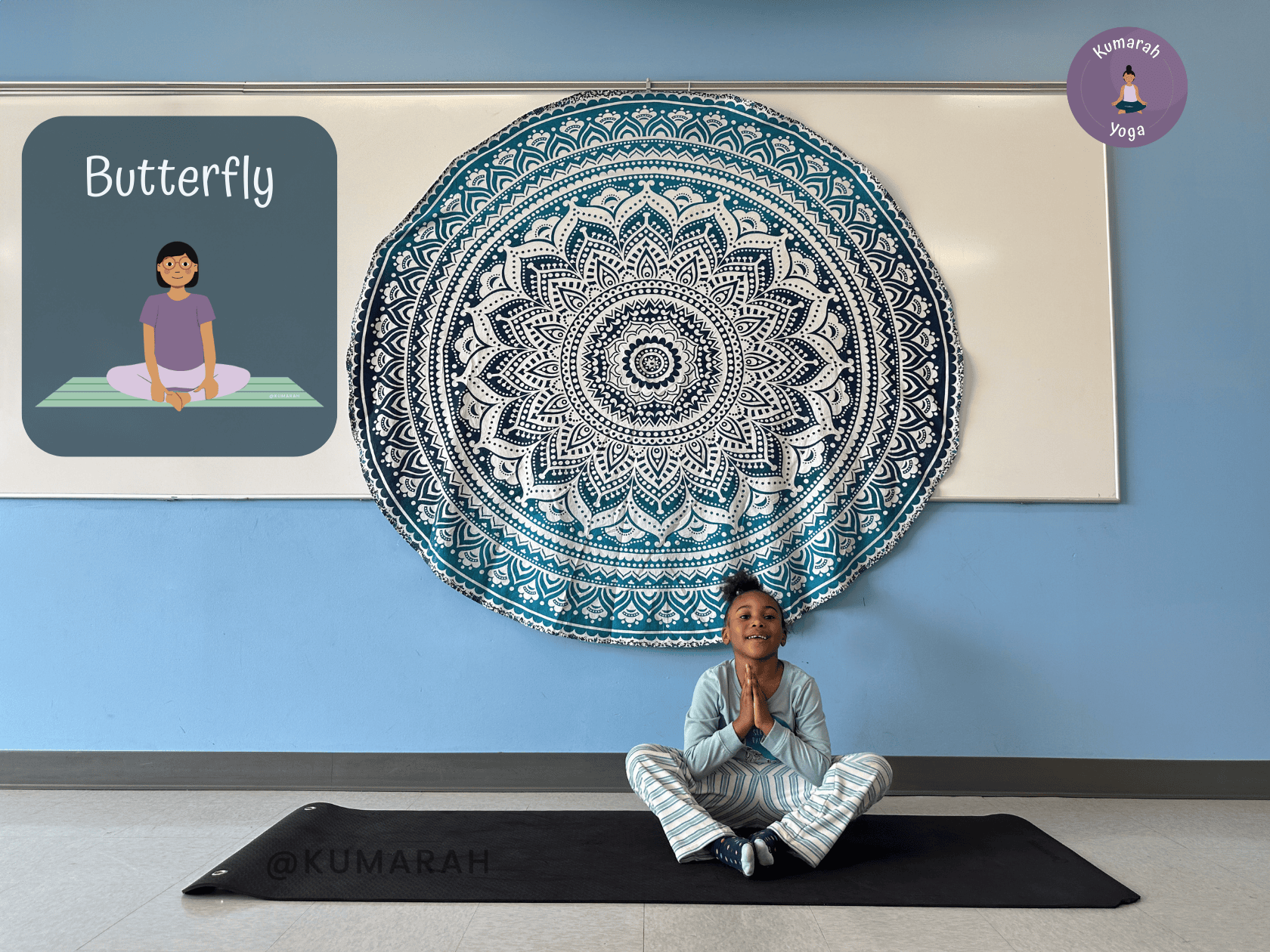
Butterfly Pose: Sit down with your back straight. Press the bottoms of your feet togethers and breathe. What color are your wings?
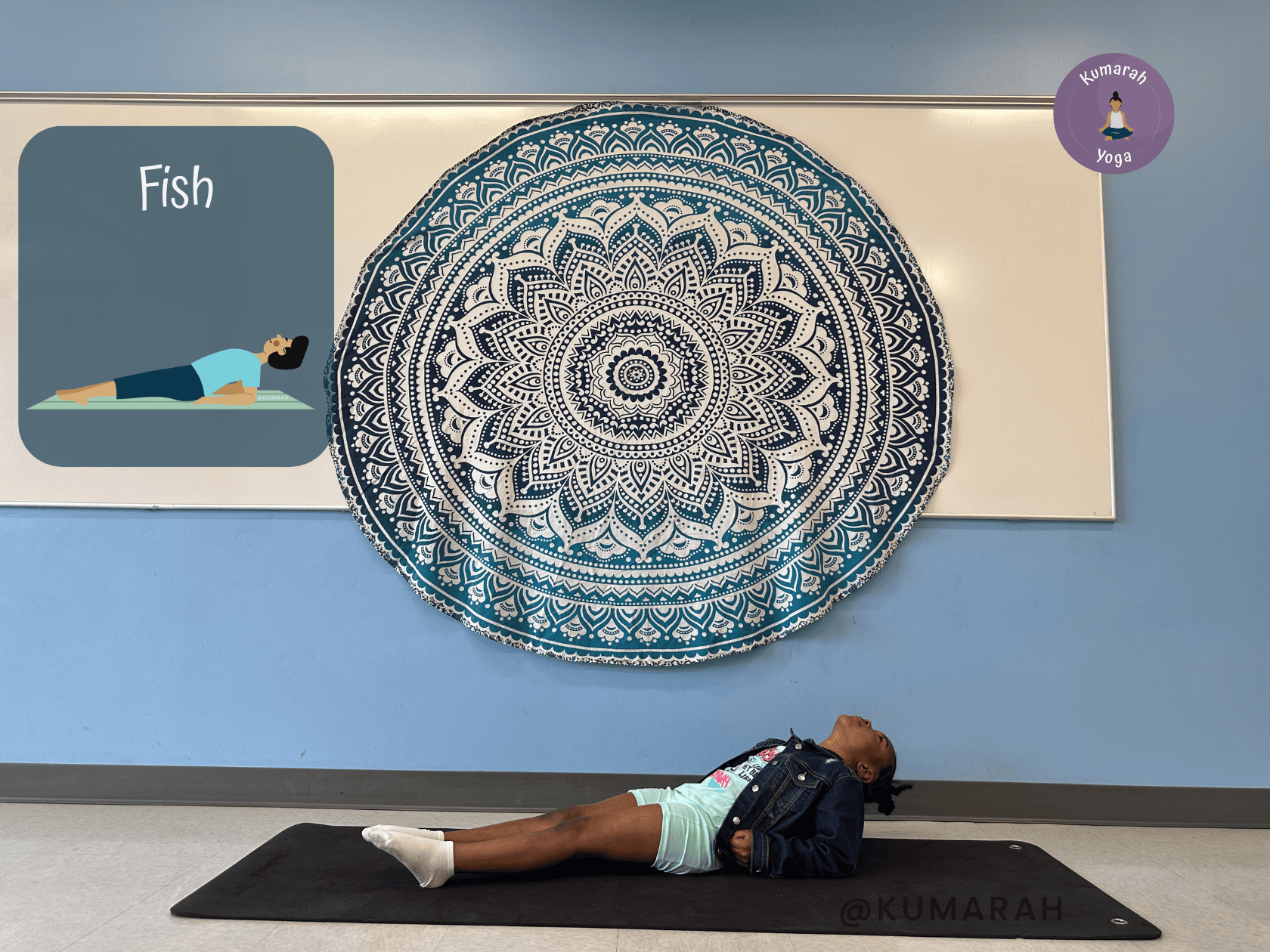
Fish Pose: Sit with your legs straight and hands flat by your hips. Lean back and brace yourself on your elbows and forearms, tucking your hands under your hips. Lift your chest up and lean your head gently back to open your heart.
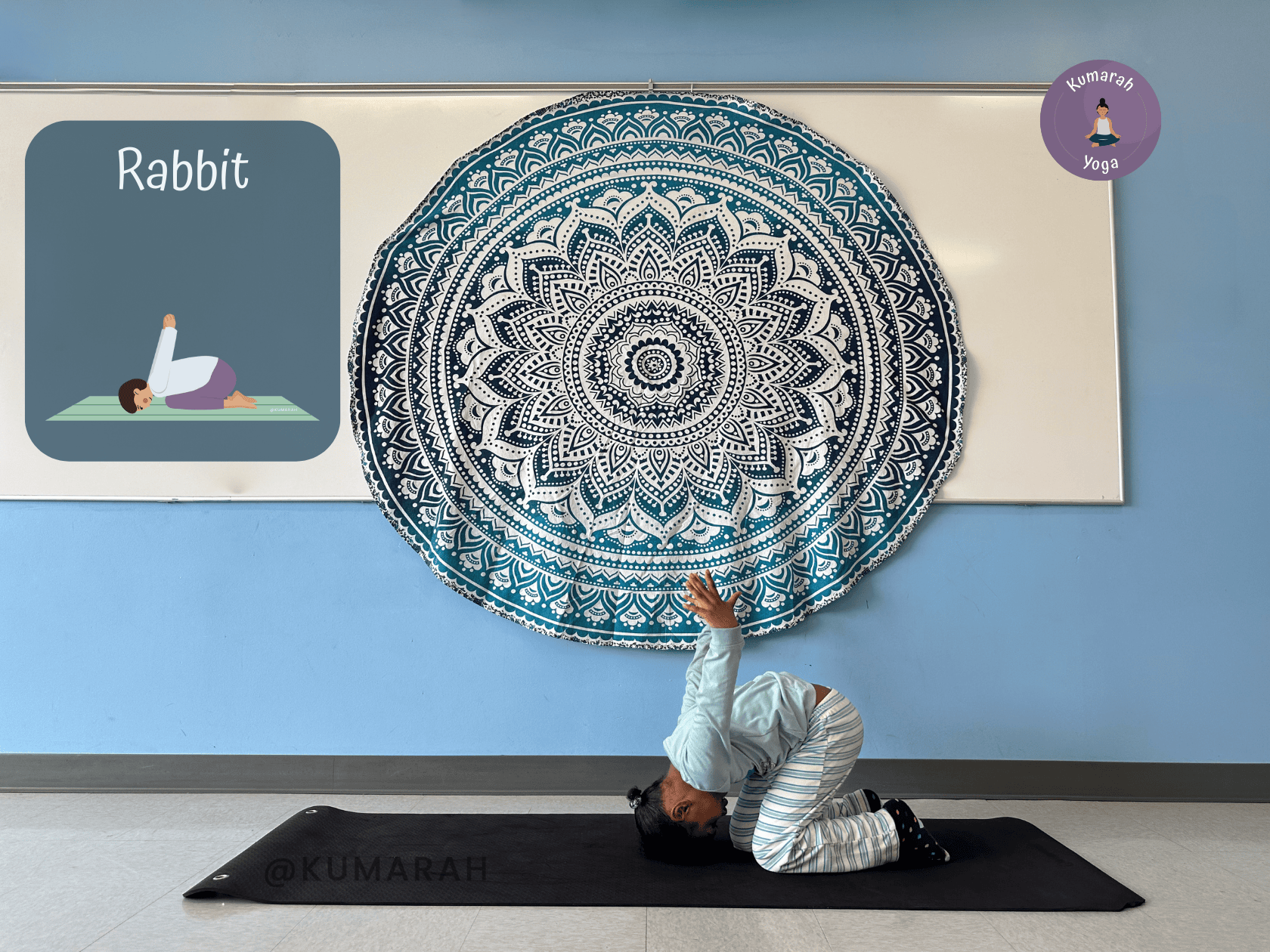
Rabbit Pose: Kneel on the ground with your feet behind you. Bend over at the waist and place the top of your head on the ground. Hold your arms back by your legs or up above your torso.
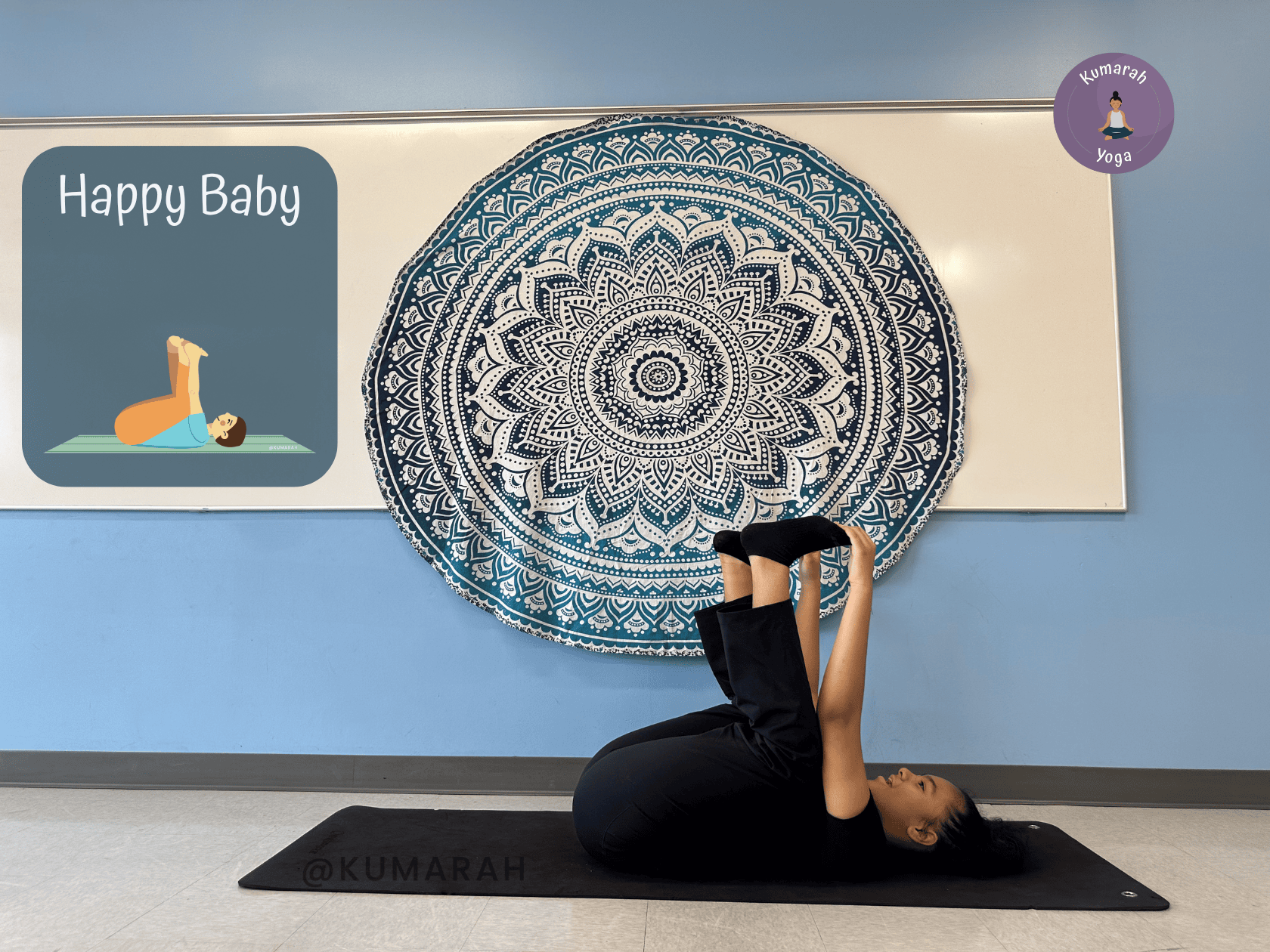
Pig Pose: Lay on your back and bend your knees into your chest. Reach between your knees for your feet or ankles and press your feet up while keeping your knees close to your armpits. Rock side to side like a pig rolling in the mud.
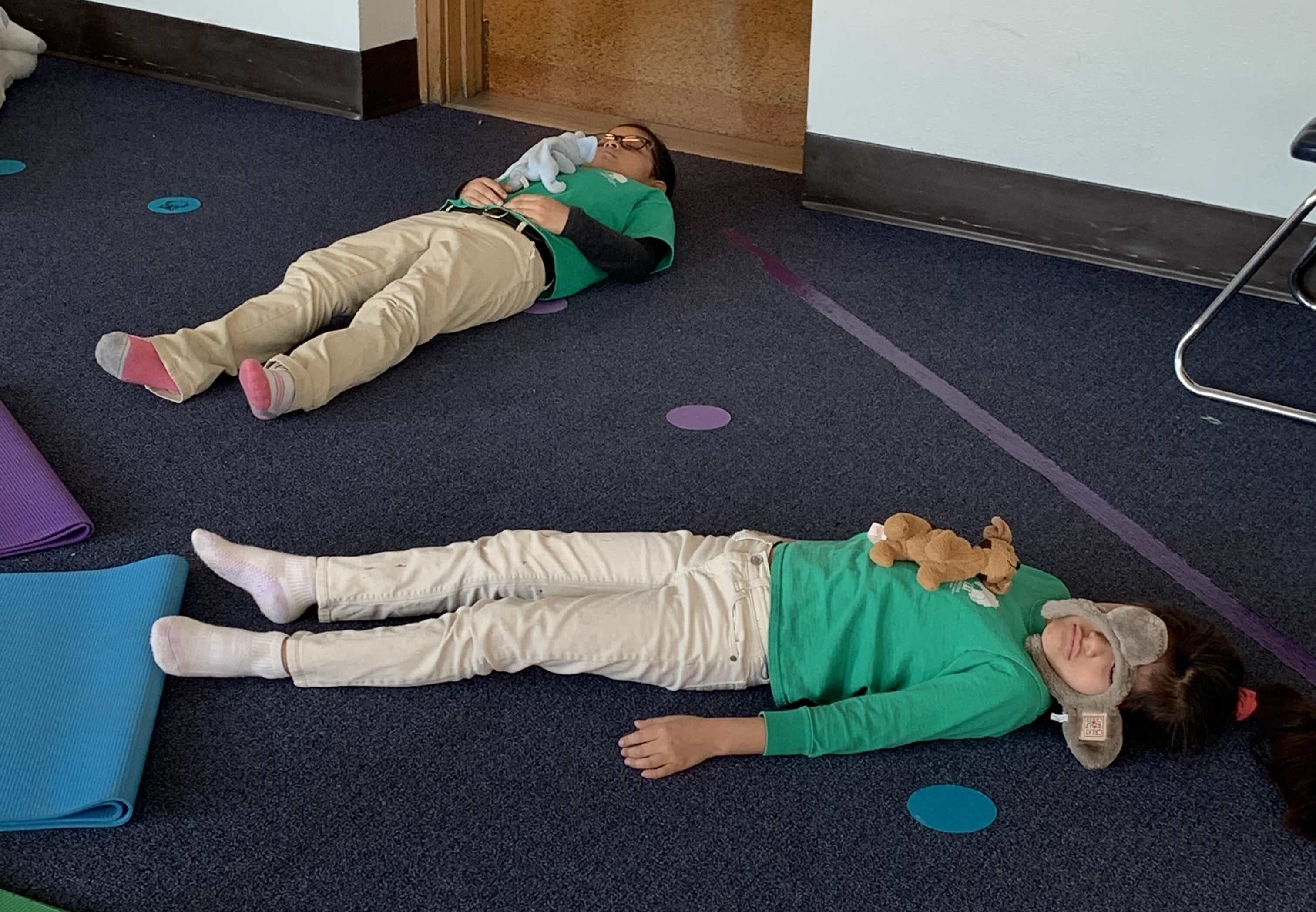
Savasana: Lay on your back with your legs straight and arms at your side. Close your eyes and breathe deeply. Use breathing buddy or stuffed animal on your tummy to help remind you to breathe slow and steady.
Pick one thing from this post. Not the whole list — one. A two-minute morning sequence, or finger-count breathing, or a rainbow walk on the way home.
Do it every day for two weeks and it stops being something you’re trying and becomes something you have.
Have a good August/September.