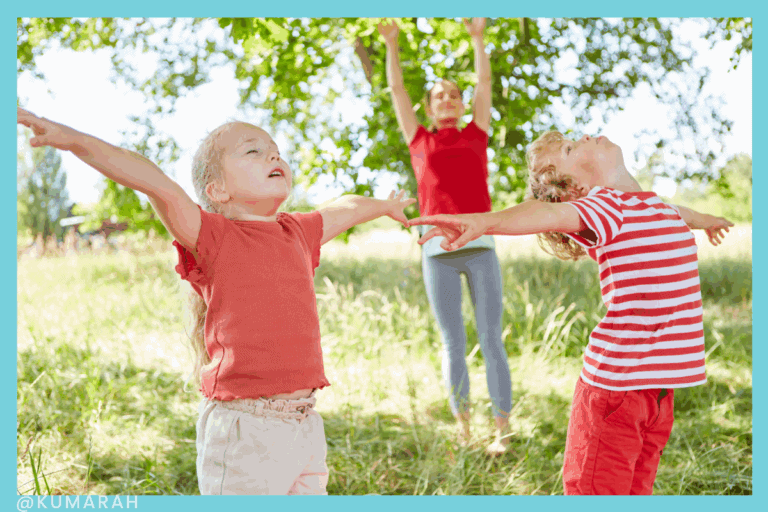
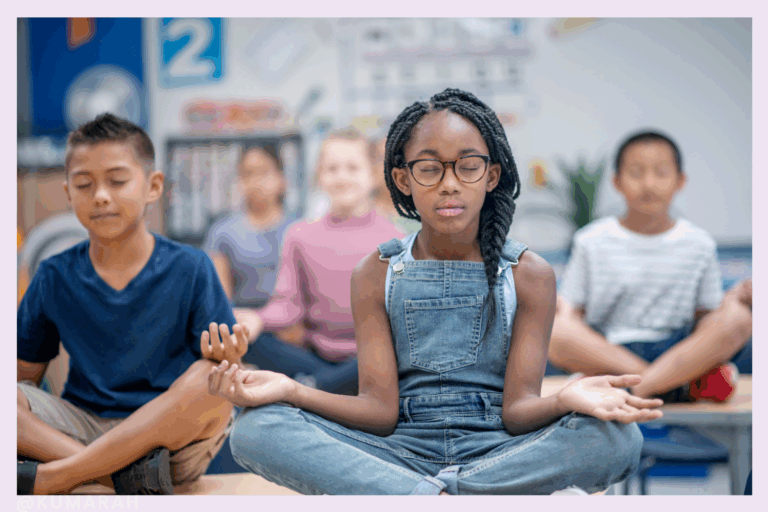
No equipment. No experience needed. Just you, your kids, and a little floor space.
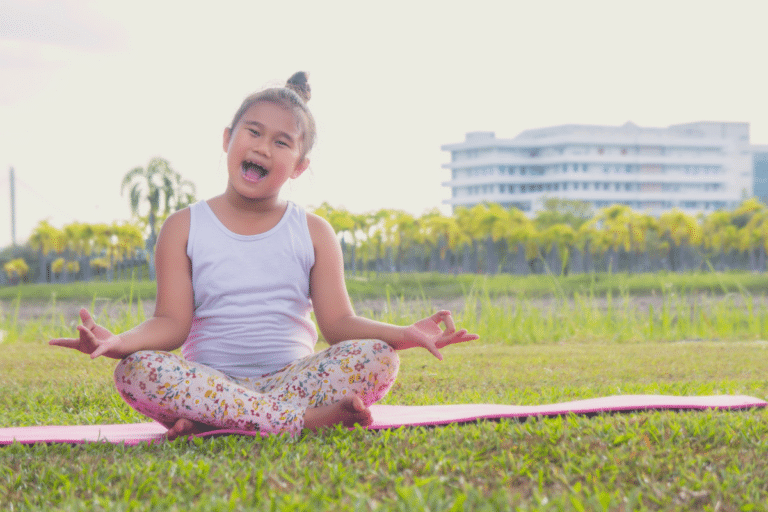
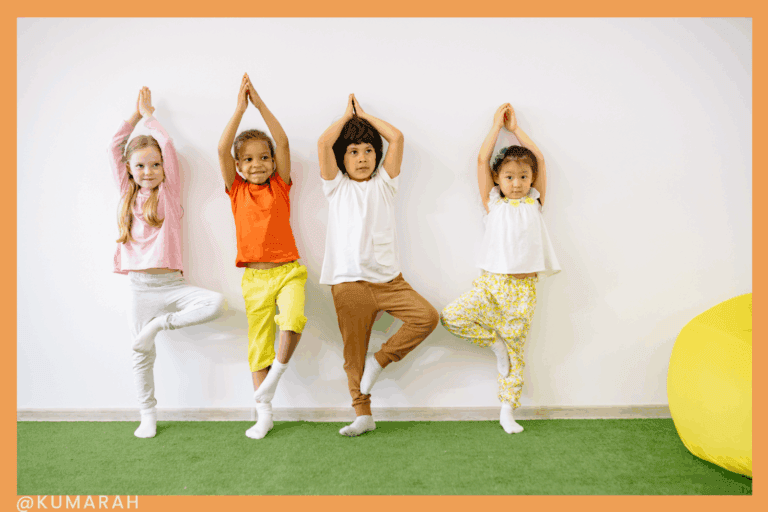
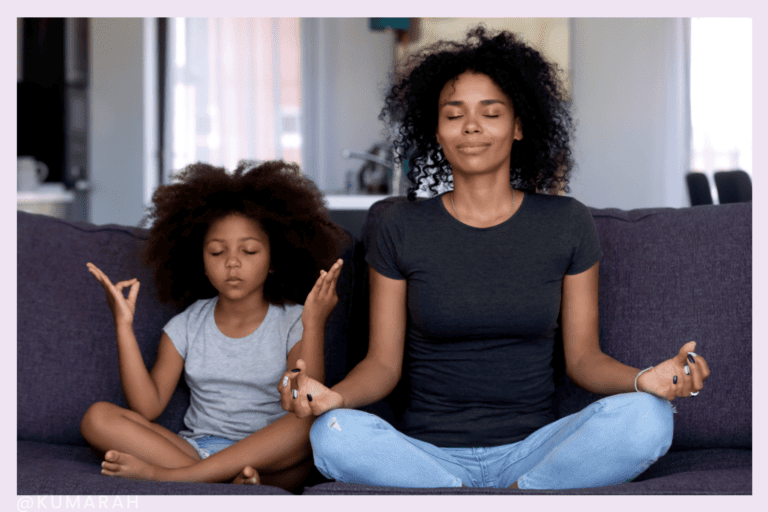
Summer is the perfect time to try kids yoga at home — the schedule is looser, kids have energy to burn, and you don’t need a studio, a mat, or any gear to make it work. All you need is a few square feet of floor space and a willingness to be a little silly.
This post gives you three complete, plug-and-play yoga routines you can do with your kids today — a morning wake-up flow, a midday cool-down, and a bedtime wind-down. Each one takes about 10 minutes, uses simple poses with kid-friendly names, and works for kids ages 4 through 12.
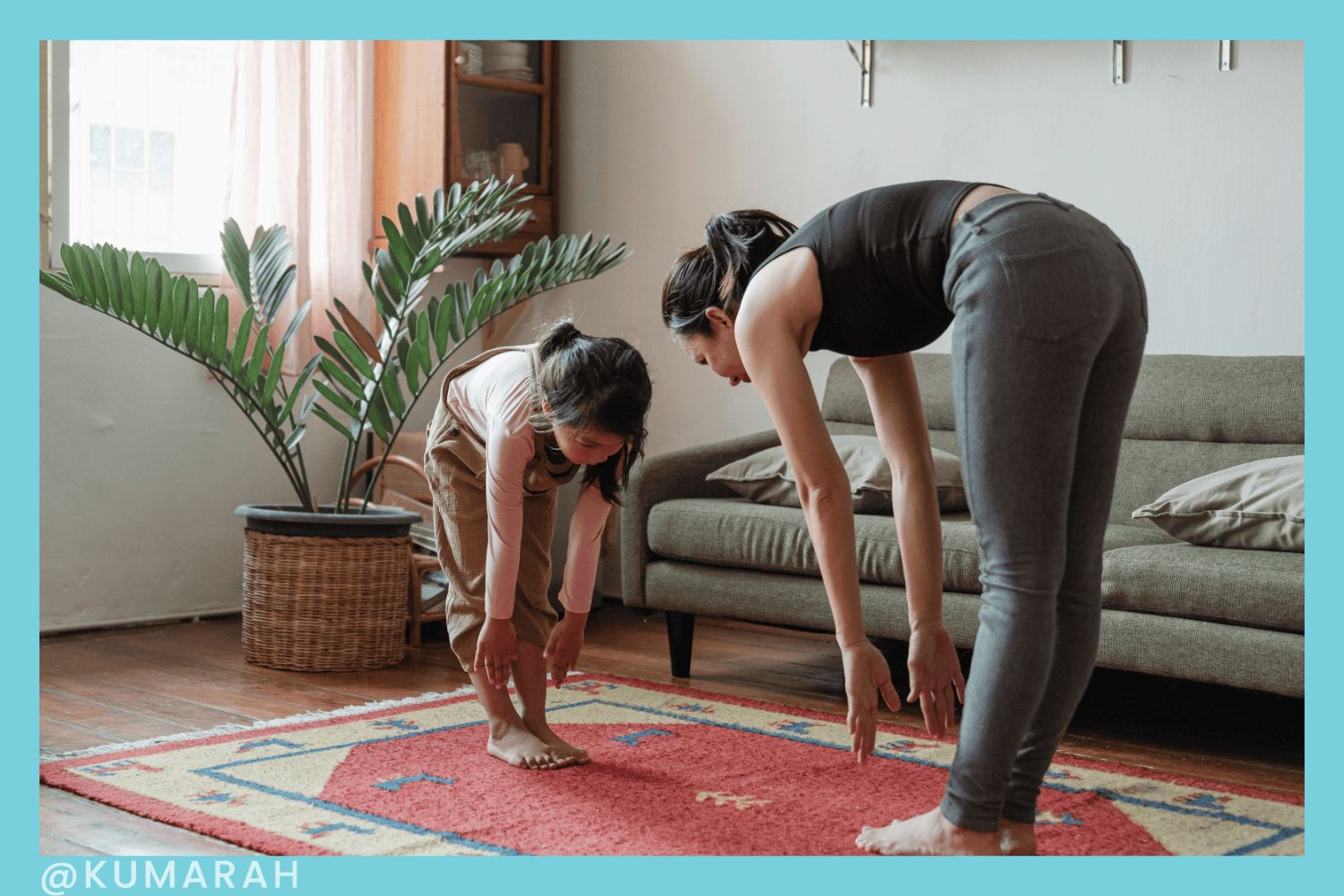
Why Summer Is the Best Time for Kids Yoga at Home
When school is out, kids lose the structure that keeps their bodies and minds regulated. Yoga fills that gap in a way that feels like play, not work.
Here’s what 10 minutes of yoga at home can do for kids during summer:
- Burn off energy without screens or a trip anywhere
- Build body awareness — balance, coordination, strength — that carries into fall sports and school
- Regulate big emotions that tend to spike when routines disappear
- Give parents something to do with their kids that doesn’t require you to entertain them
And here’s the secret: when you do it together, it’s bonding. When you do it consistently, it becomes one of those childhood rituals kids remember.
Before You Start: A Few Reminders
You do not need yoga mats. Carpet, grass, a hardwood floor — all fine. Bare feet on any surface works.
You do not need to know yoga. These routines are written for parents, not teachers. The cues are in plain language.
Kids yoga is not adult yoga. Expect wiggles, giggles, tumbling, and questions about snacks. That’s the point. Move with them, don’t perform for them.
Let them lead sometimes. If your kid wants to do Tree Pose on one leg for three minutes because they’re really feeling it, let them. The routine is a guide, not a rulebook.
Not sure how to get your kids to actually buy in? Our guide on how to start practicing yoga with kids at home covers setup, expectations, and how to handle the “I don’t want to” moment — worth a read before you dive in.
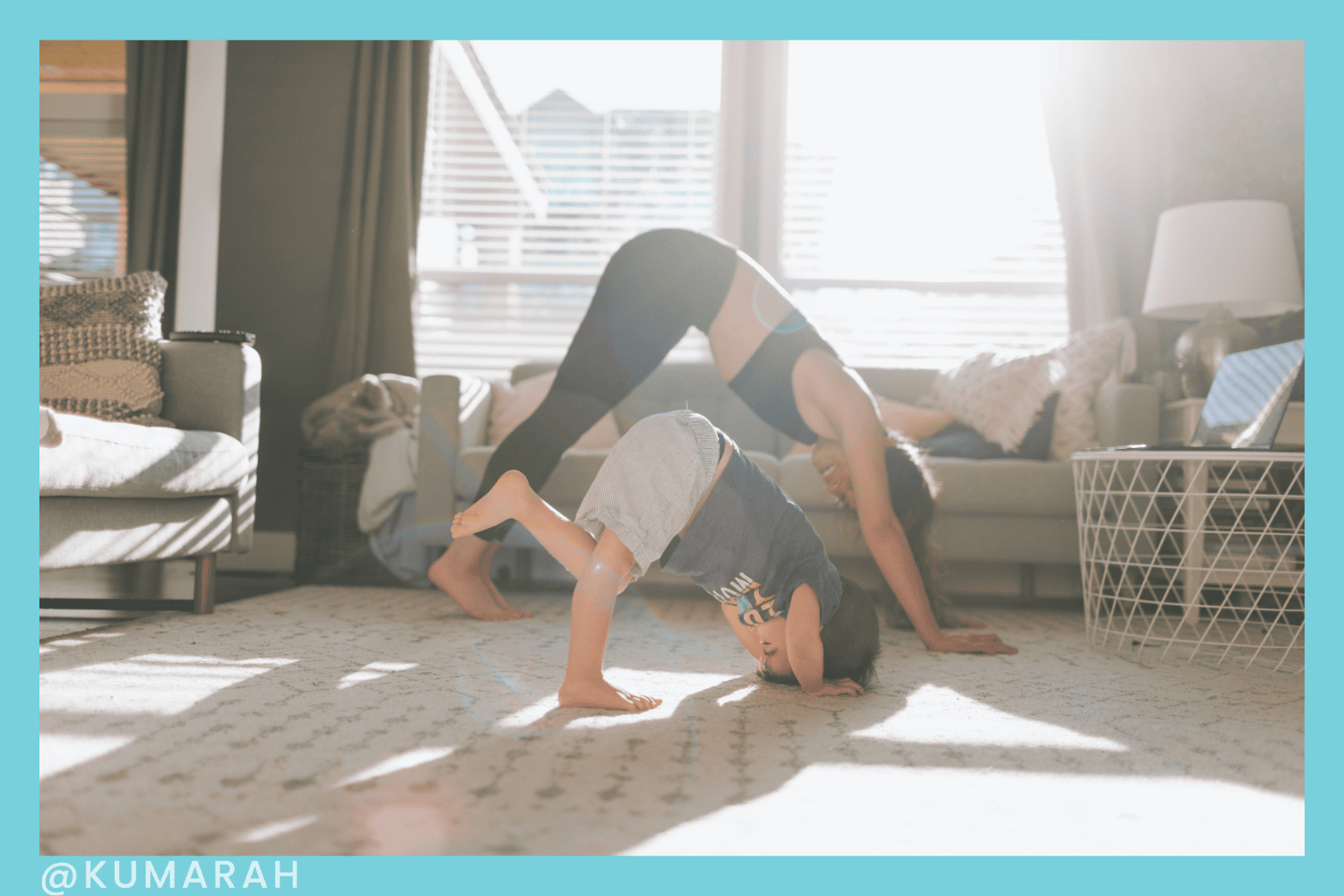
Routine 1: Morning Wake-Up Flow (10 Minutes)
Best for: Getting bodies moving in the morning before the day starts. Great for kids who wake up sluggish or kids who wake up like a tornado and need to channel that energy.
Set the vibe: Open a window. Play something upbeat but not chaotic — think light acoustic or nature sounds. Tell your kids: “We’re going to wake up our bodies like animals waking up from sleep.”
1. Sleeping Snake → Rising Cobra (2 minutes)
Start lying flat on your tummies, arms at your sides.
Say: “We’re snakes, totally still, coiled up on the warm ground.” Take three deep breaths together. Feel your belly press into the floor.
Then: “The sun is out. Time to rise.” Bring your hands under your shoulders and slowly press your chest up. Elbows can stay bent — this is Baby Cobra. Look up. Hiss softly. Hold for a breath, then melt back down. Repeat 3 times, rising a little higher each time.
What it does: Warms up the spine, opens the chest, and signals the body that it’s time to be awake.
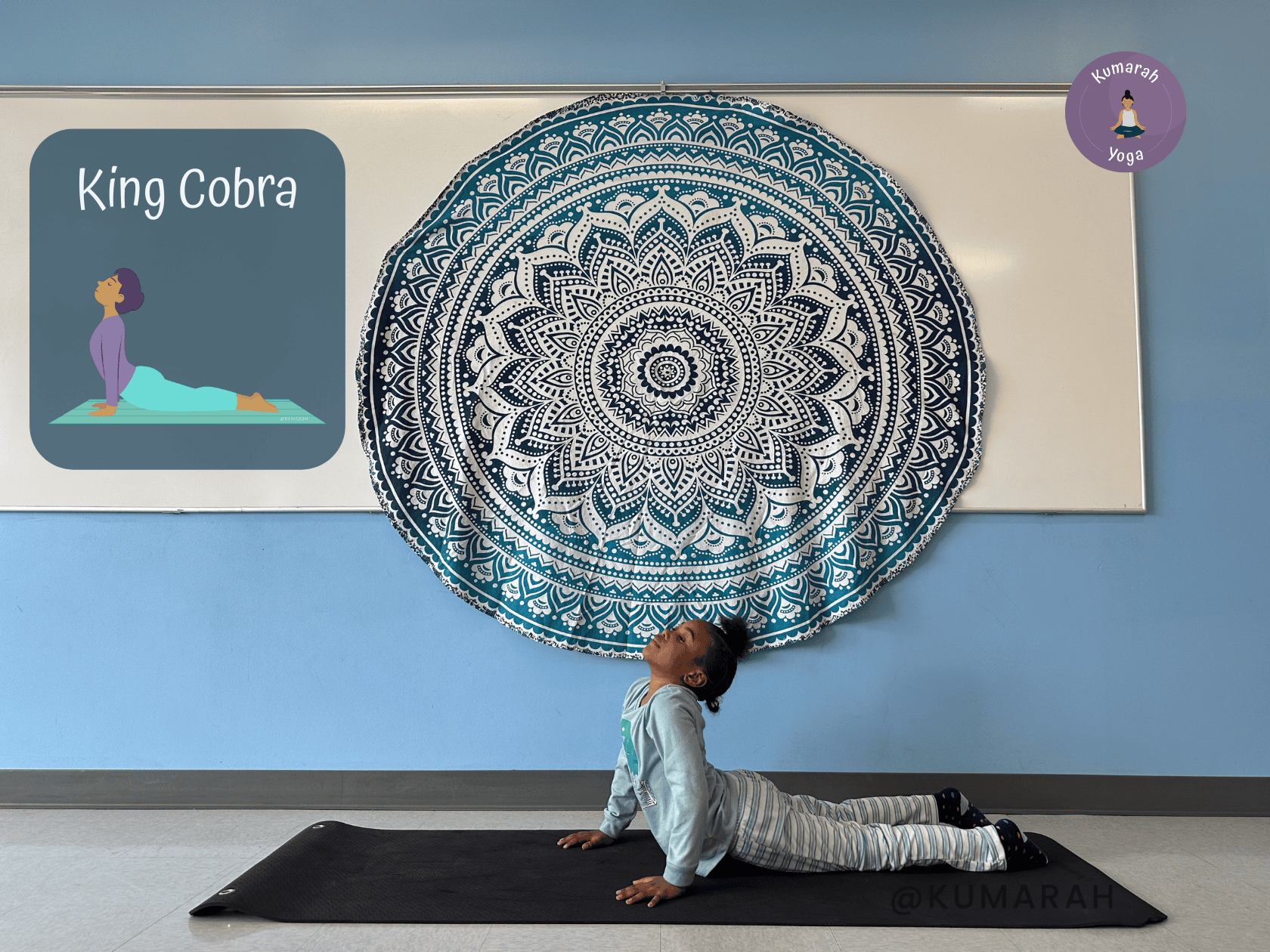
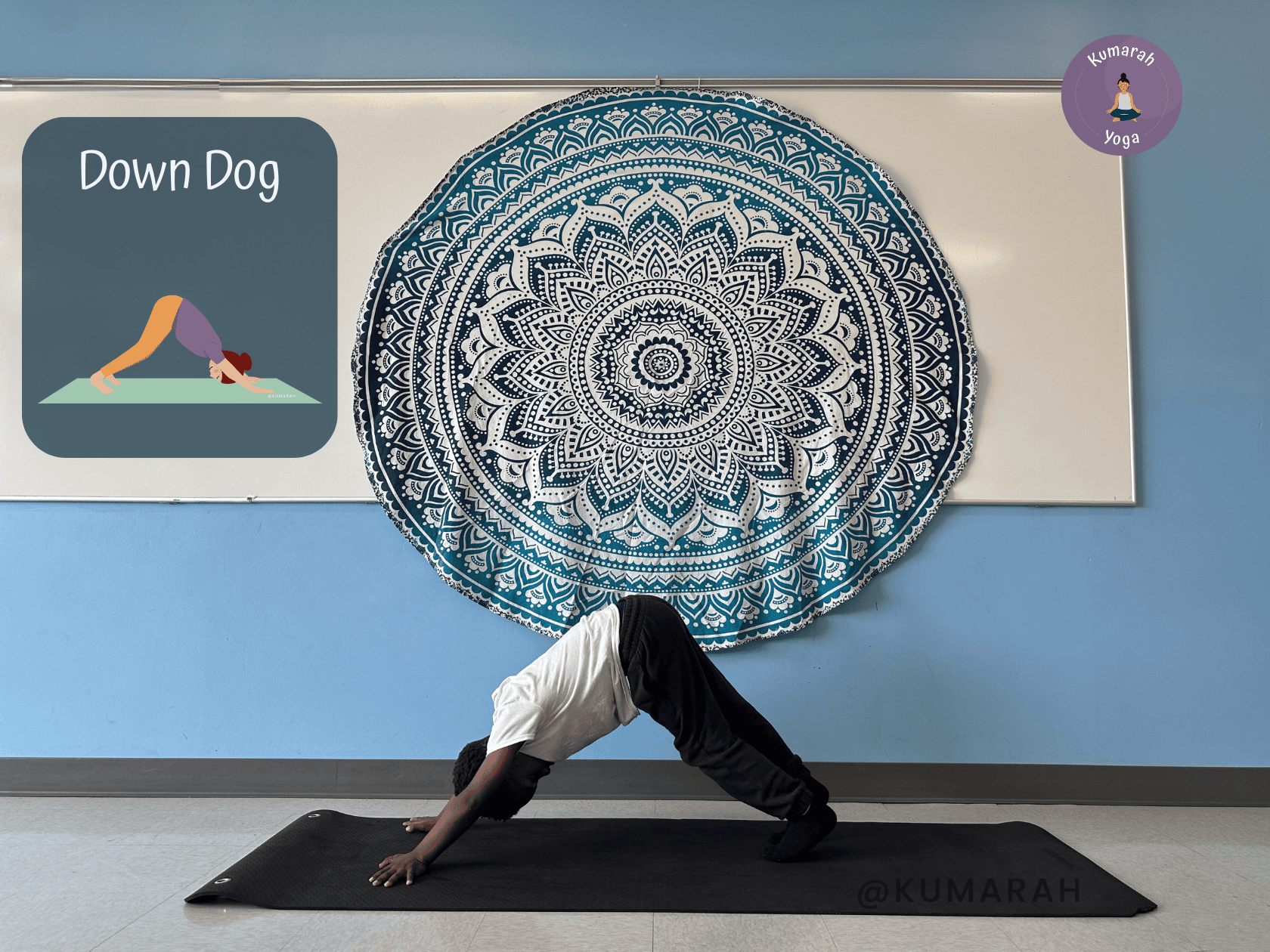
2. Puppy Stretch → Downward Dog (2 minutes)
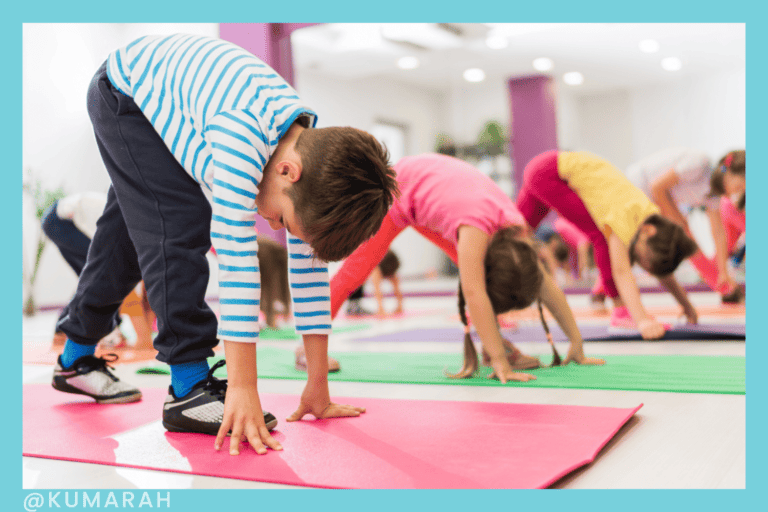
From hands and knees, walk your hands forward and let your chest melt toward the floor. Forehead can rest on the ground. This is Puppy Pose — and it feels amazing.
Say: “Take three puppy breaths here. In through the nose, out through the mouth.”
Then: “Now we grow up into big dogs.” Tuck your toes, press your hands down, and lift your hips up and back into Downward Dog. Pedal your feet (bend one knee, then the other). Bark optional but encouraged.
What it does: Stretches the whole back body — hamstrings, spine, shoulders. Kids love the pedaling feet and wagging doggy tail!
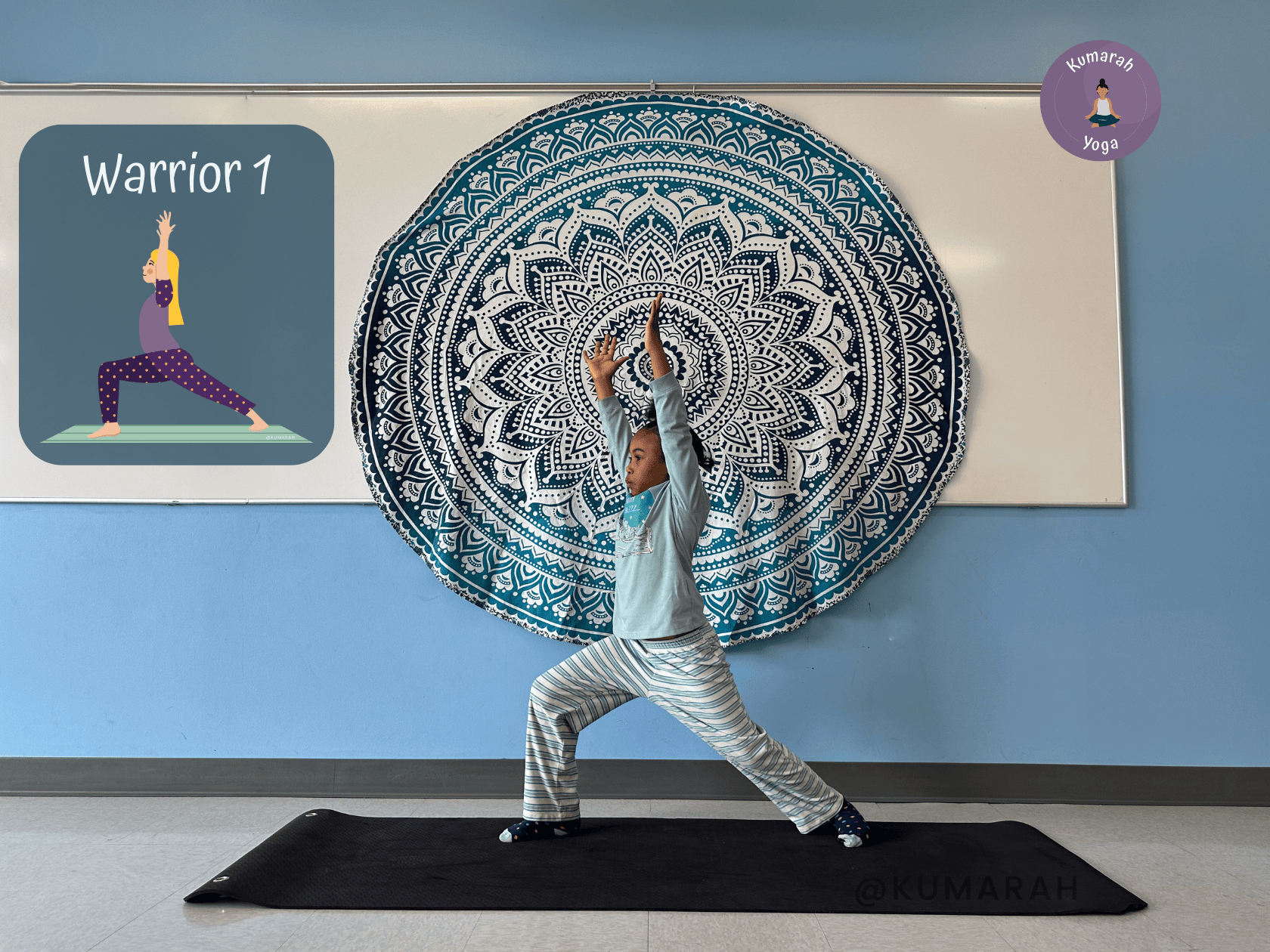
3. Three Warrior Poses (3 minutes)
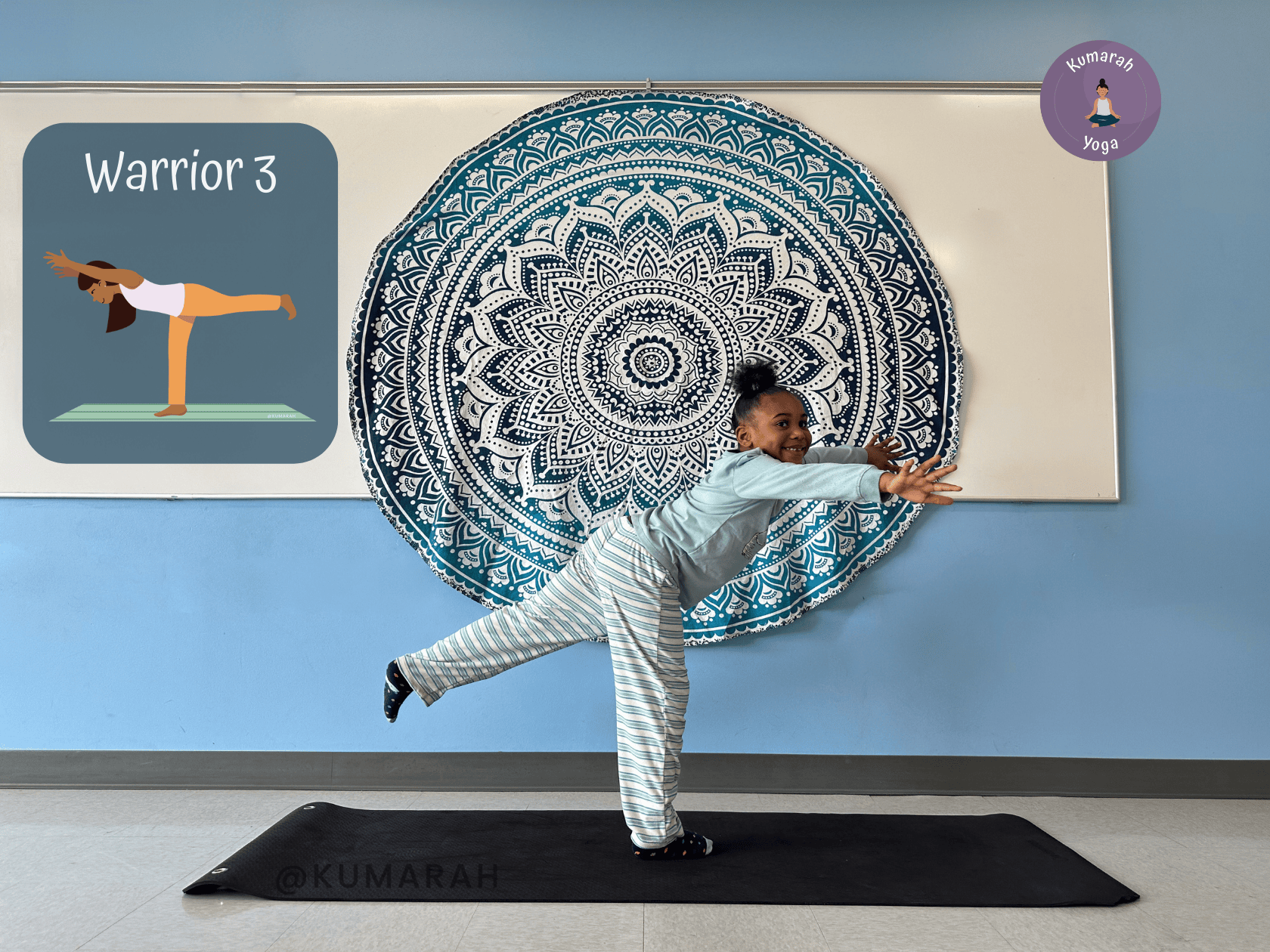
Step one foot forward into a lunge — you’re in Warrior 1. Arms reach up. Strong legs. “We are powerful morning warriors!”
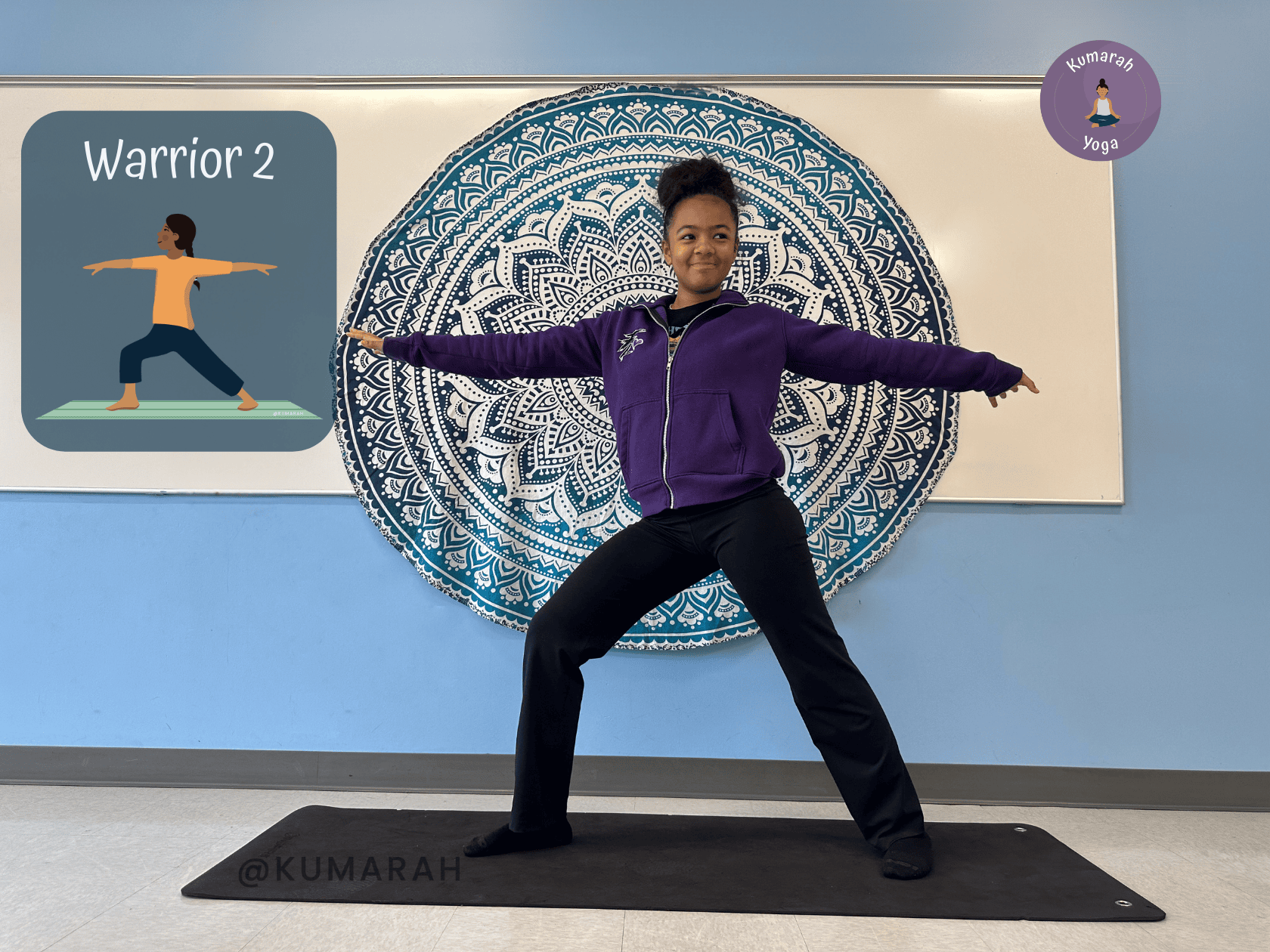
Open your hips and arms wide — Warrior 2. Gaze over your front hand. “Look out at your kingdom.”
Flip your front palm up and arc your back arm — Reverse Warrior (or as kids like to call it, “Star Warrior”). “Reach for the sky!”
Flow through all three a few times on each side, then switch legs. Move slowly at first, then pick up the pace.
What it does: Builds leg strength, opens hips, and is genuinely energizing.
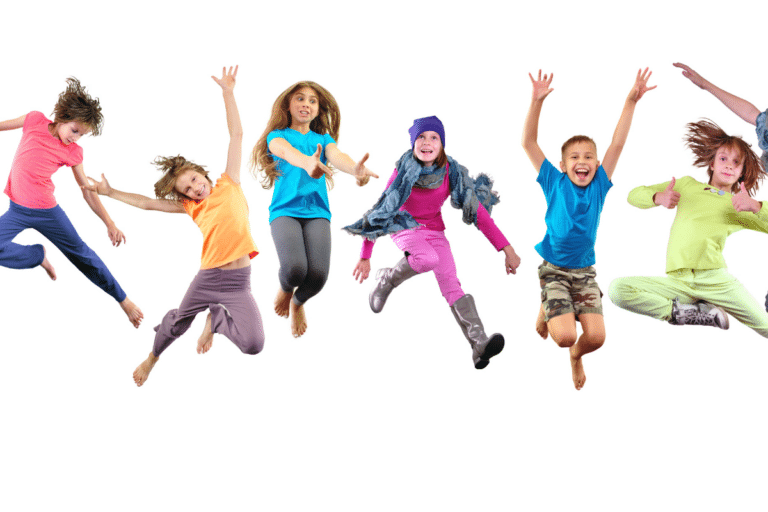
4. Jumping Frogs (1 minute)
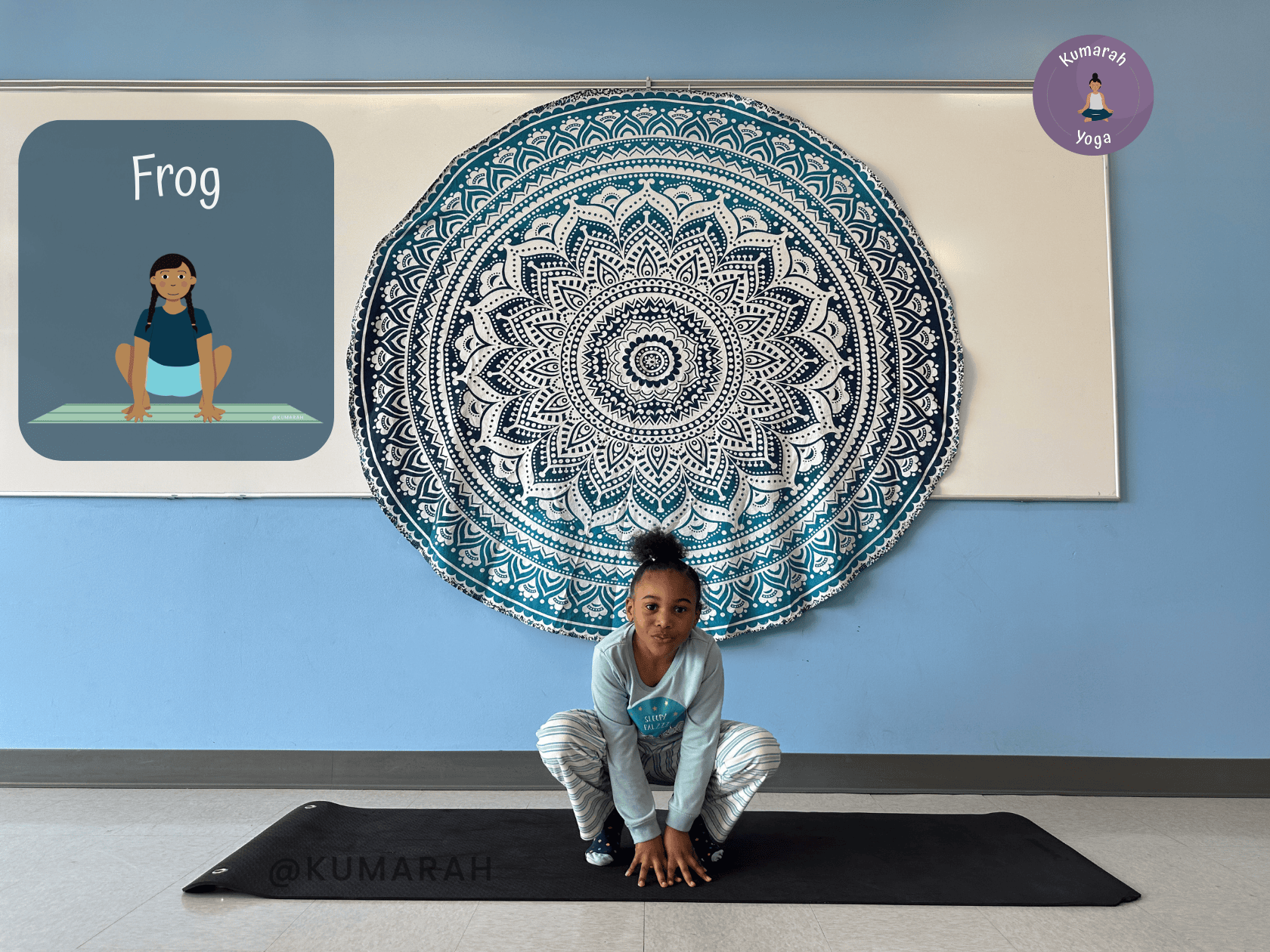
Squat down with feet wider than your hips, hands on the floor between your feet. You’re a frog. Breathe in, then jump! Land softly, crouch back down. Repeat for a full minute.
“How high can your frog jump? Can you land quietly like a real frog?”
What it does: Cardio burst that kids love. Gets the heart rate up and shakes out any remaining sleepiness.
5. Tall Mountain (2 minutes)
Stand together, feet hip-width apart, arms at your sides. Grow as tall as you possibly can — press your feet into the earth, lengthen your spine, reach the crown of your head up. Close your eyes if that feels okay.
Take five slow breaths together. With each exhale, see if you can get even taller.
“You are a mountain. Strong. Steady. Ready for anything today.”
What it does: Grounding close to the routine. Brings the heart rate back down and sets an intentional tone for the day.

Routine 2: Midday Cool-Down (10 Minutes)
Best for: That post-lunch hour when everyone is restless, too hot, or bickering. This routine resets the nervous system and gives kids (and you) a sensory break from summer chaos.
Set the vibe: Find the shadiest, coolest spot in your home. Dim the blinds if it’s hot. Play something slow and instrumental — this is a quiet time routine.
1. Cloud Breathing (2 minutes)
Everyone lies on their backs. Place one hand on your belly.
“We’re going to breathe like clouds — soft, slow, and full.”
Inhale for 4 counts, letting your belly rise. Hold for 2 counts. Exhale for 6 counts, feeling your belly fall. Repeat 5 times together. Keep your eyes closed if you want.
This is box breathing in disguise — one of the most effective regulation tools there is. You don’t have to call it that.
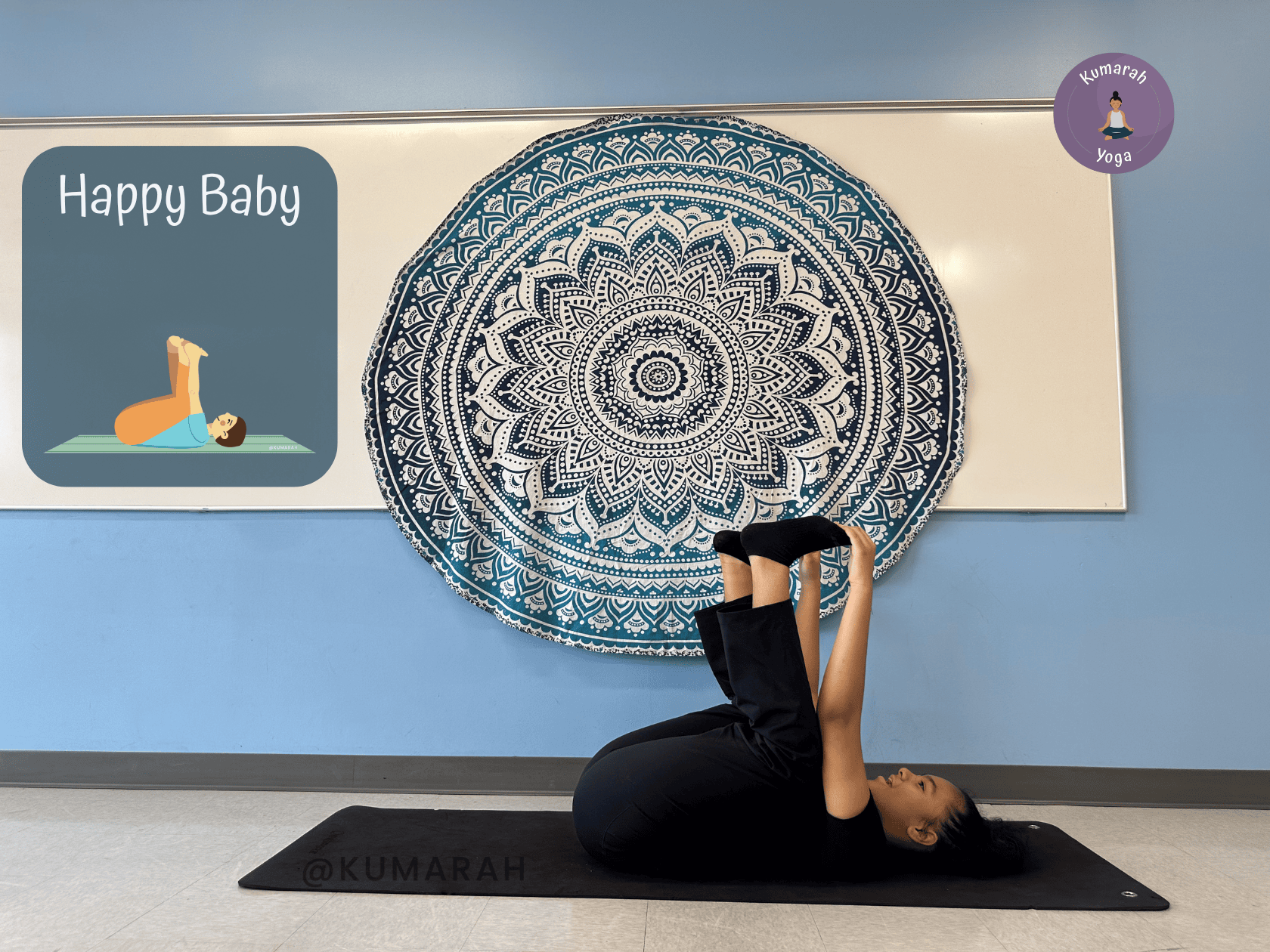
2. Happy Baby (2 minutes)
From lying on your back, bend your knees and grab the outside edges of your feet (or your shins — whatever your body allows). Rock gently side to side.
“You are a happy baby. Babies don’t worry about anything. Just rock.”
This one always makes kids laugh, which is the point. Laughter is regulation too.
What it does: Opens the hips and lower back. Genuinely calming for the nervous system.
3. Seesaw Stretch (2 minutes)
Sit facing each other, legs out straight, feet touching your partner’s feet. Hold hands.
Take turns gently pulling each other forward into a stretch — one person leans back while the other folds forward over their legs. Then switch. Go slow. Breathe into it.
“We’re a seesaw. Slow and easy.”
What it does: Deep hamstring and back stretch. The partner element builds connection and requires cooperation — great for when kids are feeling disconnected or cranky.

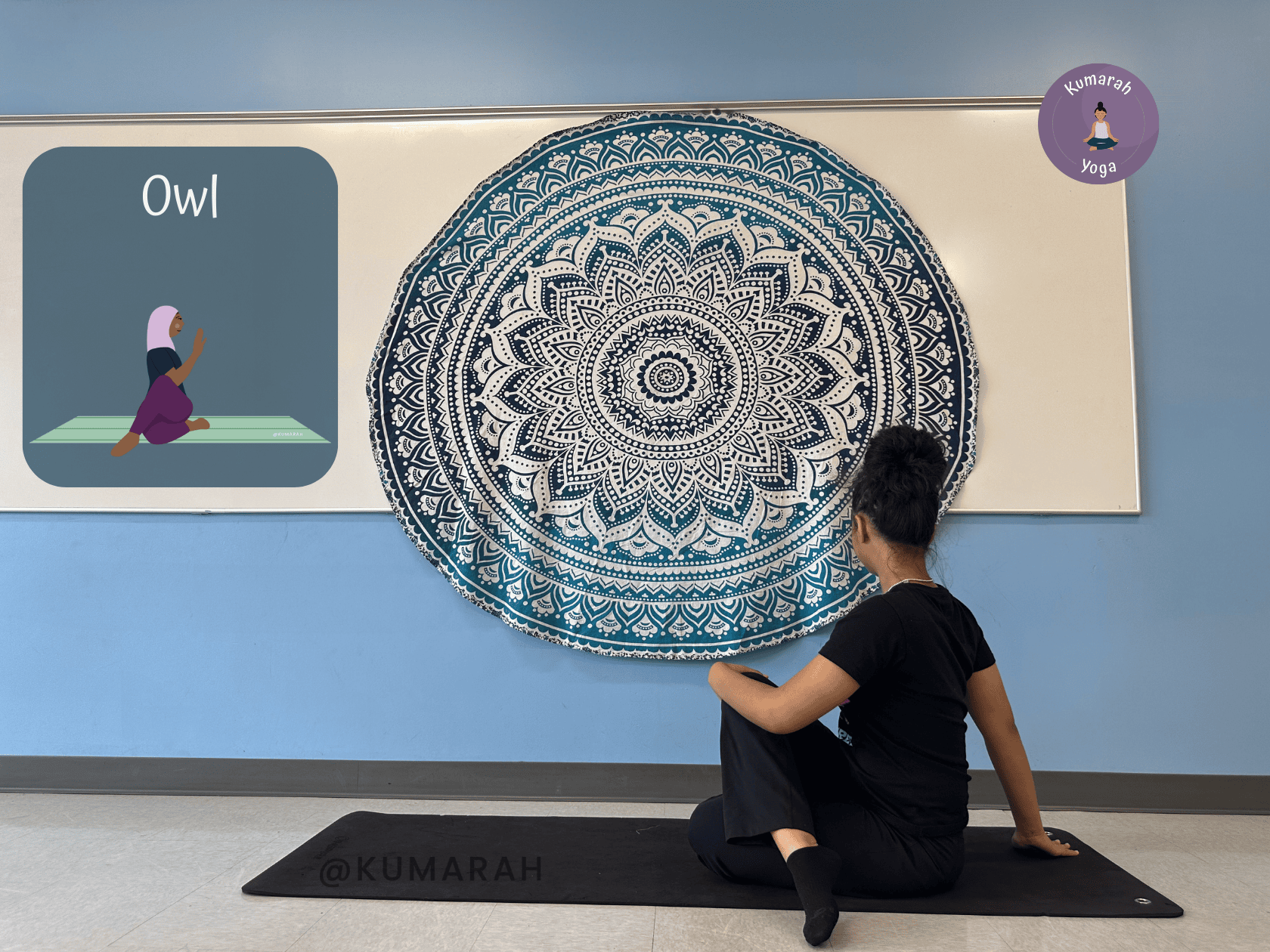
4. Twisted Pretzel (2 minutes)
Sit cross-legged. Breathe in tall. Exhale and twist to the right — your right hand goes behind you, left hand goes to your right knee. Look over your right shoulder. Hold for 3 breaths, then switch.
“We’re pretzels! Can you get twisty-er?” (Yes, “twisty-er” is the official technical term.)
Pretending to be an Owl works great too- Make those Hoot Hoot sounds!
What it does: Twists are incredibly calming. They massage the organs and reset the spine. Kids often love these because the stretch feedback is immediate.
5. Starfish Rest (2 minutes)
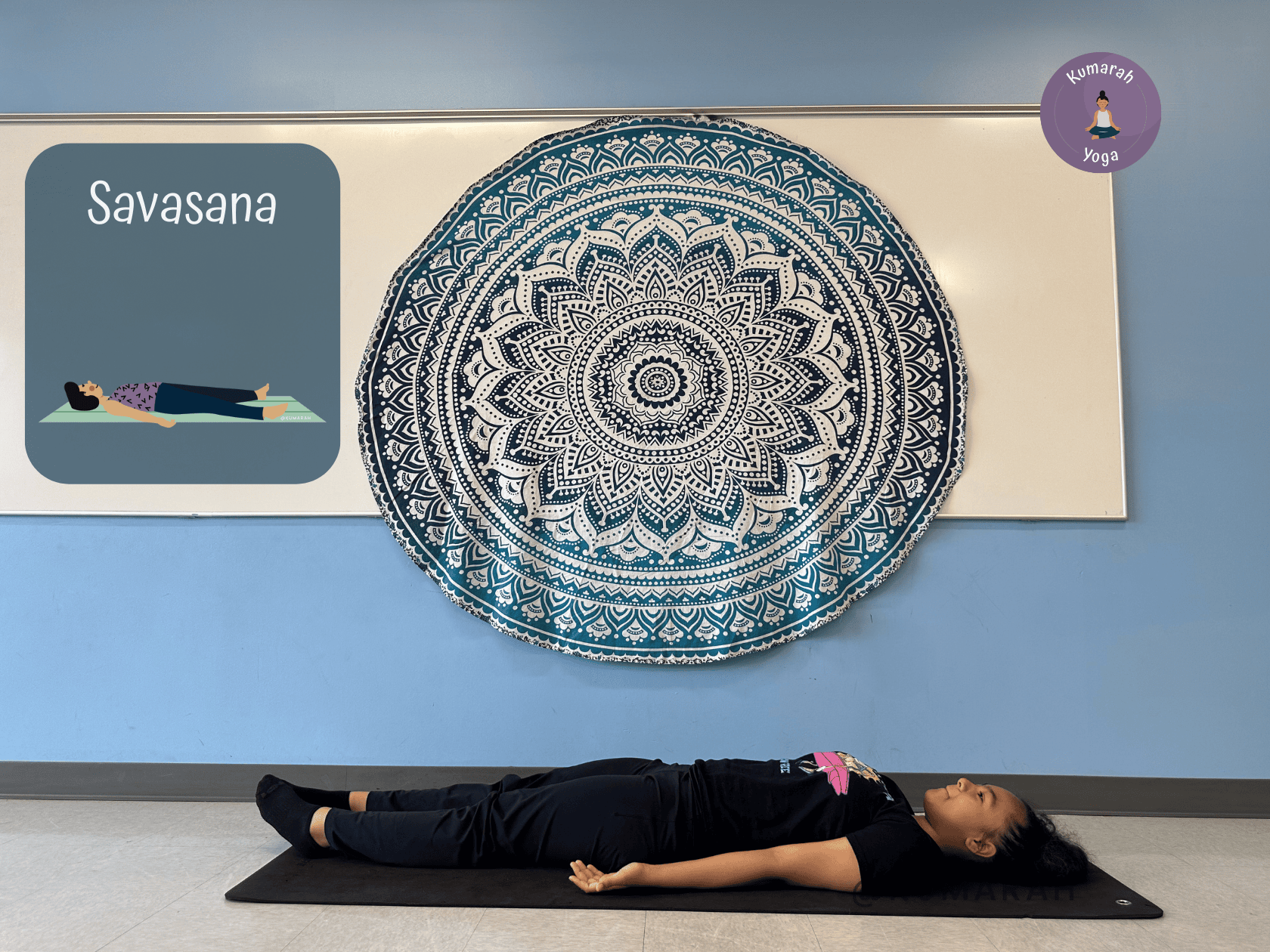
Everyone lies on their backs, arms and legs spread wide like a starfish. (Facedown is also acceptable!) Close your eyes. Do nothing.
Put on 2 minutes of nature sounds or soft music. Don’t talk. Just breathe.
If your child won’t stay still, that’s okay — let them wiggle. The goal is a brief intentional rest, not perfection.
“Starfish rest at the bottom of the ocean. The water is calm. So are we.”
What it does: This is a kid-friendly version of Savasana, the final resting pose in yoga. Even 2 minutes of stillness has measurable calming effects.
Routine 3: Bedtime Wind-Down (10 Minutes)
Best for: The 30-60 minutes before bed, when kids need to shift out of daytime energy and into sleep mode. This one is slower, quieter, and more restorative — but don’t skip the transition. Many kids can’t go straight from a busy day into calming poses. A few minutes of heavy work or coordinated movement first helps their nervous system actually land. Try the two moves below before you dim the lights.
Set the vibe: Dim the lights. Maybe light a candle or turn on a lamp instead of overhead lighting. Whisper voices only — model what you want from them. Lavender in a diffuser if you have it.
0. Transition Moves: Get the Wiggles Out First
Woodchopper Breaths (1 minute) Stand with feet wide, fingers interlaced. Breathe in and reach your arms overhead. Breathe out with a big “HA!” and swing your arms down between your legs like you’re chopping wood. Let it be loud. Repeat 6–8 times, slowing down with each one.
“We’re chopping all the busy out of our bodies. Each chop gets a little slower…”
Jumping Jacks (1 minute) 30 seconds of fast jumping jacks, then 30 seconds of slow-motion jumping jacks — big, exaggerated, like you’re moving through water. The slow-motion version is the transition: it takes coordination and focus, which naturally brings the nervous system down.
“Slow it down… slower… like you’re moving through honey.”
Once everyone is breathing a little harder and starting to smile, that’s the moment. Now dim the lights and move into Butterfly Breathing.
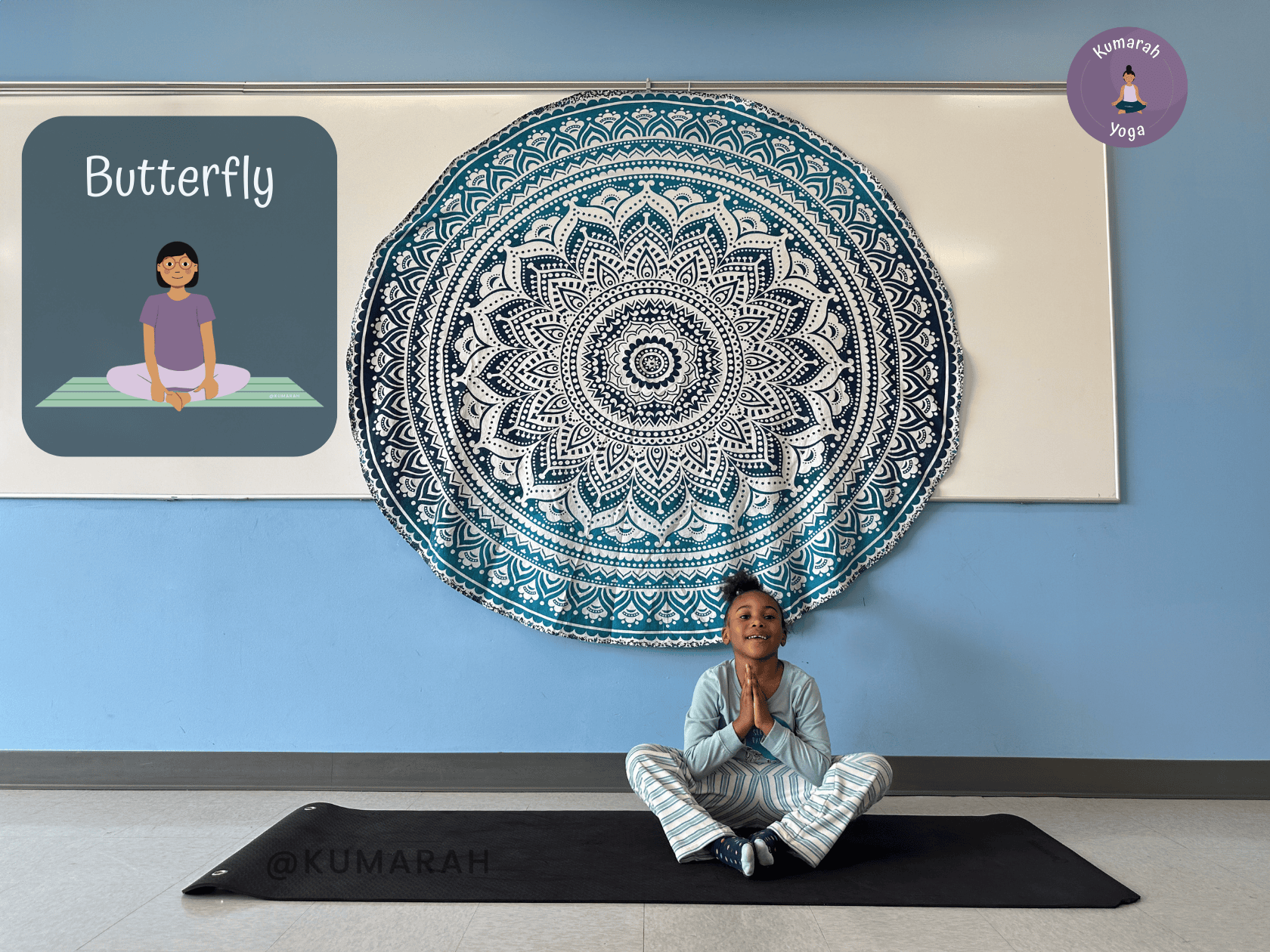
1. Butterfly Breathing (2 minutes)
Sit cross-legged facing each other. Bring the soles of your feet together so your legs look like butterfly wings.
Hold hands. Breathe in together, and as you breathe in, gently flap your knees up like wings. Breathe out and let the knees float back down.
“We’re butterflies settling in for the night. One last flight before sleep.”
What it does: Hip opener that naturally encourages slow, synchronized breathing. The synchrony is calming for both of you.
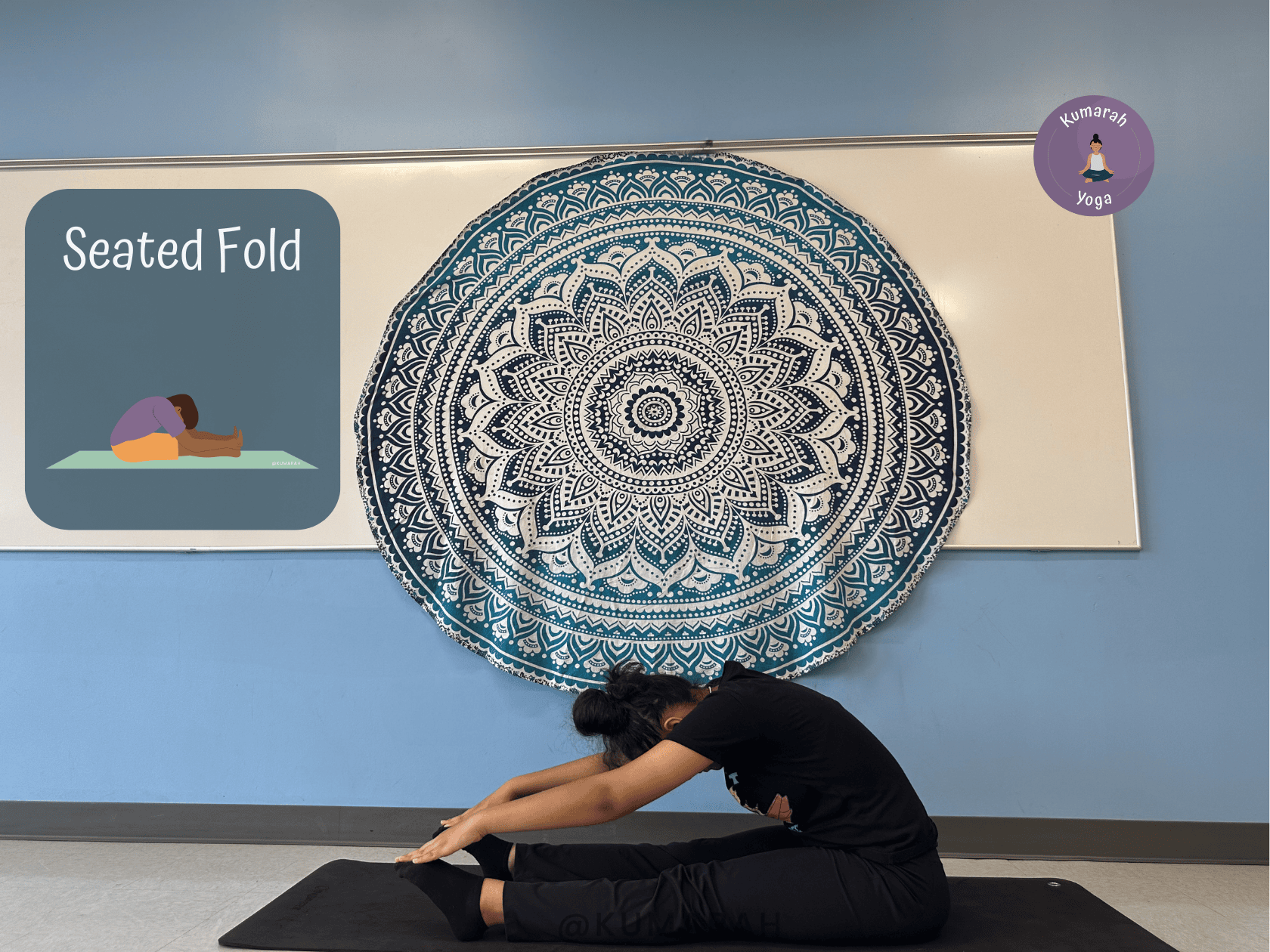
2. Caterpillar Fold (2 minutes)
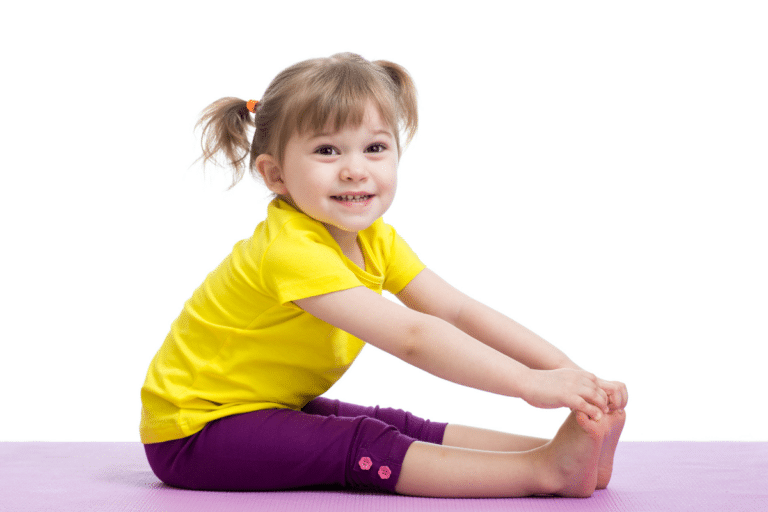
From seated with legs straight out in front, slowly fold forward — not forcing it, just letting gravity do the work. Arms reach toward feet or shins, whatever is comfortable. Hold still.
“A caterpillar folds itself into a cocoon to rest and transform. You’re safe inside.”
Hold for 5-8 slow breaths. Don’t rush out of it.
What it does: Forward folds are parasympathetic — they literally activate the body’s rest-and-digest response.
3. Melting Candle (2 minutes)
Stand tall, arms up overhead. Take a big breath in. As you exhale, slowly melt — first your hands, then your wrists, then your arms fold down, then your head drops, then your whole spine rounds forward like a candle melting.
Hang there for a breath, totally heavy. Then roll back up slowly, one vertebra at a time.
Repeat 3 times.
“We’re candles at the end of a long day. We’ve done our work. Now we melt.”
What it does: This rolling down and up movement stimulates the vagus nerve and signals the body that it’s time to slow down.
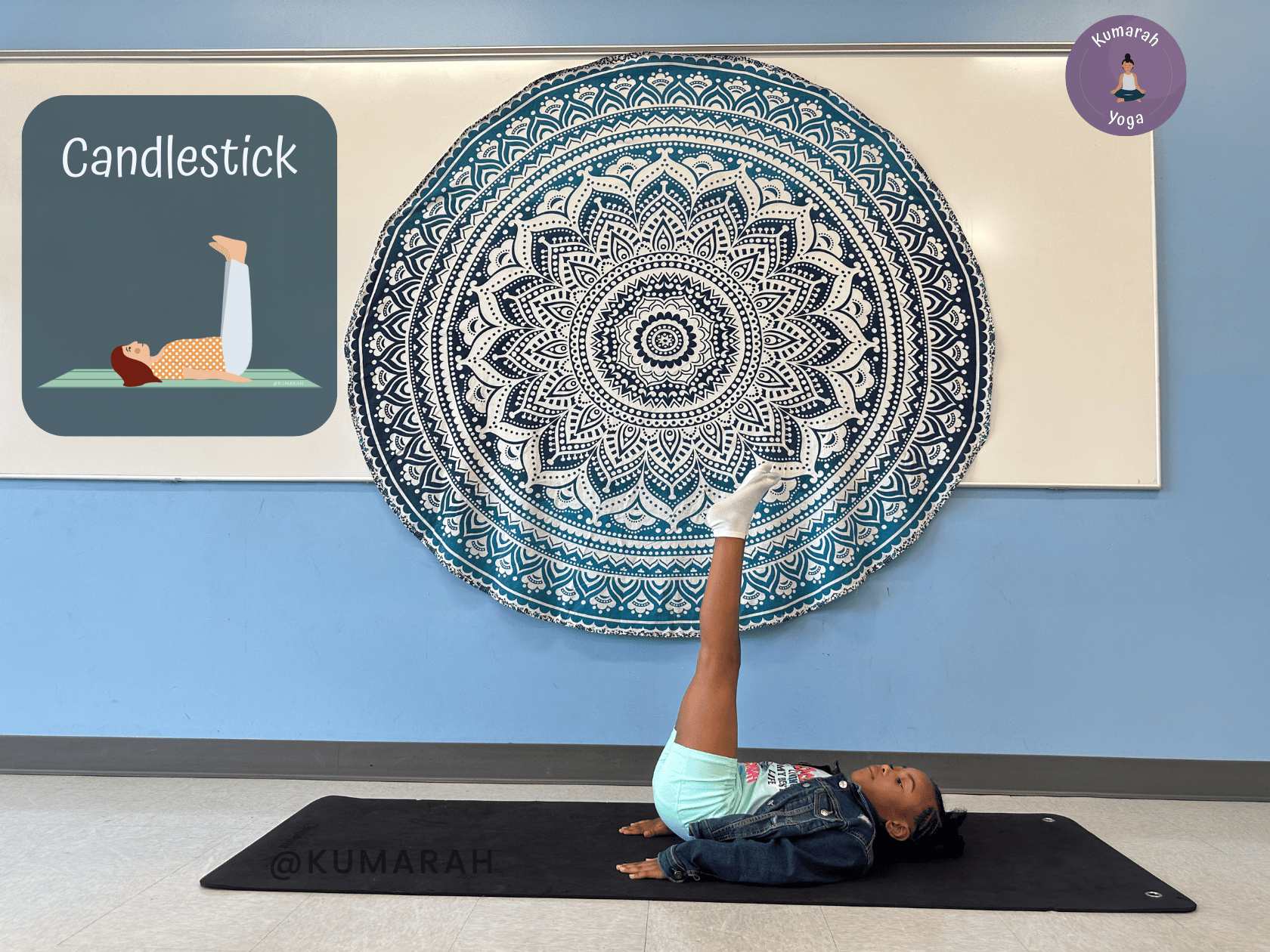
4. Legs Up the Wall (2 minutes)
Move to a wall. Lie on your back and swing your legs up so they rest against the wall. Arms rest at your sides, palms up. Close your eyes.
“Let your legs drain. Let your whole body feel heavy and still.”
This one is optional if your space doesn’t allow it easily — you can also just have kids lie with their legs over a couch cushion or pillow.
What it does: Legs-up-the-wall is one of the most restorative yoga poses there is. It helps circulate blood back toward the heart and is deeply calming.
5. Gratitude Breath (2 minutes)
Stay lying down. Take three final breaths together.
Breath one: “Think of one thing that felt good today.” Breath two: “Think of one person you love.” Breath three: “Think of something you’re looking forward to.”
Let the exhale be a sigh. Stay quiet for a moment after.
“That’s it. Your body did good work today. Time for sleep.”
What it does: Ends the practice on a positive emotional note. Gratitude before bed is well-supported as a way to improve sleep quality — and it models a habit that will serve kids for their whole lives.
Mixing and Matching
You don’t have to do full routines every time. Here are some ways to use pieces of these throughout your summer:
- Just two minutes before meals: Do Cloud Breathing or Butterfly Breathing to calm everyone down before sitting together
- Car trip prep: Run through the Warrior sequence and some wood chopper breaths in the driveway before a long drive
- Post-screen reset: Caterpillar Fold + Twisted Pretzel helps kids transition out of screen time
- Rainy day energy burn: Jumping Frogs + Warrior flow on loop until someone collapses laughing
Want Something to Hold and Use?
If your kids are getting into it and you want something tangible to use at home, our ABC Kids Yoga Pose Cards are a great next step. Each card pairs a letter of the alphabet with an animal-themed yoga pose — Snake for S, Butterfly for B, Lion for L. Print them out, spread them on the floor, and let your kids pick what to do next. It turns into a game before you even try.


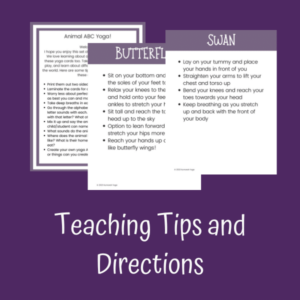
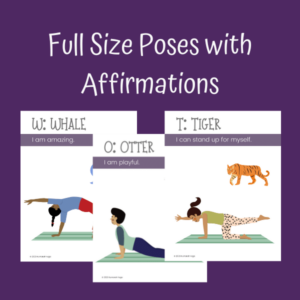
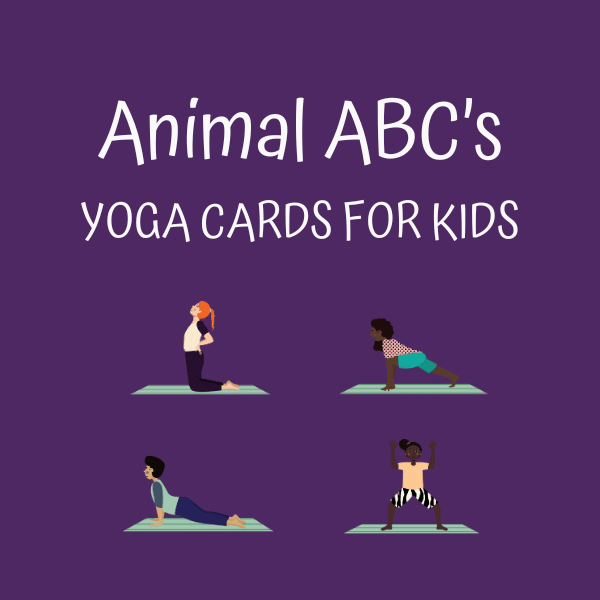
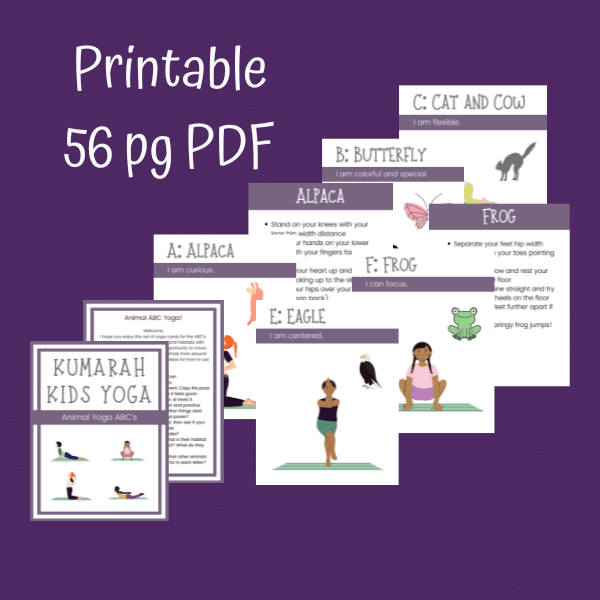


ABC Kids Yoga Pose Cards
Digital kids yoga cards with a different animal for every letter of the alphabet!
One Last Thing
Kids yoga at home doesn’t have to be perfect to be powerful. Some days you’ll do all three routines. Some days you’ll do one pose and call it good. Both are wins.
What matters is that you’re moving, breathing, and being present with your kids — and that they’re building a relationship with their own bodies that will carry them for years.
If you’re looking for more ways to bring yoga and mindfulness into your home life, explore the free resources library at KumarahYoga.com — including printable pose cards, breathing exercises, and kid-friendly mindfulness tools.