A Complete Lesson Guide with Poses, Mantras, Scents & Sounds
What Is Rainbow Chakra Yoga?
Kids and rainbows go together like sunshine and puddles. There’s something almost instinctively magical about a full arc of color lighting up the sky — and in yoga philosophy, that same magic lives right inside each of us.
In the ancient tradition of yoga, the body contains seven primary energy centers called chakras (from the Sanskrit word चक्र, meaning ‘wheel’ or ‘circle’).
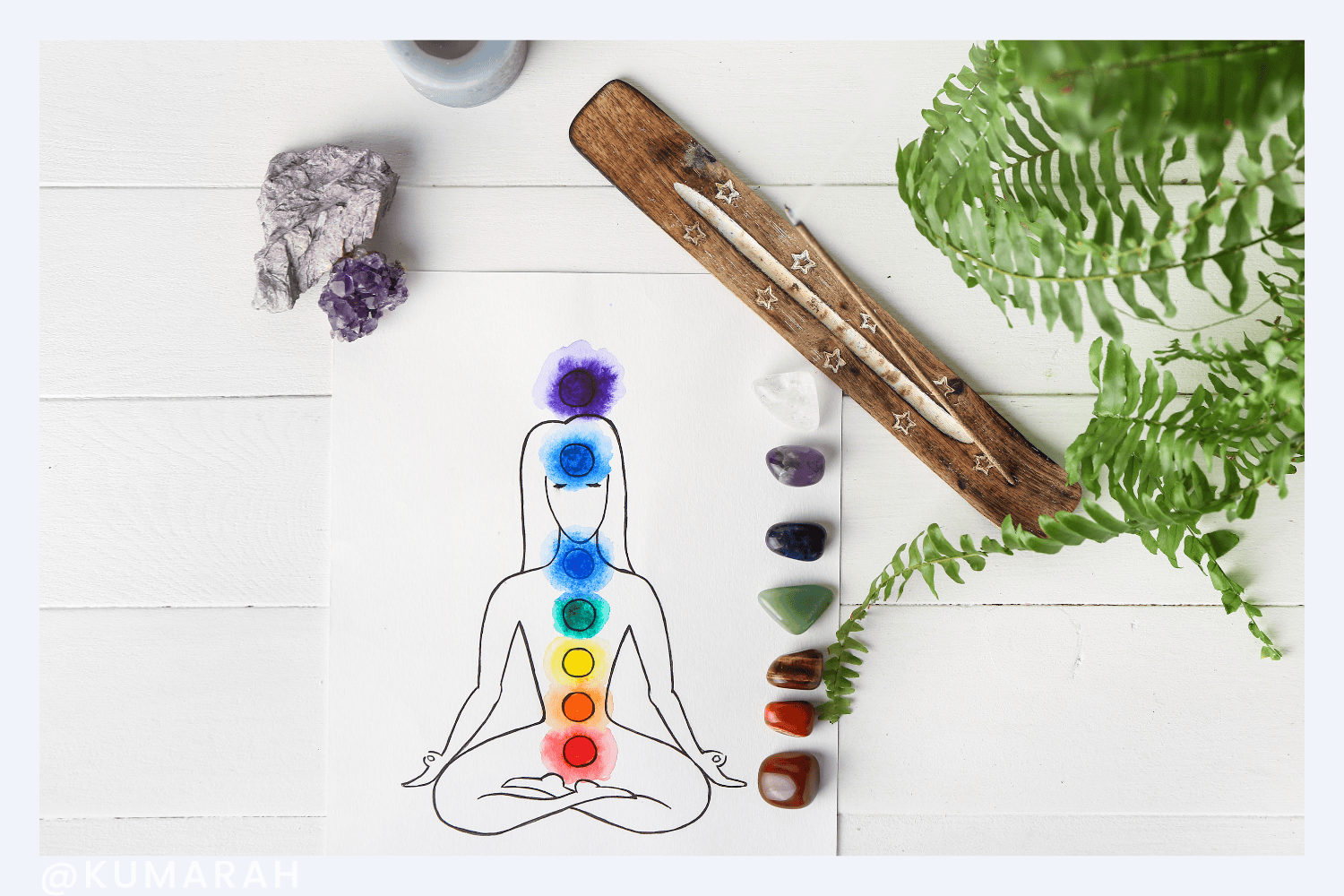
Each chakra spins along the spine like a wheel of light, corresponding to a specific color, emotion, element, and area of the body. When all seven are balanced and flowing freely, we feel healthy, grounded, creative, confident, and at peace.
For kids — and honestly, for all of us — the rainbow is the perfect map. Red at the root, orange in the belly, yellow at the navel, green at the heart, blue at the throat, purple at the brow, and violet or white light at the crown. Each color tells a story. Each story holds a feeling.
This guide is designed as a complete kids’ yoga lesson plan built around the seven chakras and the rainbow.
Whether you’re a yoga teacher, a classroom educator, a school counselor, or a parent looking for a meaningful movement practice to do at home, you’ll find everything you need here: poses, mantras, bija (seed) sounds, scents, moods, and school-friendly adaptations for every single chakra.
Let’s walk the rainbow together. 🌈
A Little Yoga Philosophy: Understanding the Chakras
The chakra system originates in the ancient texts of India, appearing in some of the oldest written records of yoga philosophy — including the Vedas (composed as early as 1500 BCE) and later elaborated in the Yoga Upanishads and Tantric traditions.
The word prana (प्राण), meaning ‘life force’ or ‘vital energy,’ flows through channels in the body called nadis. The chakras sit at the intersection points of these energy pathways, particularly along the central channel known as the sushumna nadi, which runs along the spine.
In yogic understanding, emotional experiences — joy, grief, fear, anger, love — are not just mental events. They have a somatic reality: they live in the body.
When we experience something difficult and don’t fully process it, the energy associated with that experience can become ‘stuck’ in the corresponding chakra. Yoga poses, breath work, sound, and intentional awareness help to move that stuck energy, restore flow, and return us to a state of balance.
For children, this philosophy translates beautifully into concrete body awareness and emotional literacy.
Rather than asking a child to ‘talk about their feelings’ in the abstract, we can ask: ‘Where in your body do you feel it when you’re nervous? Where do you feel happiness? What does safety feel like in your belly?’ The chakras give children a framework — a colorful, embodied map — for understanding their inner world.
Note for classroom teachers: You don’t need to use the word ‘chakra’ or reference yoga philosophy at all to share this content meaningfully. The same framework can be taught as a body-awareness and emotion-mapping practice using color, sensation, and movement. See the School-Friendly options in each section below.
Rainbow Yoga Lesson Plan for Kids
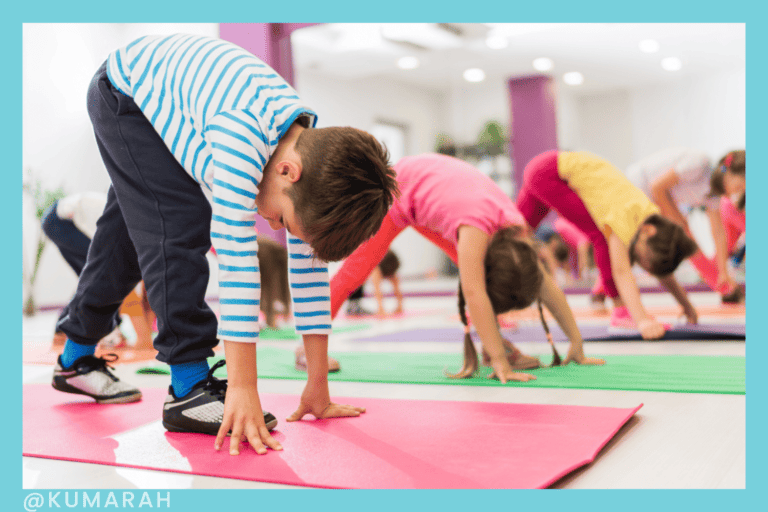
This guide can be taught as a single, complete lesson (approximately 45–60 minutes), or broken into smaller segments across multiple sessions — one or two chakras per day works beautifully as a week-long unit.
What you’ll need:
- A yoga mat or clear floor space for each child
- Optional: a rainbow visual, color cards, or the Kumarah Yoga chakra pose cards
- Optional: essential oil diffuser or scent cards for the sensory components
- Optional: a speaker for music/sounds
- Journals or paper for reflection prompts
Opening: The Rainbow Breath
Begin every chakra yoga session with the Rainbow Breath. This simple breathwork exercise activates awareness of the full body and sets the intention for the practice.
How to Do the Rainbow Breath:
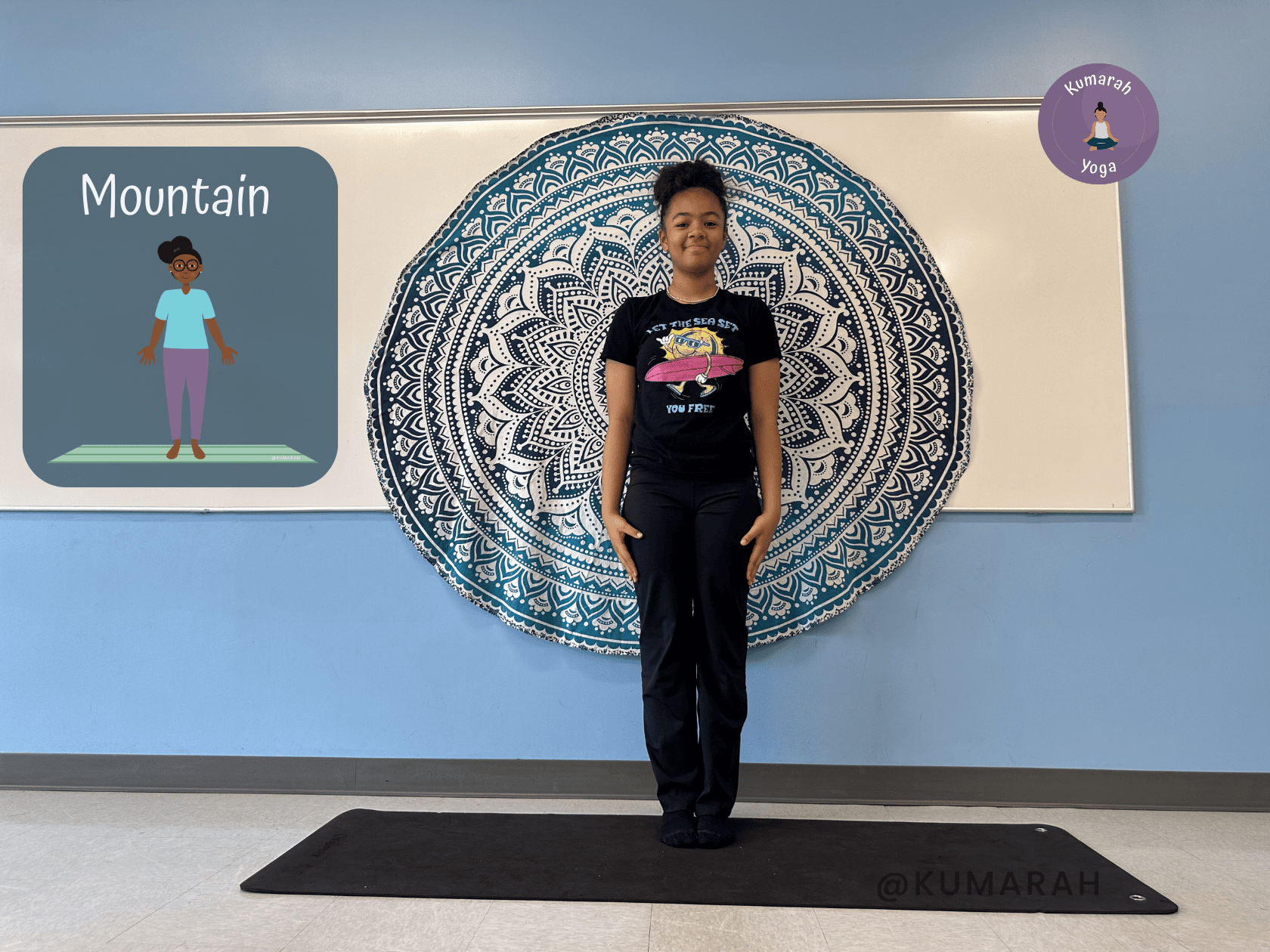
- Stand tall in Mountain Pose (Tadasana) — feet hip-width apart, arms at your sides.
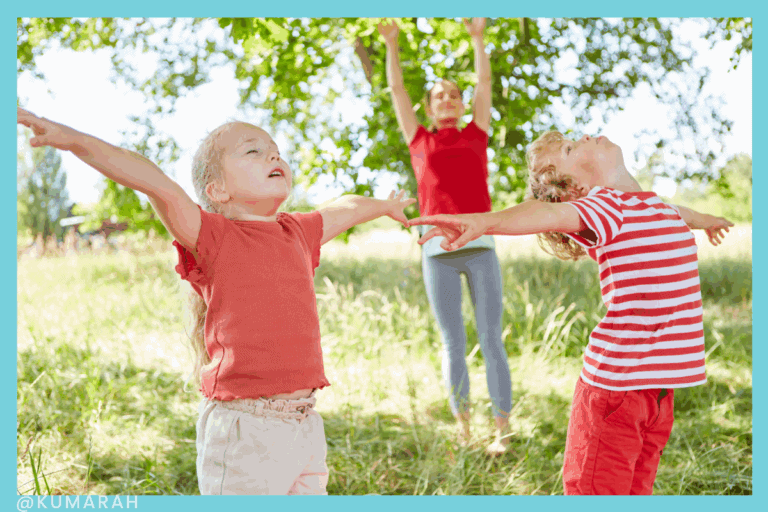
- Inhale slowly as you raise both arms out to the sides and up overhead, like drawing a big rainbow arc in the sky.
- Exhale slowly as you lower your arms back down to your sides, completing the arc.
- Repeat 3–7 times.
As you practice the Rainbow Breath together, invite children to visualize each color of the rainbow appearing as they arc their arms upward: red, orange, yellow, green, blue, purple, violet. This primes their imagination and body-awareness for the chakra exploration to come.
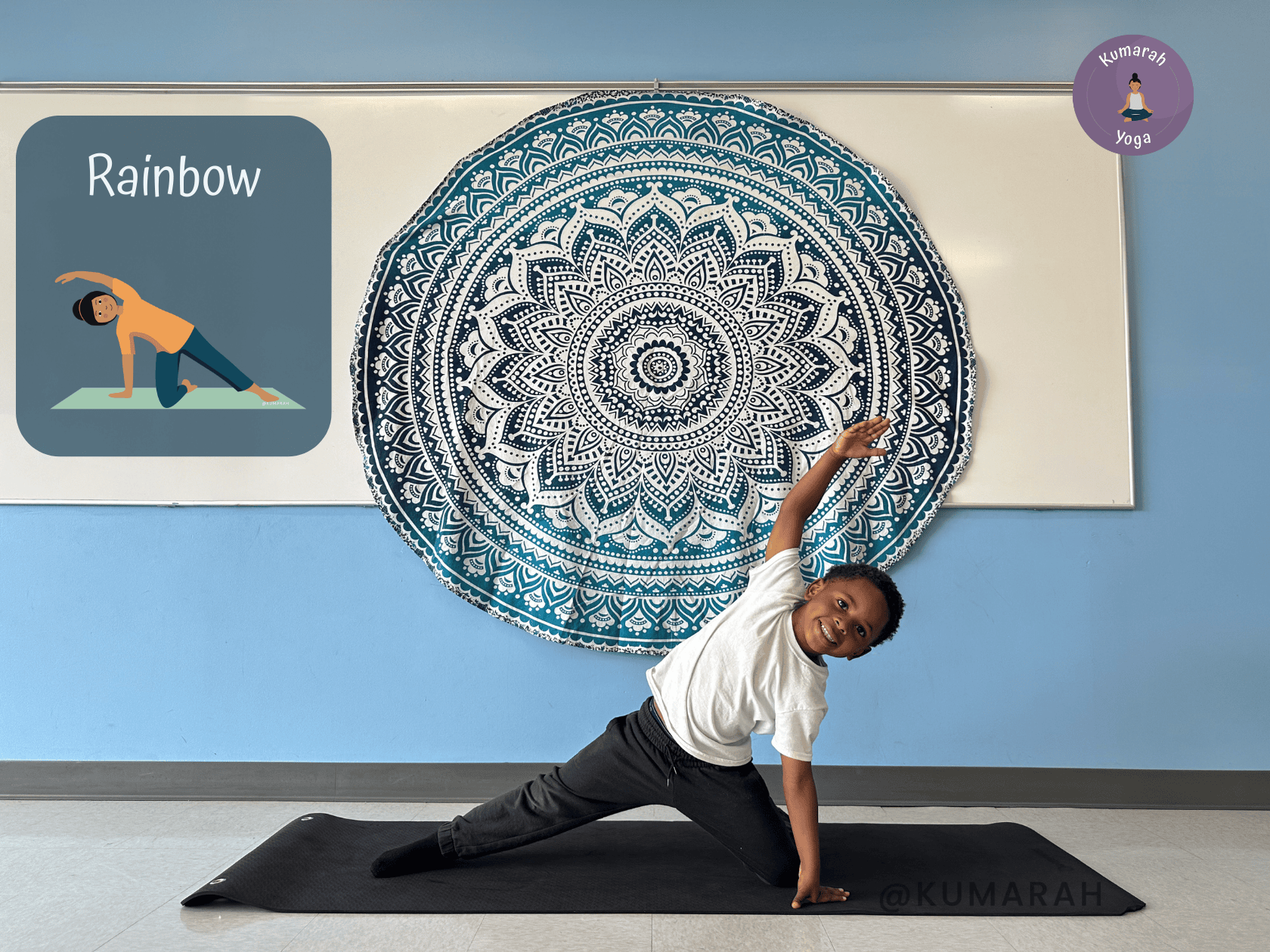
Another option is to try this is rainbow pose, or even double rainbow (a partner pose!). For each inhale/exhale you’ll reach one direction, then switch to the other side for the next color.
Discussion starters: ‘When are some times that you feel safe? What about happy? When do you feel proud, or creative? Have you ever felt scared — what did that feel like in your body? What about angry or jealous? Let’s explore those feelings together through color and movement.’
Warm-Up: Move Like A…
Before moving through the chakras, a short warm-up game helps kids drop into their bodies and get curious about how emotion and movement are connected.
Call out an animal and an emotion: ‘Move like a CONFIDENT dog!’ ‘Move like a SCARED fish!’ ‘Move like a STRONG gorilla!’ ‘Move like a SAD elephant!’ Let children interpret the prompts however feels right to them — there are no wrong answers.
After each one, pause and ask: ‘How did your body feel when you moved that way? What did your face do? What did your mind think?’ This simple game introduces the idea that feelings live in the body — which is exactly what the chakra system maps.
The Seven Chakras: A Rainbow of Poses, Mantras & Senses
For each chakra below, you’ll find everything you need to guide a meaningful experience: the Sanskrit name and its meaning, the associated color and body location, the emotional feeling and mood, a yoga pose with step-by-step instructions, an affirmation mantra (with the Sanskrit bija/seed sound), corresponding scents and sounds, the classical element and a matching stone, and a school-friendly secular adaptation.
The elements follow the ancient Pancha Bhuta system — earth, water, fire, air, and ether — with light and pure consciousness added for the upper two chakras, reflecting the more subtle, non-physical nature of Ajna and Sahasrara.
Stones and crystals are optional additions; even simply holding or observing a stone of the corresponding color can anchor a child’s attention during a chakra meditation.
Move through each chakra in order from root to crown — red to violet — just like a rainbow rising from the earth to the sky.
Root Chakra – Red
| 🔴 Root Chakra — Muladhara (Root Chakra) Color: Red | Location: Base of the spine |
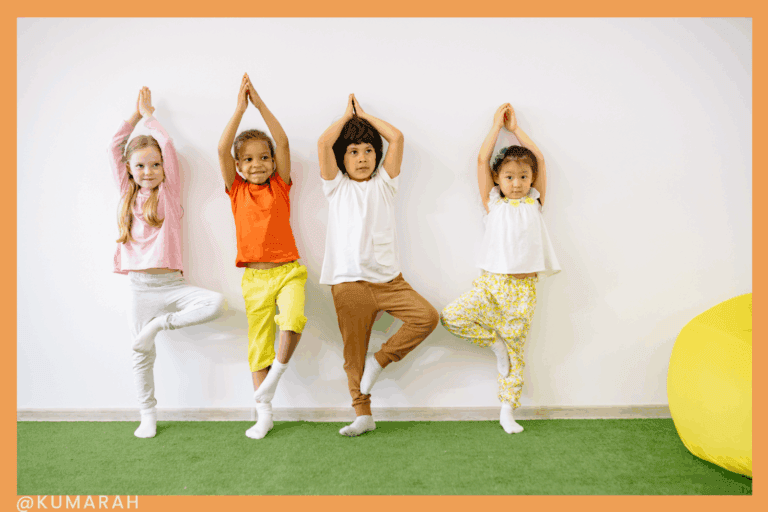
| ✨ Feeling & Mood: Safety, groundedness, belonging Calm and settled — like having both feet firmly on the earth. When balanced, children feel secure, stable, and at home in their own bodies. 🧘 Pose — Mountain Pose (Tadasana) or Tree Pose (Vrksasana) Mountain Pose (Tadasana): Stand tall with feet hip-width apart, arms at sides, eyes soft. Feel your feet pressing into the earth like the roots of a mountain. Breathe deeply and feel yourself grow still and strong. Tree Pose (Vrksasana): Shift your weight onto one foot. Bring the other foot to rest on your calf or inner thigh — never on the knee. Press your palms together at your heart or reach your arms up like branches. Find a spot to focus your gaze. Breathe and hold. Switch sides. 💬 Mantra: “I am safe. I am here. I belong.” Sanskrit Bija: Lam (seed mantra / bija mantra) 🌸 Scent: Cedarwood, patchouli, or sandalwood — earthy, grounding aromas that connect us to the natural world 🎵 Sound: Deep drumming, nature sounds like rustling leaves or running water, or low humming 🌍 Element Earth 💎 Stone Red Jasper or Black Tourmaline — grounding, protective stones that connect us to the stability of the earth beneath our feet 🏫 School-Friendly Option: Skip the Sanskrit mantra if needed and simply say: ‘Let’s take a moment to feel our feet on the floor. Say with me: I am safe. I am here.’ This works beautifully for any classroom. |

Sacral Chakra – Orange
| 🟠 Sacral Chakra — Svadhisthana (Sacral Chakra) Color: Orange | Location: Lower abdomen, below the navel |
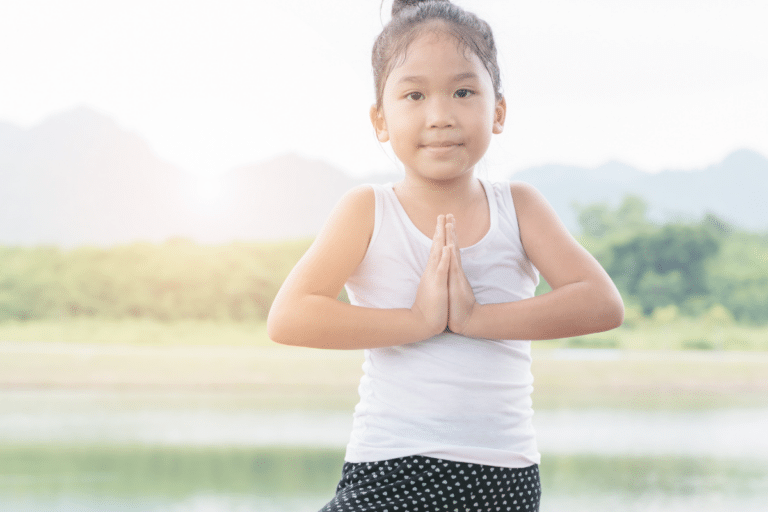
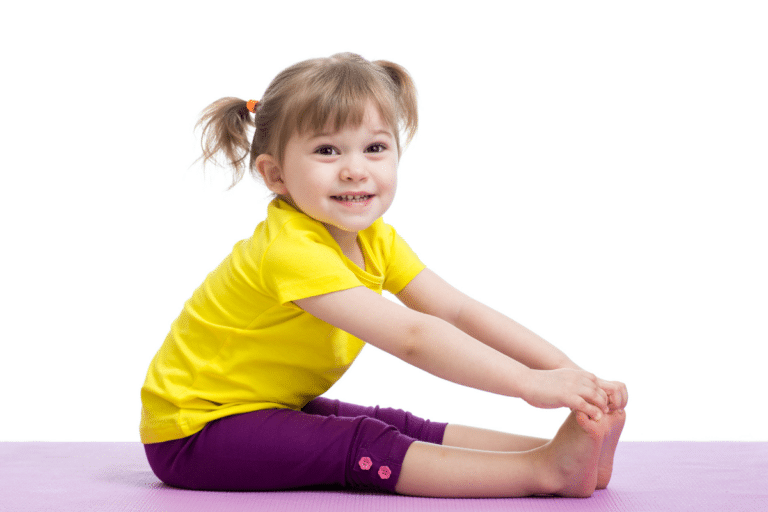
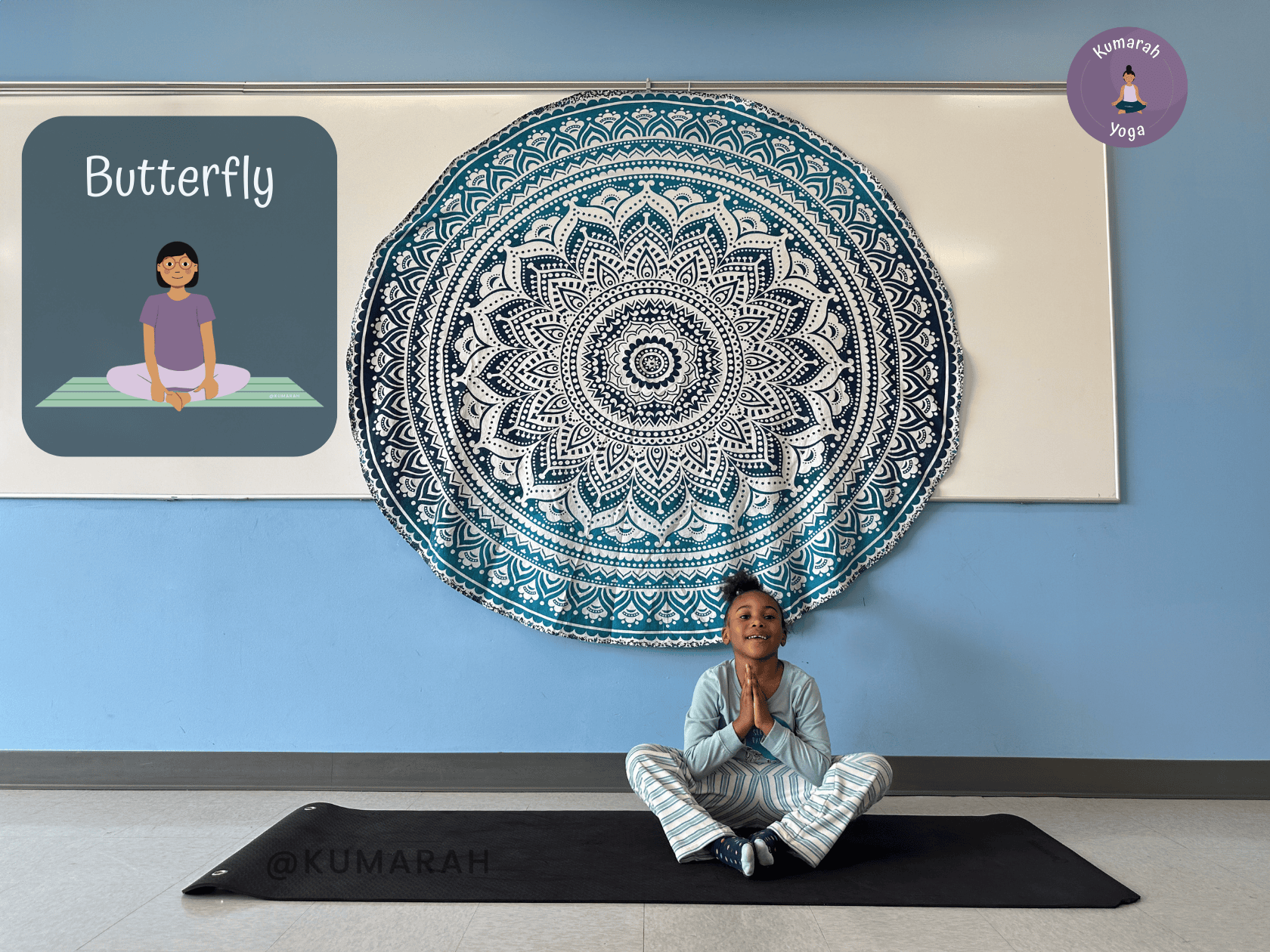
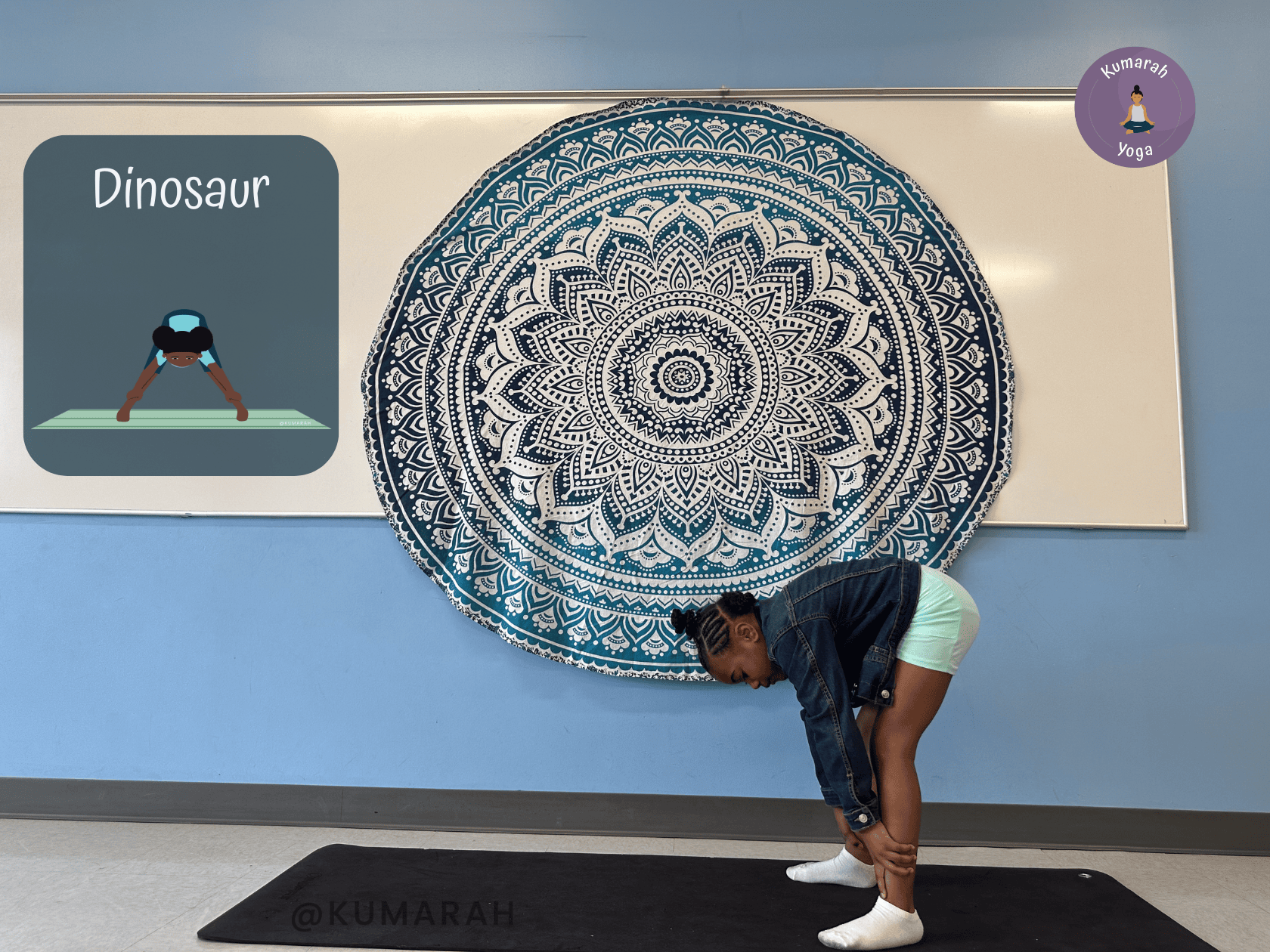
| ✨ Feeling & Mood: Creativity, satisfaction, playfulness, flow Fluid and curious — like water moving freely. When balanced, children feel creative, expressive, and deeply satisfied with what they make and who they are. 🧘 Pose — Butterfly Pose (Baddha Konasana) or Wide-Legged Forward Fold (Prasarita Padottanasana) Butterfly: Sit on the floor and bring the soles of your feet together, letting your knees open wide like butterfly wings. Hold your feet gently and breathe. Feel your hips open and relax. Option to flutter your ‘wings’ slowly up and down. Wide-Legged Forward Fold: Stand with feet wide apart, toes pointing forward. Slowly hinge at the hips and let your upper body fold down toward the floor. Let your head hang heavy and your arms dangle — like a rag doll melting. Breathe into the wide, open space of your hips. 💬 Mantra“I am creative. I am satisfied.” Sanskrit Bija: Vam (seed mantra / bija mantra) 🌸 Scent: Sweet orange, ylang ylang, or jasmine — warm, sweet scents that invite playfulness and ease 🎵 Sound: Flowing water sounds, upbeat music with a gentle rhythm, or soft marimba 🌍 Element Water 💎 Stone Carnelian or Orange Calcite — warm, energizing stones that spark creativity and a sense of inner satisfaction 🏫 School-Friendly Option: Invite students to think of one thing they made or created this week — a drawing, a story, a solution to a problem. Creativity shows up everywhere, in every subject. This chakra also connects to satisfaction and contentment: ‘What’s something you made or did this week that felt good when it was finished?’ |
Solar Plexus – Yellow
| 🟡 Solar Plexus Chakra — Manipura (Solar Plexus Chakra) Color: Yellow | Location: Upper abdomen, around the navel center |
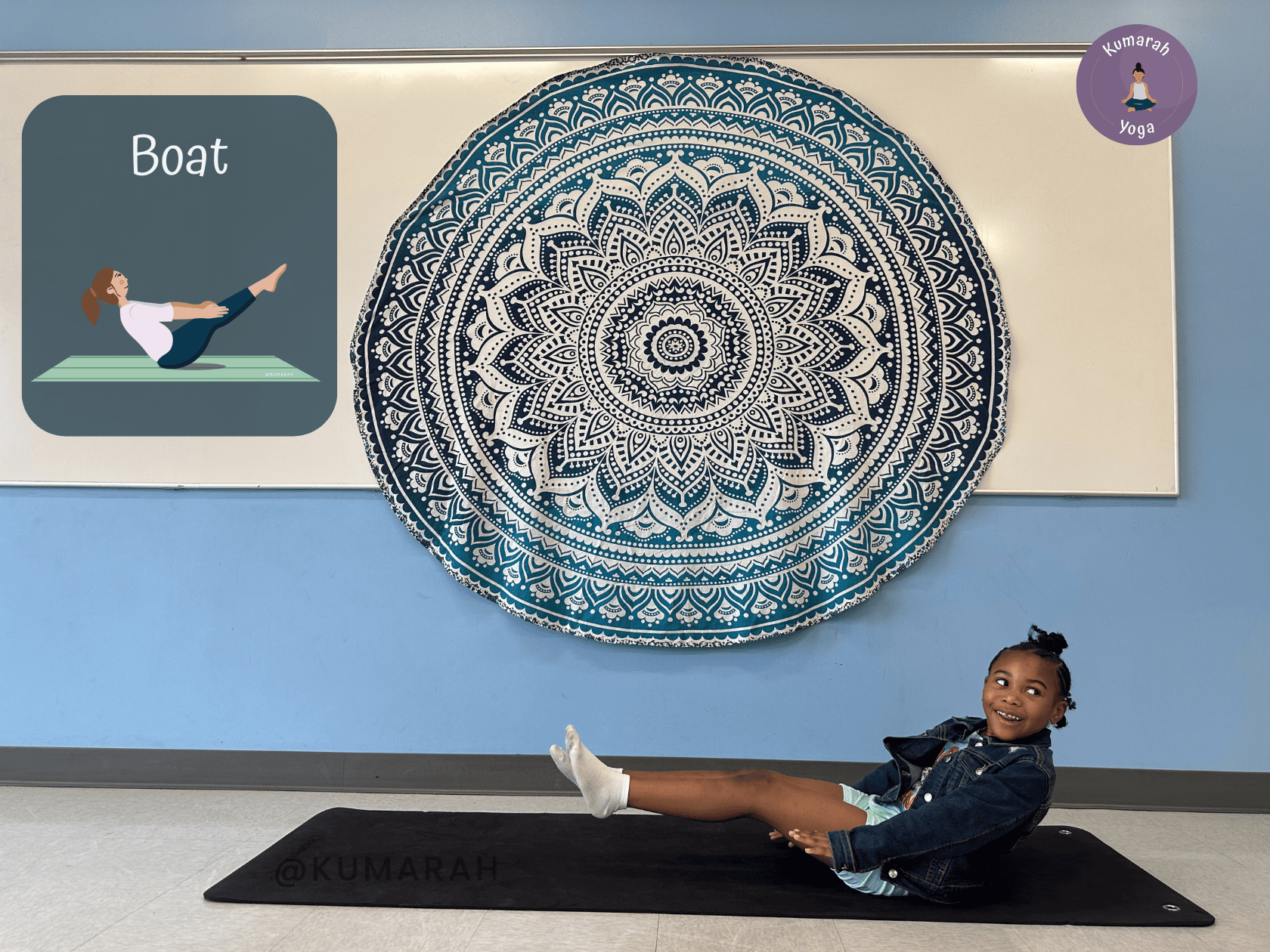
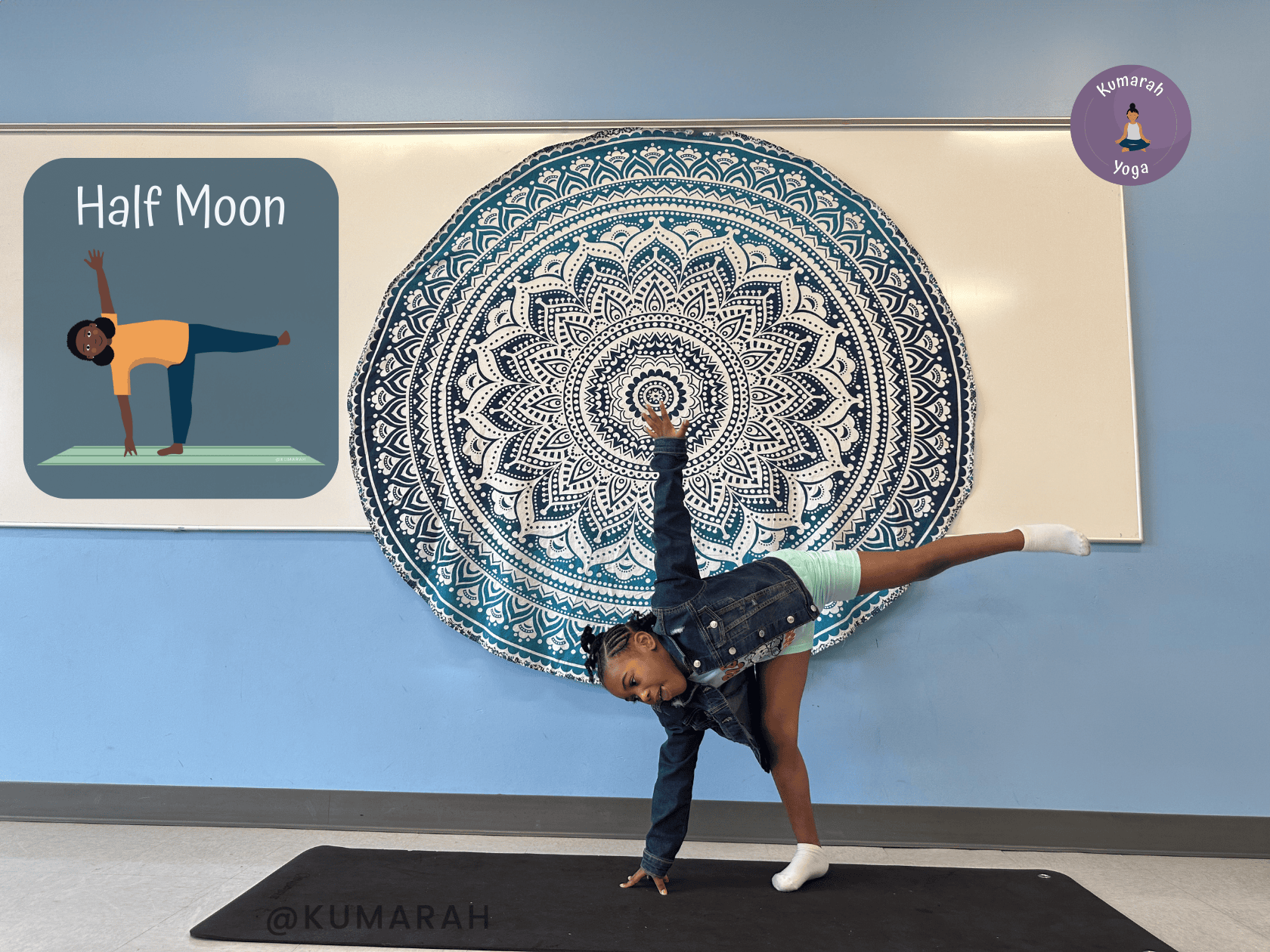
| ✨ Feeling & Mood: Confidence, courage, personal power Bright and strong — like the sun at midday. When balanced, children feel capable, motivated, and ready to take on challenges. 🧘 Pose — Boat Pose (Navasana) or Half Moon Pose (Ardha Chandrasana) Boat Pose (Navasana): Sit on the floor and lean back slightly, lifting both feet off the ground. Arms reach forward, parallel to the floor. Hold your core strong and breathe. Feel the fire in your belly! For a gentler option, keep knees bent and feet lifted just a little. Half Moon Pose (Ardha Chandrasana): Stand tall, then shift your weight onto one foot and tip your body sideways, reaching your top arm toward the sky and your bottom hand toward the floor. Open your chest wide like a shining half moon. Find your balance, breathe, and switch sides. 💬 Mantra“I am strong. I am brave. I can do hard things.” Sanskrit Bija: Ram (seed mantra / bija mantra) 🌸 Scent: Lemon, grapefruit, or rosemary — bright and energizing scents that awaken confidence 🎵 Sound: Upbeat, energizing music — drumbeats, marching rhythms, or empowering songs with a strong beat 🌍 Element Fire 💎 Stone Citrine or Tiger’s Eye — bright, sunny stones that activate confidence, willpower, and personal power 🏫 School-Friendly Option: Connect this to growth mindset: ‘What’s something you tried that felt hard at first?’ This chakra is about persistence and inner strength — deeply aligned with SEL competencies. |
Heart Chakra – Green
| 🟢 Heart Chakra — Anahata (Heart Chakra) Color: Green | Location: Center of the chest |
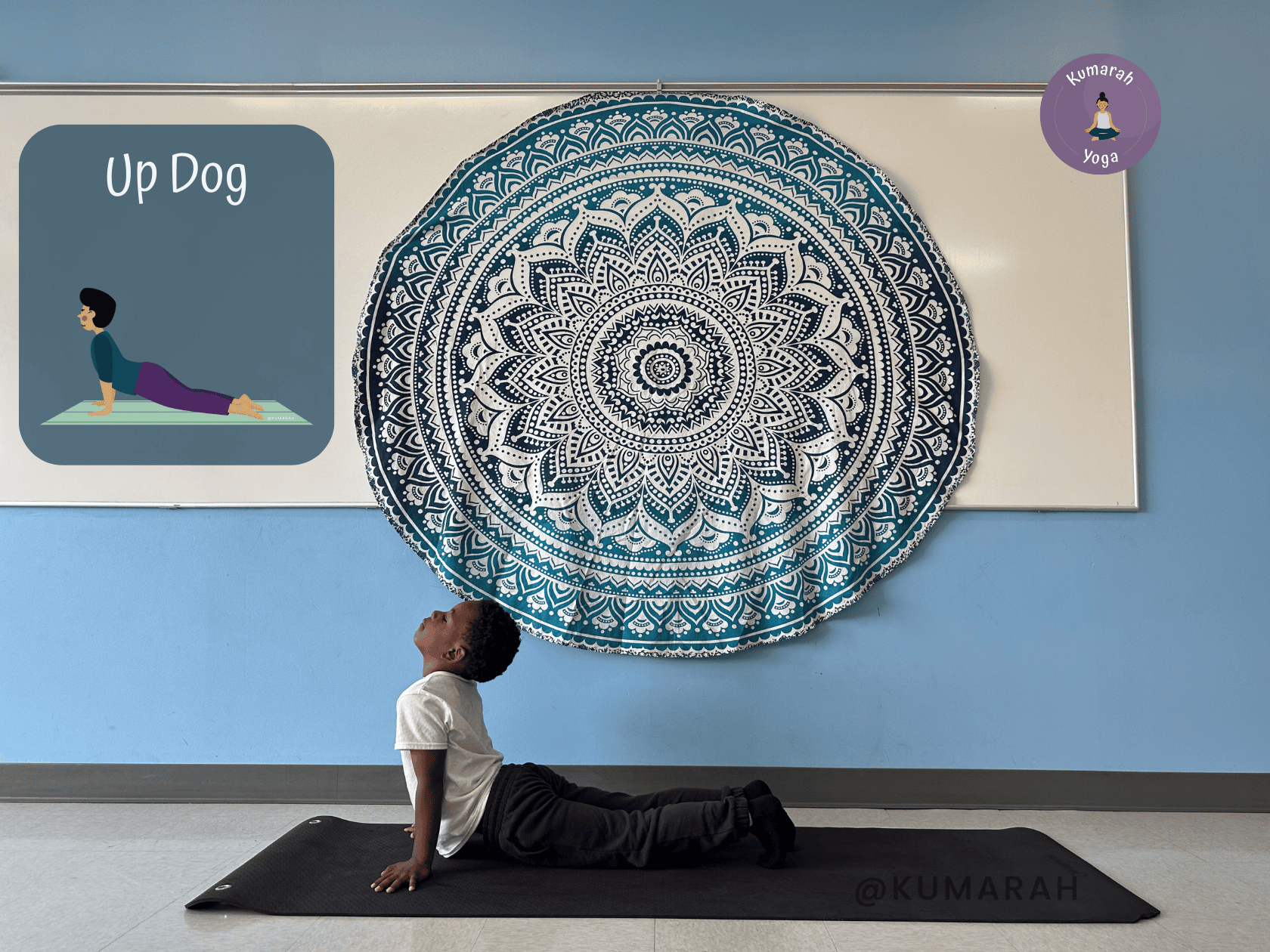
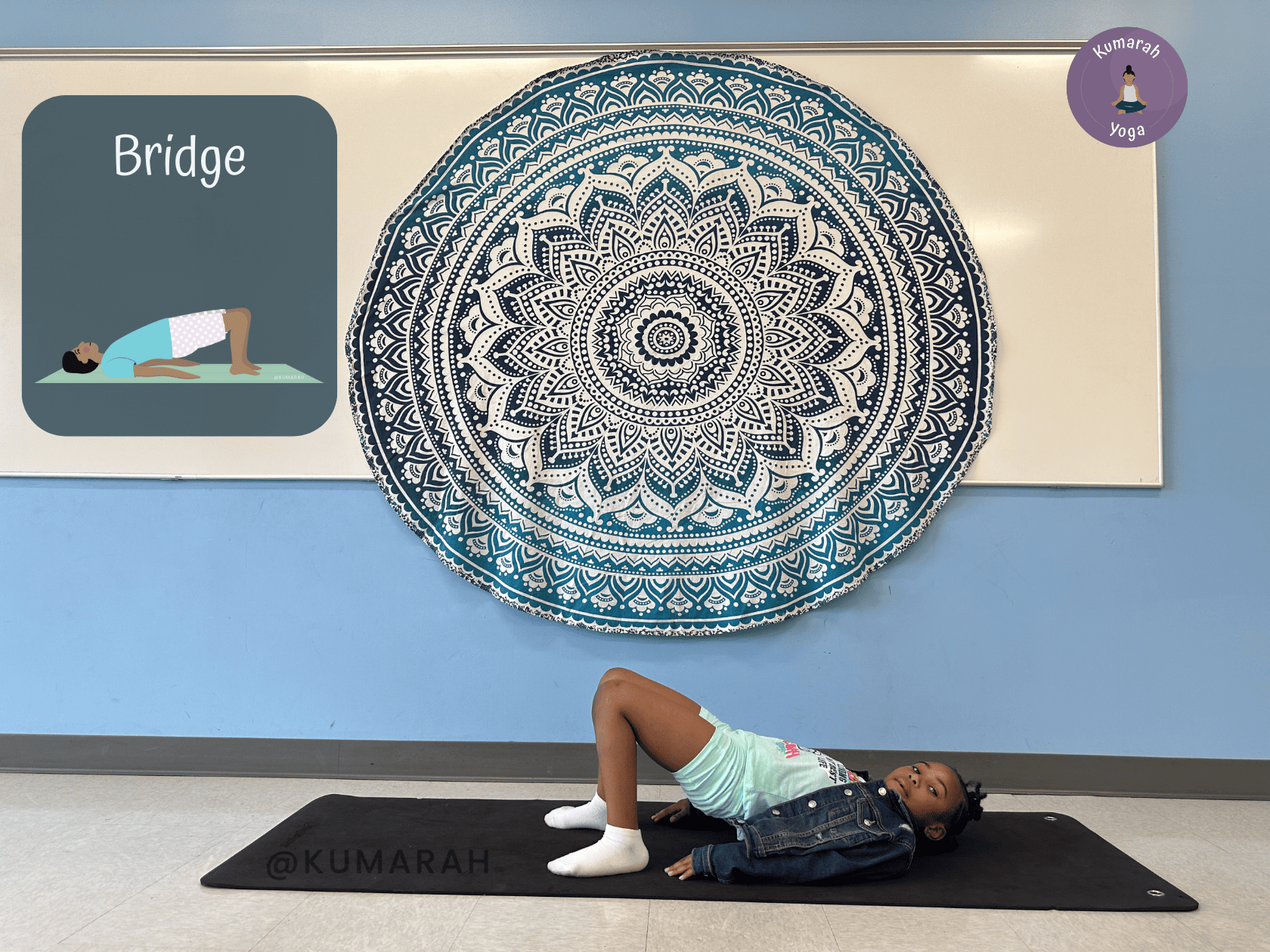
| ✨ Feeling & Mood: Love, kindness, compassion, connection Open and warm — like sunlight through leaves. When balanced, children feel loved, connected to others, and able to give and receive kindness freely. 🧘 Pose — Puppy Pose (Uttana Shishosana), Upward Dog (Urdhva Mukha Svanasana), or Bridge Pose (Setu Bandha Sarvangasana): Upward Dog (Urdhva Mukha Svanasana): Lie face down, place your hands under your shoulders, and press the tops of your feet into the floor. Inhale and straighten your arms, lifting your chest and thighs off the ground. Open your heart forward and up. Let your shoulders roll back and down. Breathe. Bridge Pose (Setu Bandha Sarvangasana): Lie on your back with your knees bent and feet flat on the floor, hip-width apart. Press your feet into the earth and slowly lift your hips up toward the sky. You can clasp your hands underneath your back and press your arms into the floor. Feel your heart rising. Breathe into your chest and hold for a few breaths before slowly lowering back down. 💬 Mantra: “I am loved. I am kind. My heart is open.” Sanskrit Bija: Yam (seed mantra / bija mantra) 🌸 Scent: Rose, lavender, or bergamot — soft, floral scents that open the heart and calm the nervous system 🎵 Sound: Gentle acoustic guitar, soft singing, or nature sounds like birdsong in the morning 🌍 Element Air 💎 Stone Rose Quartz or Green Aventurine — soft, loving stones associated with compassion, kindness, and open-heartedness 🏫 School-Friendly Option: Invite a ‘kindness moment’: ‘Think of one person you appreciate. What is something kind you could say or do for them today?’ This pairs naturally with gratitude journals and community-building circles. |
Throat Chakra – Blue
| 🔵 Throat Chakra — Vishuddha (Throat Chakra) Color: Blue | Location: Throat and neck |
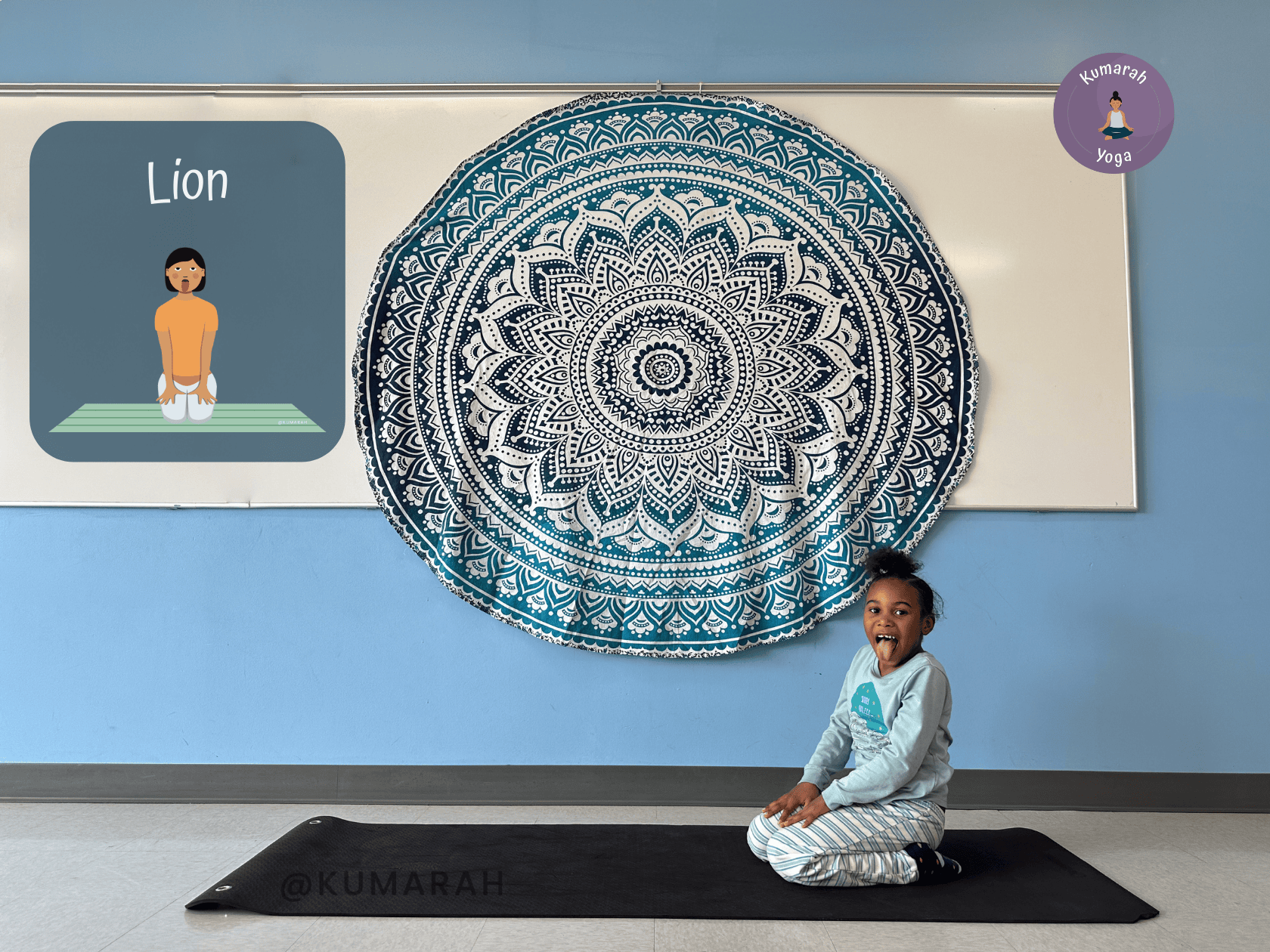
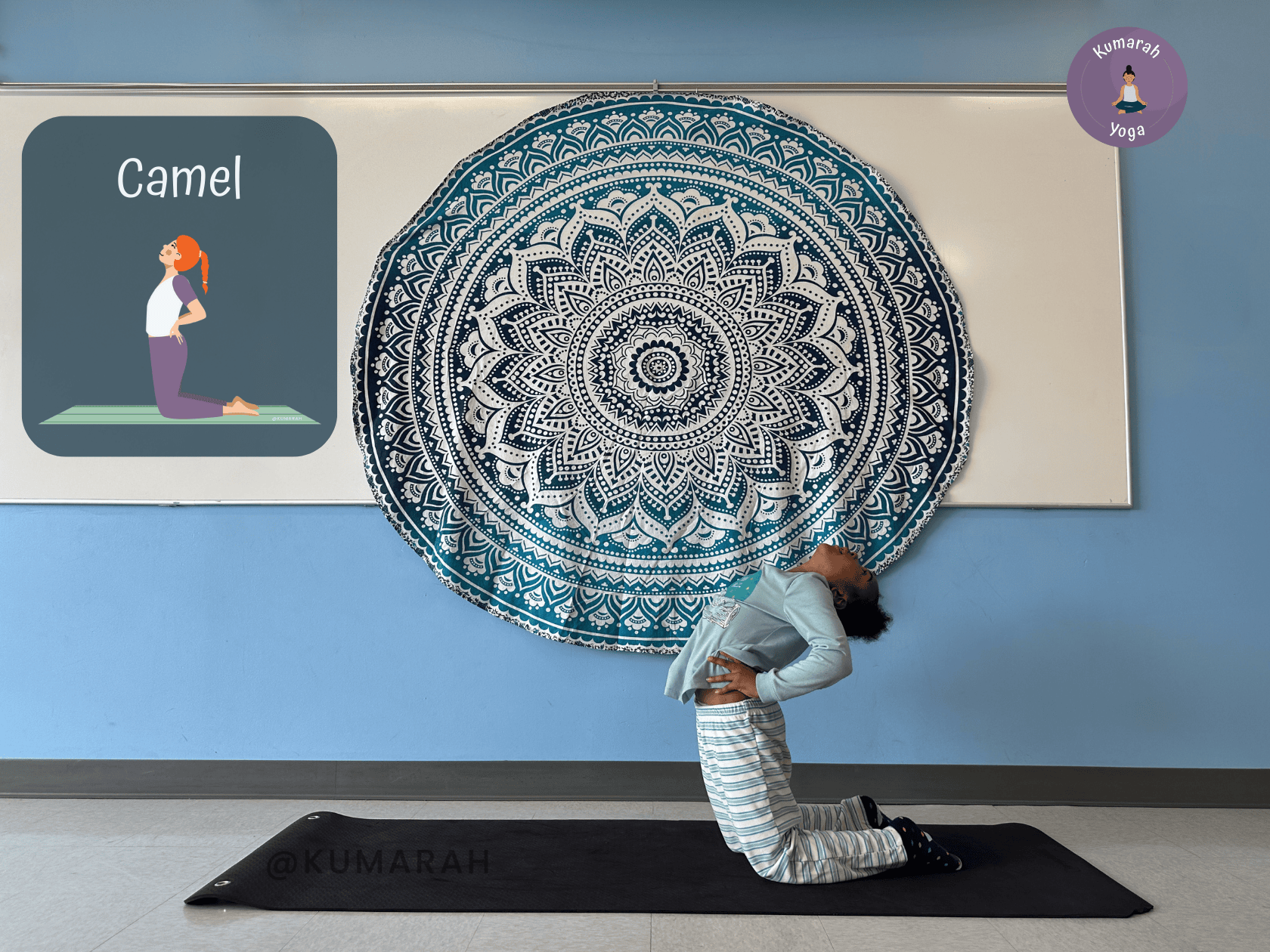
| ✨ Feeling & Mood: Expression, honesty, communication, being heard Clear and expressive — like an open sky. When balanced, children feel comfortable speaking their truth, asking for help, and listening with care. 🧘 Pose — Lion’s Breath Pose (Simhasana) or Camel Pose (Ustrasana) Lion’s Breath (Simhasana): Sit in a comfortable position. Take a big breath in through your nose. Open your mouth wide, stick out your tongue, and let out a big ‘HAAA’ — roar like a lion! This releases stuck energy in the throat and face. Repeat 2-3 times. Laugh if you need to — that’s perfect. Camel Pose (Ustrasana): Kneel with your knees hip-width apart. Place your hands on your lower back, fingers pointing down. Gently begin to open your chest upward and back. If it feels good, reach your hands toward your heels. Let your throat open softly. Breathe slowly and come up carefully when you’re ready. 💬 Mantra: “I speak my truth. I listen with care. My voice matters.” Sanskrit Bija: Ham (seed mantra / bija mantra) 🌸 Scent: Eucalyptus, peppermint, or chamomile — cool, clear scents that open the airways and encourage breath 🎵 Sound: Singing, chanting, humming, or music with meaningful lyrics — any sound made with your own voice 🌍 Element Ether (Akasha) — the space through which sound travels 💎 Stone Blue Lace Agate or Aquamarine — cool, calm stones that support clear, honest expression 🏫 School-Friendly Option: Pair with speaking and listening activities. Ask: ‘What’s something important you want people to know about you?’ Give students time to share in partners or small groups. Throat chakra work supports communication standards and emotional vocabulary. |
Third Eye Chakra – Indigo
| 🟣 Third Eye Chakra — Ajna (Third Eye Chakra) Color: Indigo / Deep Purple | Location: Center of the forehead, between the eyebrows |
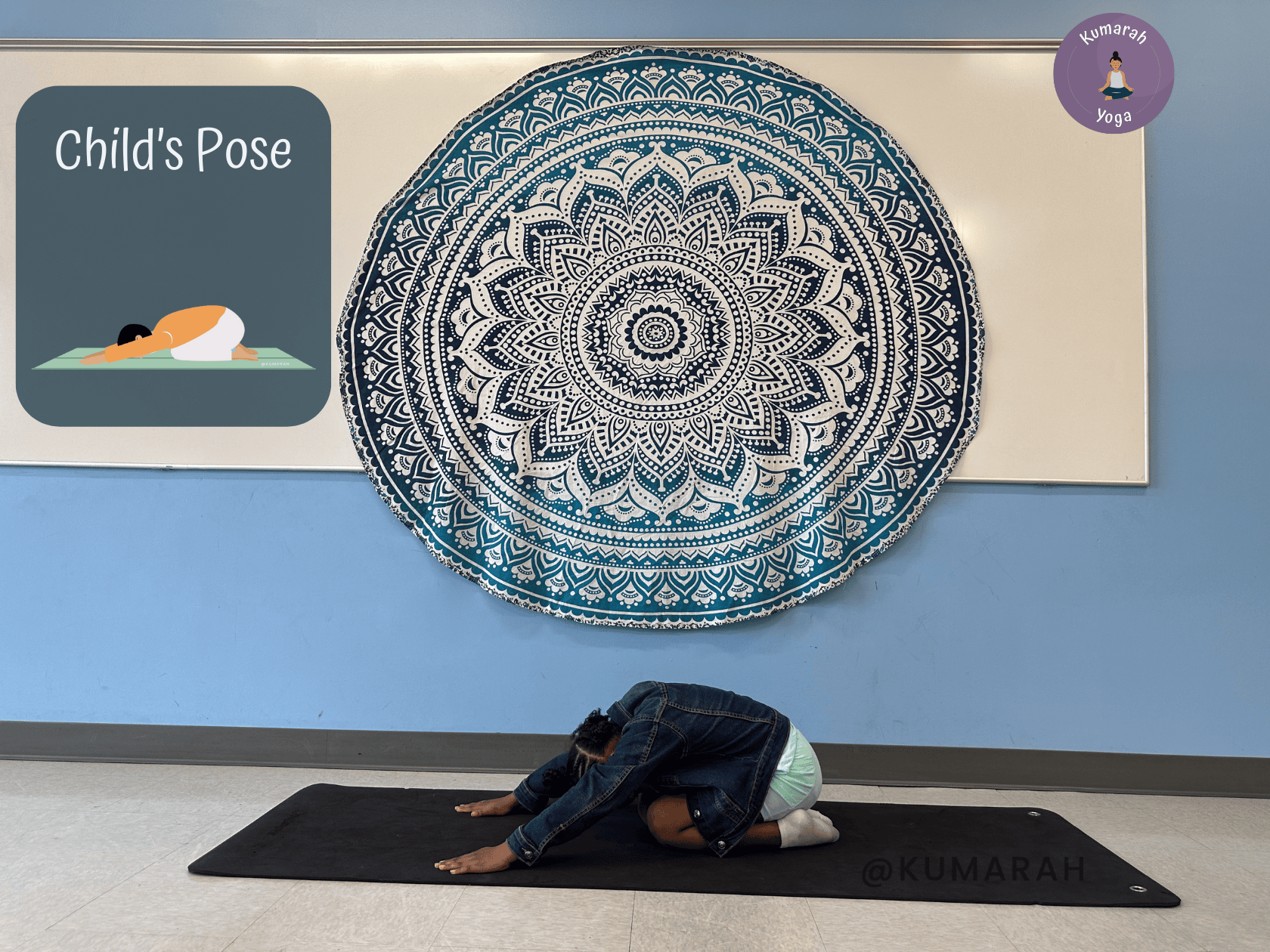
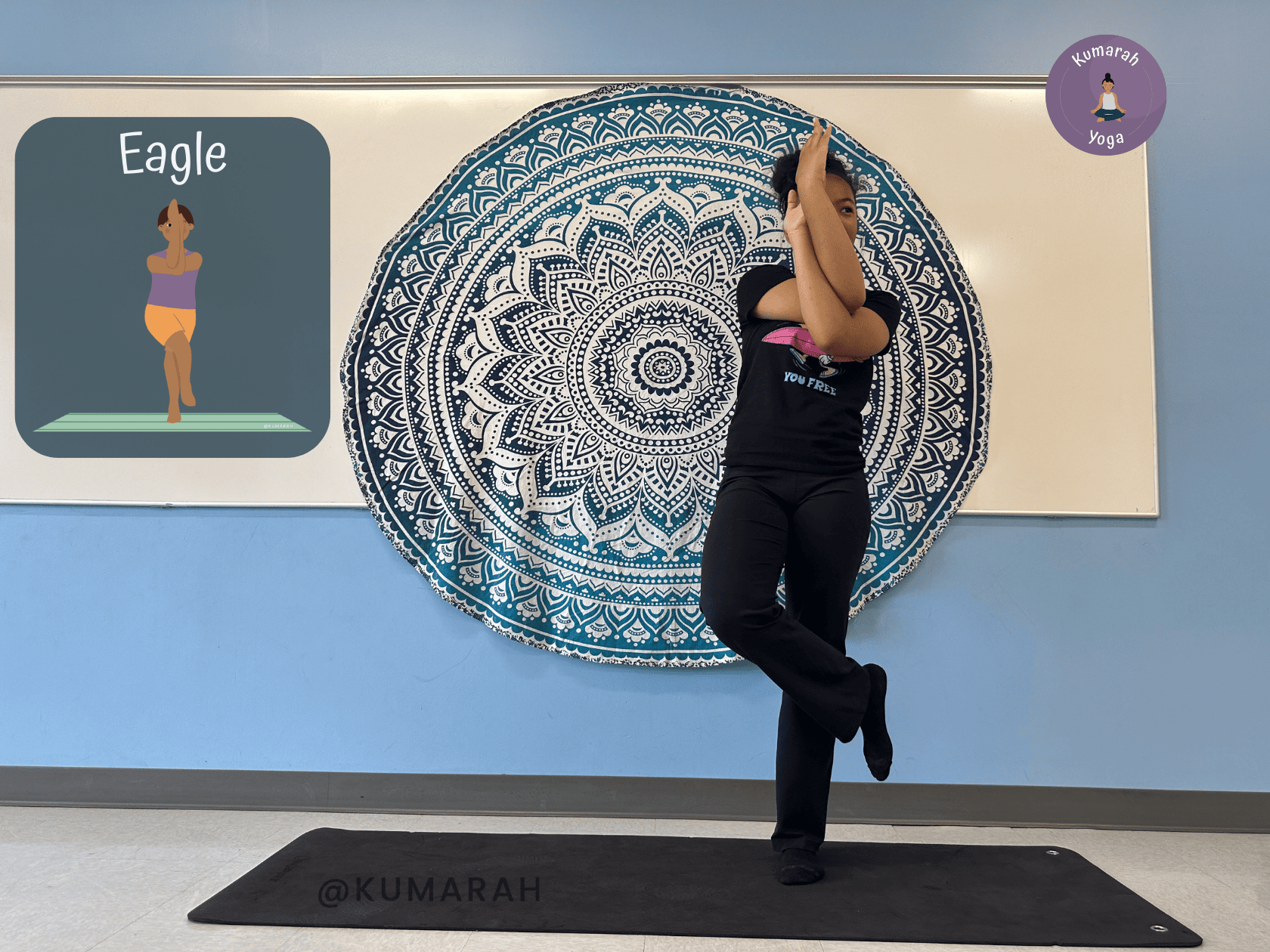
| ✨ Feeling & Mood: Intuition, focus, imagination, inner knowing Still and knowing — like the quiet before you understand something. When balanced, children trust themselves, use their imagination, and can focus deeply. 🧘 Pose — Child’s Pose (Balasana) or Eagle Pose (Garudasana) Child’s Pose (Balasana): From kneeling, fold forward and rest your forehead gently on the floor or a folded blanket. Arms can reach forward or rest alongside your body. Breathe slowly. Notice the gentle pressure on your forehead — this is your third eye center. Rest here and let your mind grow quiet. Eagle Pose (Garudasana): Stand tall and bend your knees slightly. Cross one leg over the other and try to hook your foot behind the standing calf. Cross your arms at the elbows, then wrap your forearms and bring your palms together. Find a still point to gaze at. This pose asks your mind to focus — that is the third eye at work. Hold, breathe, and switch sides. 💬 Mantra“I trust myself. I use my imagination. I am open to learning.” Sanskrit Bija: Aum / Om (the universal seed sound) 🌸 Scent: Frankincense, clary sage, or juniper — deep, resinous scents that invite stillness and inner clarity 🎵 Sound: Soft instrumental music, Tibetan singing bowls, or simple silence — the absence of sound is also a sound 🌍 Element Light 💎 Stone Amethyst or Lapis Lazuli — deep, still stones associated with intuition, inner vision, and mental clarity 🏫 School-Friendly Option: Connect to mindfulness and self-awareness: ‘Close your eyes for a moment. What does your body feel right now? What does your gut tell you?’ This builds interoception — the ability to notice internal states — a foundational SEL skill. |
Crown Chakra – Violet
| 🌸 Crown Chakra — Sahasrara (Crown Chakra) Color: Violet, White, or Prism (all colors) | Location: Top of the head |
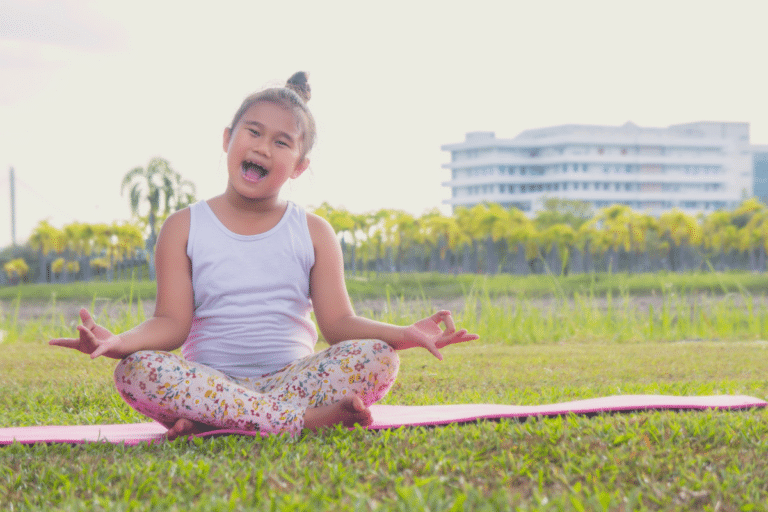
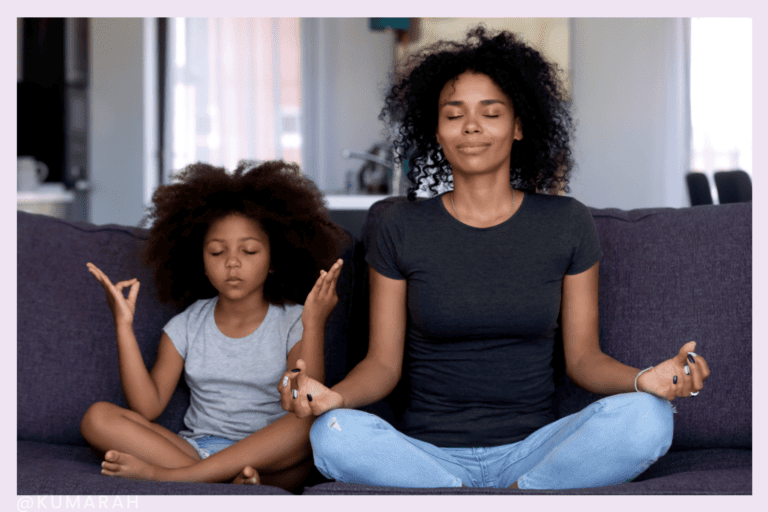
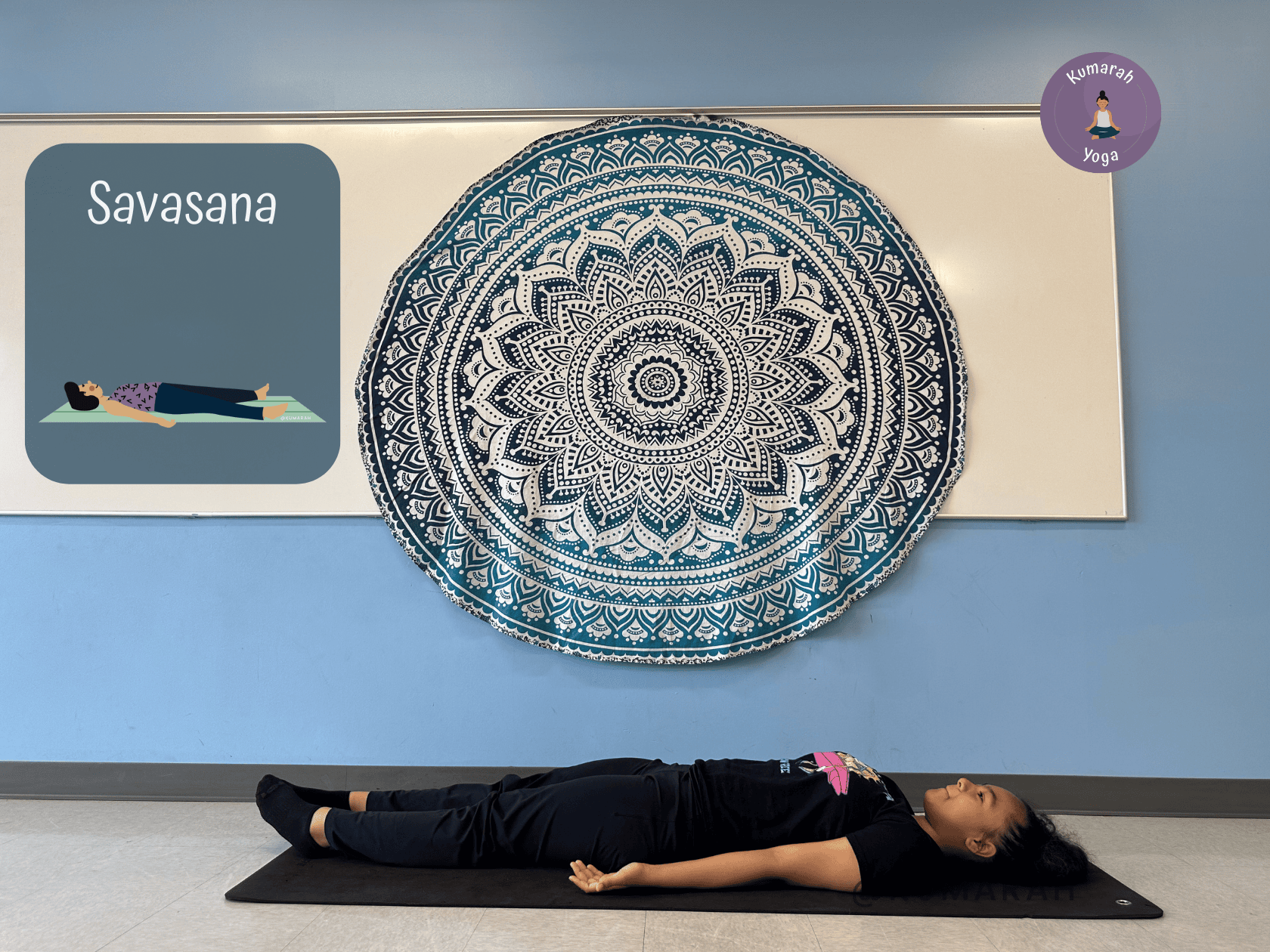
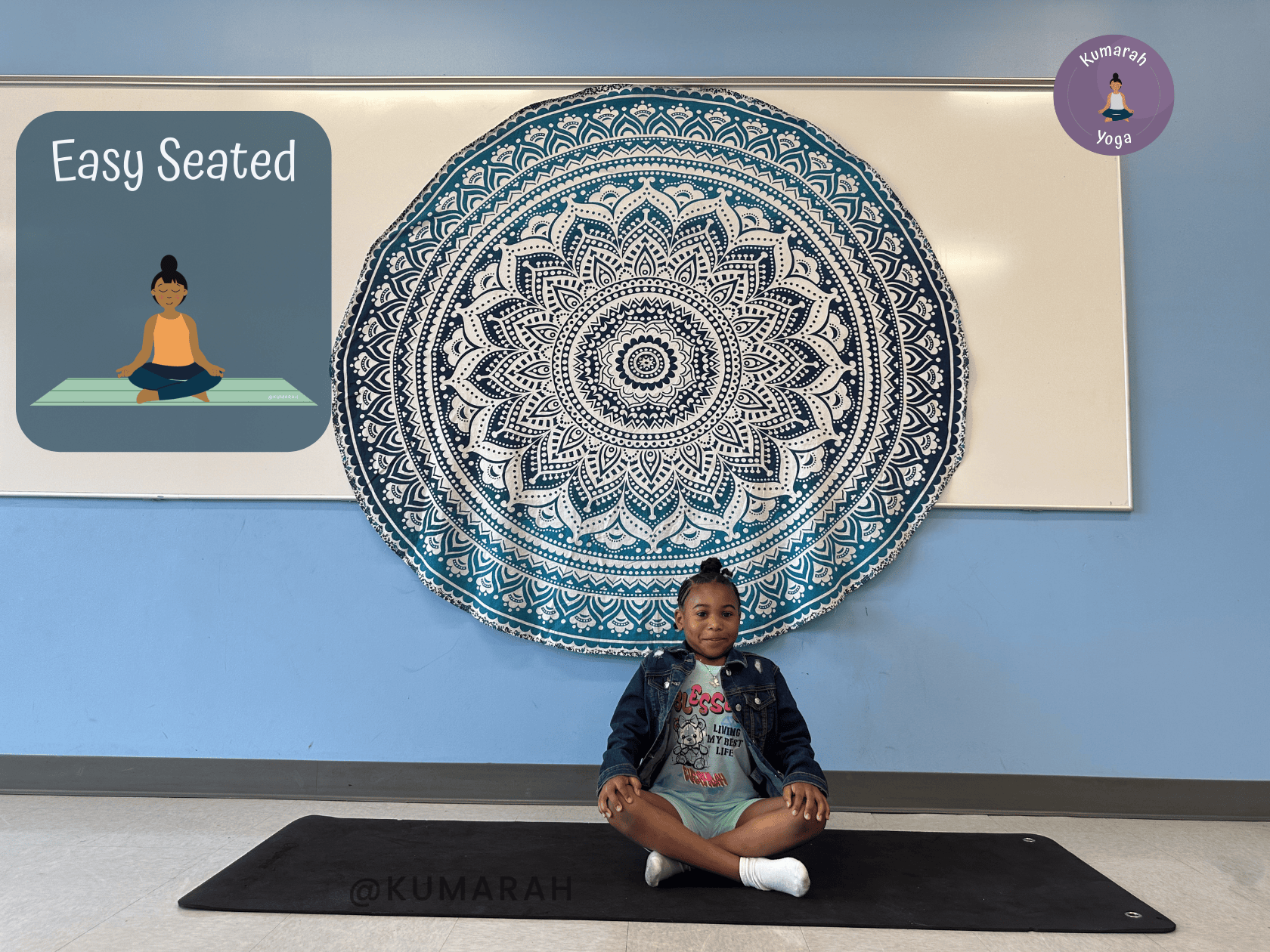
| ✨ Feeling & Mood: Peace, wisdom, connection to something bigger than ourselves Expansive and peaceful — like watching the sky open up after rain. When balanced, children feel a sense of wonder, wholeness, and deep inner calm. 🧘 Pose — Savasana (Corpse Pose) or Easy Seated Meditation (Sukhasana) Savasana (Corpse Pose): Lie down on your back with your arms resting at your sides, palms turned gently upward. Let your feet fall open. Close your eyes. Let your whole body relax into the floor — starting with your feet, moving up through your legs, your belly, your chest, your hands, your face. There is nothing to do and nowhere to be. Just breathe. Just be. Easy Seated Meditation (Sukhasana): Sit comfortably cross-legged on the floor or in a chair with feet flat. Rest your hands on your knees, palms up or down. Sit tall but not rigid. Close your eyes or soften your gaze downward. Simply notice your breath moving in and out. When your mind wanders, gently return to the breath. Even one minute of this is enough. 💬 Mantra“I am peaceful. I am whole. We are connected.” Sanskrit Bija: Om (or silence — the crown chakra transcends individual seed sounds) 🌸 Scent: Lavender, lotus, or violet — gentle, ethereal scents that invite surrender and peace 🎵 Sound: Pure silence, singing bowls, or soft ambient music — music without words or a clear rhythm helps the mind rest 🌍 Element Thought / Pure Consciousness 💎 Stone Clear Quartz or Selenite — luminous, high-vibration stones associated with peace, clarity, and connection to something larger than ourselves 🏫 School-Friendly Option: End with a brief rest: even 2 minutes of quiet lying down or seated stillness can reset the nervous system. Research supports stillness breaks for attention and emotional regulation. You don’t need to call it meditation — simply ‘rest time’ or ‘quiet time’ works in any school setting. |
Closing: Rainbow Walk Guided Meditation
End your chakra yoga session with this short guided visualization. Ask children to lie down in Savasana or sit comfortably with their eyes closed.
Read aloud slowly, pausing between sentences:
‘Close your eyes and take a deep breath in… and out. Imagine you are walking through a beautiful, peaceful field. The grass is soft beneath your feet. You can feel a gentle breeze.
A little rain begins to fall — soft and warm, like a shower of tiny stars. And then the sun comes out, bright and golden. And there, stretching across the whole sky, is the most beautiful rainbow you have ever seen.
You walk up to the rainbow and discover you can step right onto it — it feels solid beneath your feet, like a bridge of colored light.
You step onto the red. Feel it in your feet, your legs, the base of your spine. Say to yourself: I am safe. I am here.
You step onto the orange. Feel it warm your belly. I am creative. I am joyful.
You step onto the yellow. Feel the sunshine in your center. I am strong. I can do hard things.
You step onto the green. Feel your heart open and warm. I am loved. I am kind.
You step onto the blue. Feel your throat relax and your voice grow clear. I speak my truth.
You step onto the purple. Feel your mind grow still and knowing. I trust myself.
You step onto the violet light at the top of the rainbow. You can see everything from here — the whole field below, the whole sky above. You feel completely peaceful. I am whole. We are connected.
Take one more deep breath in… and slowly let it go. When you’re ready, gently wiggle your fingers and toes and open your eyes.’
Rainbow Yoga Class Extension Activities
Game: Rainbow Chakra Freeze Dance
A spin on classic freeze dance — but with chakra colors, poses, and mantras built in. Great for any size group and works at home too.
You need: Music and a way to pause it. Optional: colored scarves or construction paper squares in the 7 chakra colors.
Dance freely when the music plays. When it stops, call out a chakra color — everyone freezes in the matching pose and says the mantra together before the music starts again.
Color — Freeze Pose — Say Together:
- Red — Mountain Pose — “I am safe. I am here.”
- Orange — Butterfly — “I am creative. I am satisfied.”
- Yellow — Boat Pose — “I am strong. I can do hard things.”
- Green — Bridge Pose — “I am loved. I am kind.”
- Blue — Lion’s Breath — “My voice matters.”
- Purple — Child’s Pose — “I trust myself.”
- Violet — Savasana — “I am peaceful. I am whole.”
Mix it up:
- K-2: Hold up a colored card when you call each color. Keep freeze time short and silly.
- Grades 3-5: Call the feeling instead of the color — “Freeze in your CONFIDENCE pose!” Kids have to match the emotion to the chakra.
- Classroom: Works in the aisles or with desks pushed aside. Mountain = sit tall; Butterfly = seated hip stretch; Lion’s Breath is perfect at a desk.
- Full rainbow round: Go through all seven colors in order, red to violet, without stopping the music — just slow it to a gentle sway as you move up the rainbow together. A beautiful way to close a session.
Craft: Rainbow Mantra Bookmarks
A simple take-home craft kids will actually use. Works as a bookmark, a locker decoration, or a desk reminder. Two versions below — pick what fits your time and supplies.
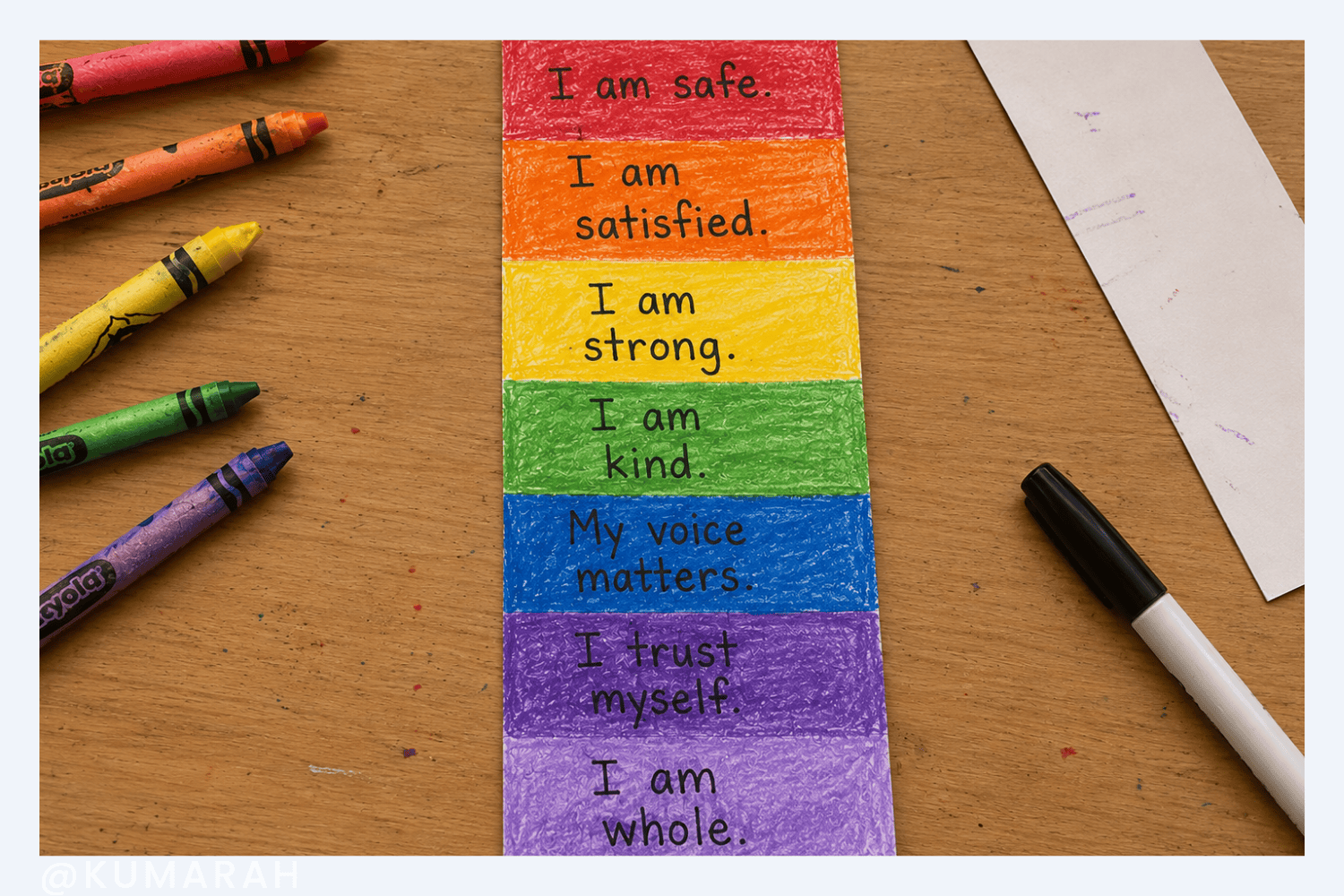
Simple Version
You need: Cardstock or heavy paper, crayons or markers, scissors
Cut cardstock into strips about 2 inches wide by 8 inches tall. Divide into seven sections and color each one with its chakra color. Write one mantra in each section:
- Red — I am safe.
- Orange — I am satisfied.
- Yellow — I am strong.
- Green — I am kind.
- Blue — My voice matters.
- Purple — I trust myself.
- Violet — I am whole.
On the back, kids write their name and circle the mantra that feels most important to them right now. That’s their chakra of the week.
- K-2 tip: Pre-print the strips with the sections and mantra words lightly in gray. Kids just color over them.
- Grades 3-5 tip: Add a small drawing in each section — an animal, a symbol, a pose — whatever feels right to them.
Watercolor Resist Version
You need: Watercolor paper cut into 2″ x 8″ strips, white oil pastels or white crayons, liquid watercolors in rainbow colors, fine-tip black marker, optional: hole punch and ribbon
Write one mantra word per section in white oil pastel — press firmly. The wax is nearly invisible at first. Then paint each section with its chakra color and watch the words appear as the paint resists the wax. Let dry, then add details with a black marker. Punch a hole at the top and add ribbon if you like.
The reveal moment is always a hit. It also connects beautifully to the whole idea behind chakra work — things are present inside us even when we can’t see them yet.
- Classroom tip: Pre-write the mantras in white oil pastel before class so kids can go straight to painting and decorating.
- Home tip: Make one as a family. Each person picks their own chakra of the week before painting.
More Ideas for the Classroom
- Chakra Journals: After each chakra, have students draw or write about the corresponding feeling. ‘Draw a time you felt as safe as a mountain.’ ‘What does creativity feel like in your body?’
- Magic Senses Station: Use touch (identify objects in a bag), smell (scent cards), and sound (identify sounds with eyes closed) as sensory exploration tied to specific chakras.
- Color Breathing: Assign each color a breath pattern — red breath (slow and deep), yellow breath (strong and sharp), blue breath (long exhale).
More Ideas for Yoga Teachers
- Alternate Nostril Breathing (Nadi Shodhana): After the chakra flow, teach this balancing pranayama — close the right nostril, inhale left; close both; exhale right; inhale right; close both; exhale left. Repeat 4-6 rounds, only for kids ages 8 and up.
- Rainbow Wands: Make rainbow wands from paper towel rolls and colored streamers to use during the freeze dance or the Rainbow Breath.
More Ideas for Parents
- Do the Rainbow Breath together every morning as a family ritual.
- Keep a chakra color of the day — choose the color that matches how you’re feeling and wear something in that color, eat a food of that color, or draw something in it.
- Use the mantras as bedtime affirmations: whisper them while tucking your child in.
Rainbow Chakra Themed Books to Pair with This Lesson
These books pair beautifully with a rainbow chakra yoga lesson — use them as an intro to the class, a wind-down read, or a jumping-off point for discussion.
- My Many Colored Days by Dr. Seuss — The perfect companion for this lesson. Each color represents a different mood or feeling, illustrated with gorgeous animals in motion. Great for younger kids and older ones too — and fun to act out with yoga poses on each page.
- The Color Monster: A Story About Emotions by Anna Llenas — Color Monster has all his feelings mixed up in a jar and needs help sorting them out by color. A classroom favorite for introducing emotional literacy in a playful, visual way.
- Anna and her Rainbow Colored Yoga Mats by Giselle Shardlow — This is a story about a girl named Anna who brings a different colored yoga mat to school each day and uses them to go on a fun adventure. Her classmates discover her confidence and learn about her imagination too!
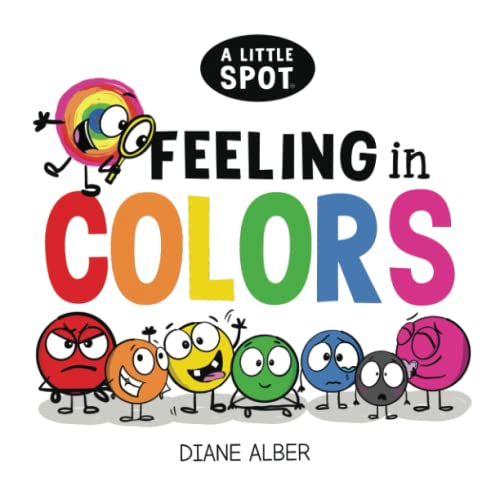
- A Little Spot Feeling in Colors by Diane Alber — Part of Diane Alber’s beloved Little Spot series, this one uses colors to help kids identify and understand different emotions. Pairs naturally with the chakra color system.
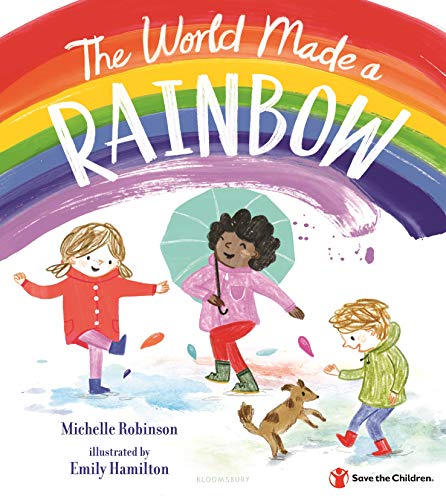
- The World Made a Rainbow by Michelle Robinson — A gentle, hopeful story about a little girl who misses the color and light that seem to have gone from her world. A beautiful reminder that light always follows the dark.
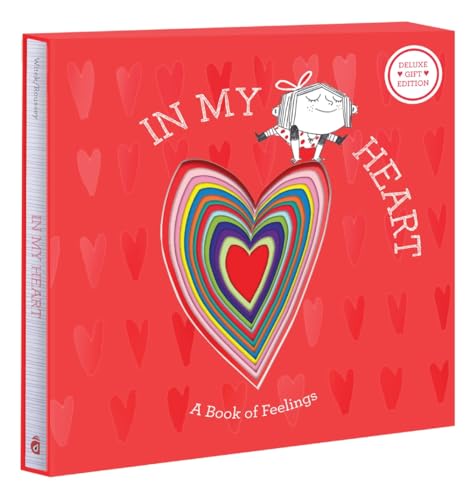
- In My Heart: A Book of Feelings by Jo Witek — Each page explores a different emotion through beautiful die-cut illustrations that literally grow and shrink with the feeling described. Wonderful for body-awareness conversations.
- Red: A Crayon’s Story by Michael Hall — A crayon labeled “red” discovers he’s actually blue — a gentle story about identity, labels, and being true to yourself. Great for older K-5 kids and connects well to themes of authenticity and self-trust.




Bringing Rainbow Chakra Yoga to All Kids
Not every child will connect with the Sanskrit vocabulary or the philosophical framework of chakras — and that is perfectly okay. The beauty of this system is that it is endlessly adaptable. The poses, the breathing, the colors, the sensory experiences, the affirmations — all of these work on their own, with or without the yogic container.
What matters most is that children leave the practice feeling more at home in their bodies, more able to name their feelings, and more connected to themselves and each other. That is the heart of this work.
The rainbow was always there. We’re just helping them see it.