One time I tried this with a child who was crying so hard they could barely talk and couldn’t tell me why. I had no idea what had happened.
But they could look at me, and they could hold my hand. That was already a huge first step. That was connection.
So I just said: okay, use your eyes to look. You don’t have to tell me what’s wrong yet. Just look.
See my pink shirt? With the elephant?
What else do you see?
(sniff)
Any other colors?
(nod)
What colors?
(sniff) “Blue.”
Good. Blue what?
(sniff) “Blue words.”
Good. Let’s find four more things.
And I held up four fingers.
The 5-4-3-2-1 activity doesn’t work the way it’s usually written
If you’ve seen the five senses grounding exercise before, you’ve seen it written like this: five things you can see, four you can hear, three you can touch, two you can smell, one you can taste (in some order or another). Start at five, work down to one, feel better.
It’s a good technique. But 5-4-3-2-1 is a lot to try to process when a child is in full meltdown mode.
Think about what you’re actually asking. Hold a number in your head. Track which sense you’re on. Scan the room. Produce a word. Do it again four more times. Then switch senses and start over.
That’s a working-memory task. And working memory is the first thing to go when a kid is flooded.
Here’s the part that matters most: they have to know how to do it before the meltdown, or it won’t work. You cannot teach a new skill to a dysregulated child. You can only run one they already have.
So the technique has two homes, and they’re different rooms:
- Before and after — you teach it, practice it, make it familiar. Calm brain, full sequence.
- During — you run a stripped-down version for them, and you carry the parts they can’t.
Most articles only describe the first one and then hand it to you for the second. That’s the gap this post is about.
The version I actually use with kids
| Step | What I do |
|---|---|
| 5 — see | Five things you can see may be the only step they get through at first, and that’s okay. Keep naming things you see, and you be the one to count. |
| 4 — four breaths | Four things they can hear may take some time — they probably don’t want to listen to you talk anymore. So swap it: four deep breaths, and listen to each one. |
| 3 — touch | Then skip straight to three things you can touch. One is probably your hand that they are holding. Give it a gentle squeeze. Have them touch their chest for their heartbeat. Wiggle their toes. |
| stop | End there. Let them have some time to process. Or start over from five. |

The standard 5-4-3-2-1 runs see, touch, hear, smell, taste. This version keeps see, swaps four breaths in, and moves touch down to three. Three is touch on purpose — touch is what settles a body fastest, and it’s the last thing you do before you stop.
Three things are doing the work here.
You be the one to count. In the story above, I’m the one holding up four fingers. The child doesn’t have to track the number, because I’m tracking it out loud and with my hands. This is the same move I make in almost everything I teach: the adult carries the load the child can’t carry yet. Not instead of them — with them, until they can.
You name yours first. I said “see my pink shirt? With the elephant?” before I asked what they saw. That’s not filler. A flooded kid staring at a whole room can’t pick a starting point, so I give them one. It also takes the spotlight off them for a second, which is often the only reason they answer at all.
Ending at three is the point. Most versions treat finishing all five steps as the success condition. I don’t. Stopping early is the success. If a child gets through five things they can see and then wants to sit quietly, you’re done — that’s the nervous system doing exactly what you wanted. Dragging them to “one thing you can taste” so the exercise looks complete is for you, not for them.
And the swap from hearing to breathing is deliberate. A kid who’s melting down usually doesn’t want to listen to your voice, but four slow breaths still gives them four countable somethings. If you want more ways to make breathing land with kids, I’ve collected a pile of them in 20 breathing exercises for kids. And this pairs well with a calm down corner if you have one set up.
The sensory walk (that’s really a sensory wander)
Taking the five senses outside is one of my favorite ways to teach this when everyone’s calm. It’s also messier than it sounds.
A sensory walk is definitely harder in a group. Unless you have a set path or a sidewalk, it becomes a sensory wander.
That’s okay. Let them wander. Stay in your sight, come back with observations. You keep the pen and paper — or a chart, or a note on your phone.
That’s the same principle as counting on your fingers. You hold the structure. They do the noticing.
You don’t need nature for this
Our city-centered school was pretty limited with outdoor space. We made it work anyway.
Even noticing how flat the grass was in the soccer field at the middle was something fun to find. We wandered through the parking lot looking for lines that were crooked, or cracks in the pavement that caused us to trip. Scents from kitchens nearby with open windows or from the back of the local pizza pub, always made our mouths water. The houses with a satellite dish, a fence with a gate, rain puddles — all valid encounters.
If you do have green space, outdoor yoga with kids opens up more. But a parking lot and fifteen minutes is genuinely enough. The point isn’t the scenery. It’s that they’re outside their own heads and looking at something real.

Two things to bring
Bandages. The hiccup we run into most often is a scraped knee. Don’t forget those — and always have tons of tissues in your pockets. Even a few wet wipes in a ziplock are good to have.
A plan for the dog poop. Smelly dog poop that someone forgot to pick up — or chose not to — was a definite thumbs down for all my kids. It’s also a pretty good lesson in cleaning up after ourselves and our pets, so I let that conversation happen instead of hurrying past it.
A five senses scavenger hunt
If your group does better with a list than with open wandering, turn it into a hunt. Same activity, more structure — and it’s usually the better call with a big group or a first time out.
| Sense | Look for |
|---|---|
| See | A crooked line. A crack in the pavement. A gate. A satellite dish. Something round. |
| Hear | A car. A bird. A door. Something far away that you can barely hear. |
| Touch | Grass that’s been flattened. Something rough. Something cold. Bark. A brick wall. |
| Smell | Cut grass. Rain coming. Something from a kitchen vent. (And yes, sometimes the dog poop.) |
| Taste | Skip it outside — save this one for the fish pose below. |
These are just some examples I’d use when building a scavenger hunt for my own group. There’s a blank template in the free download — don’t forget to grab it!
One activity per sense (with a pose for each)
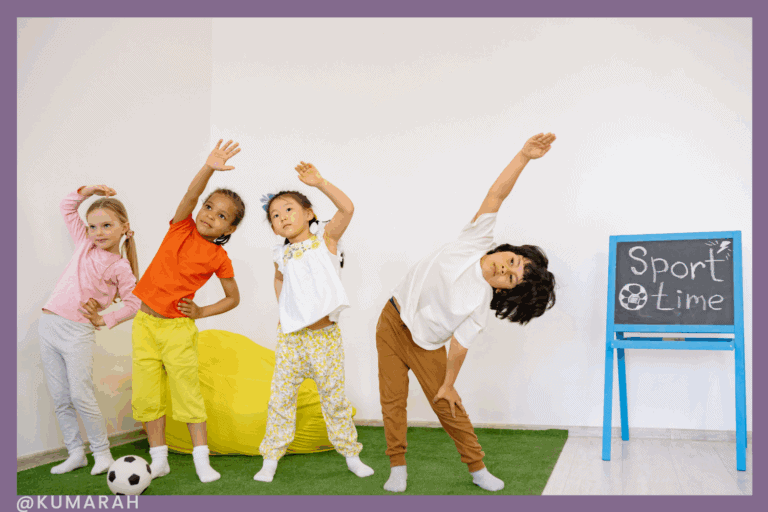
When you’re teaching this calmly — a Monday morning meeting, a warm-up, a rainy indoor recess — go one sense at a time. Here’s the language I actually use, and the pose that goes with it.
Notice the pattern in every one: I name mine first, then I offer them options. Same move as the pink shirt. This is a good practice for the first few times you do this activity — but eventually you can let them own it and go through the whole thing with suggestions from them.
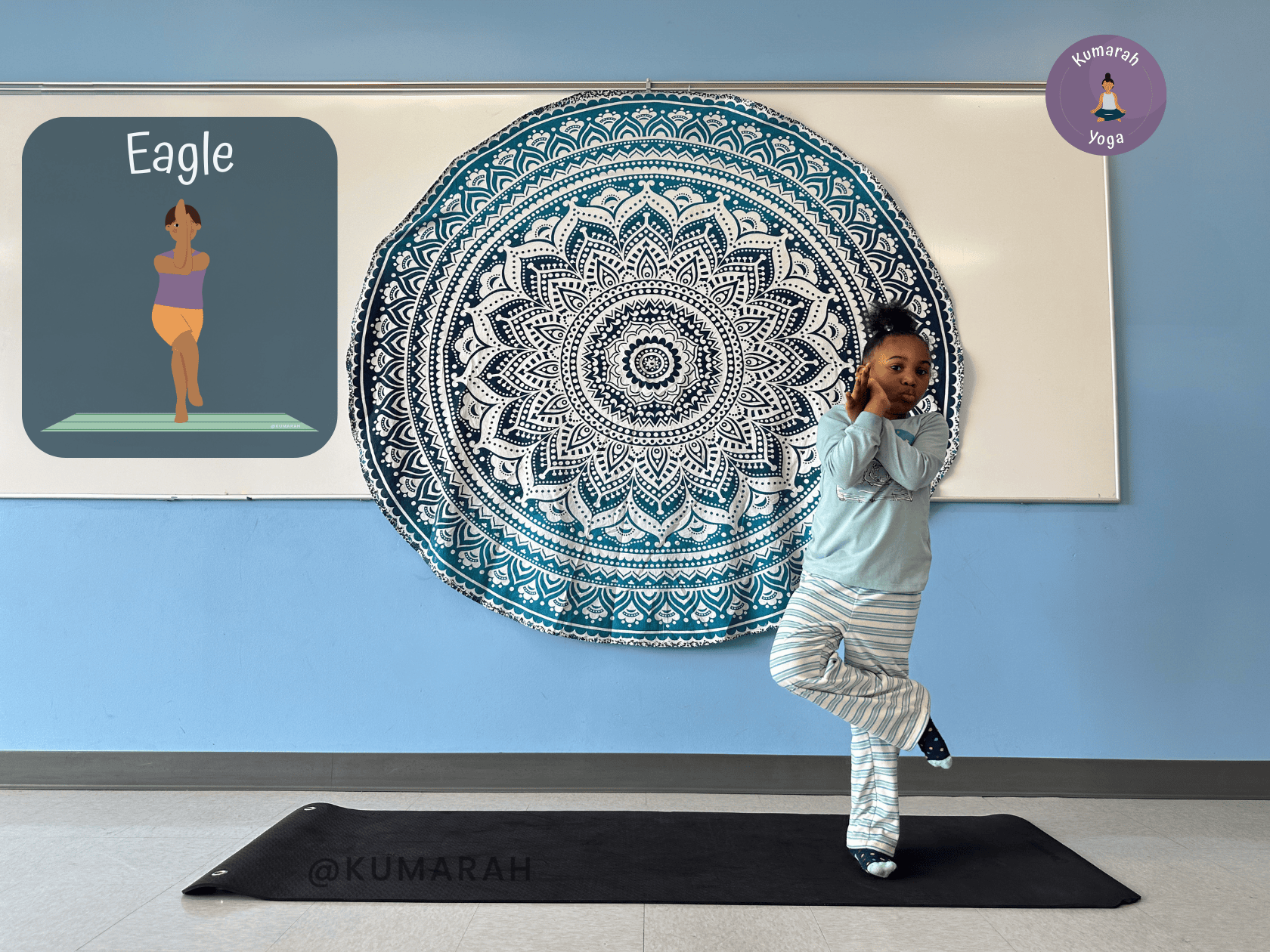
See — eagle pose
“First, let’s use our eyes. What do you see? I see the green plant. You might see the clock, the window, or a book.”
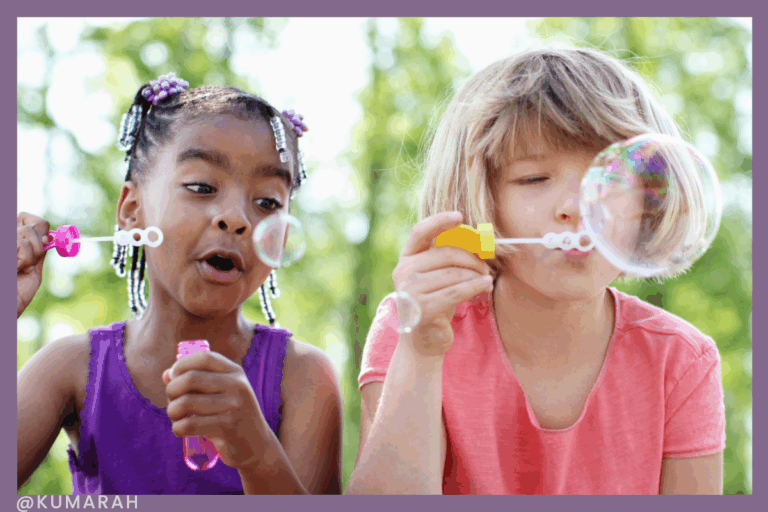
Stand in eagle pose and look with the sight of an eagle. Eagles are the seeing animal; kids know this already and it gives their eyes a job.
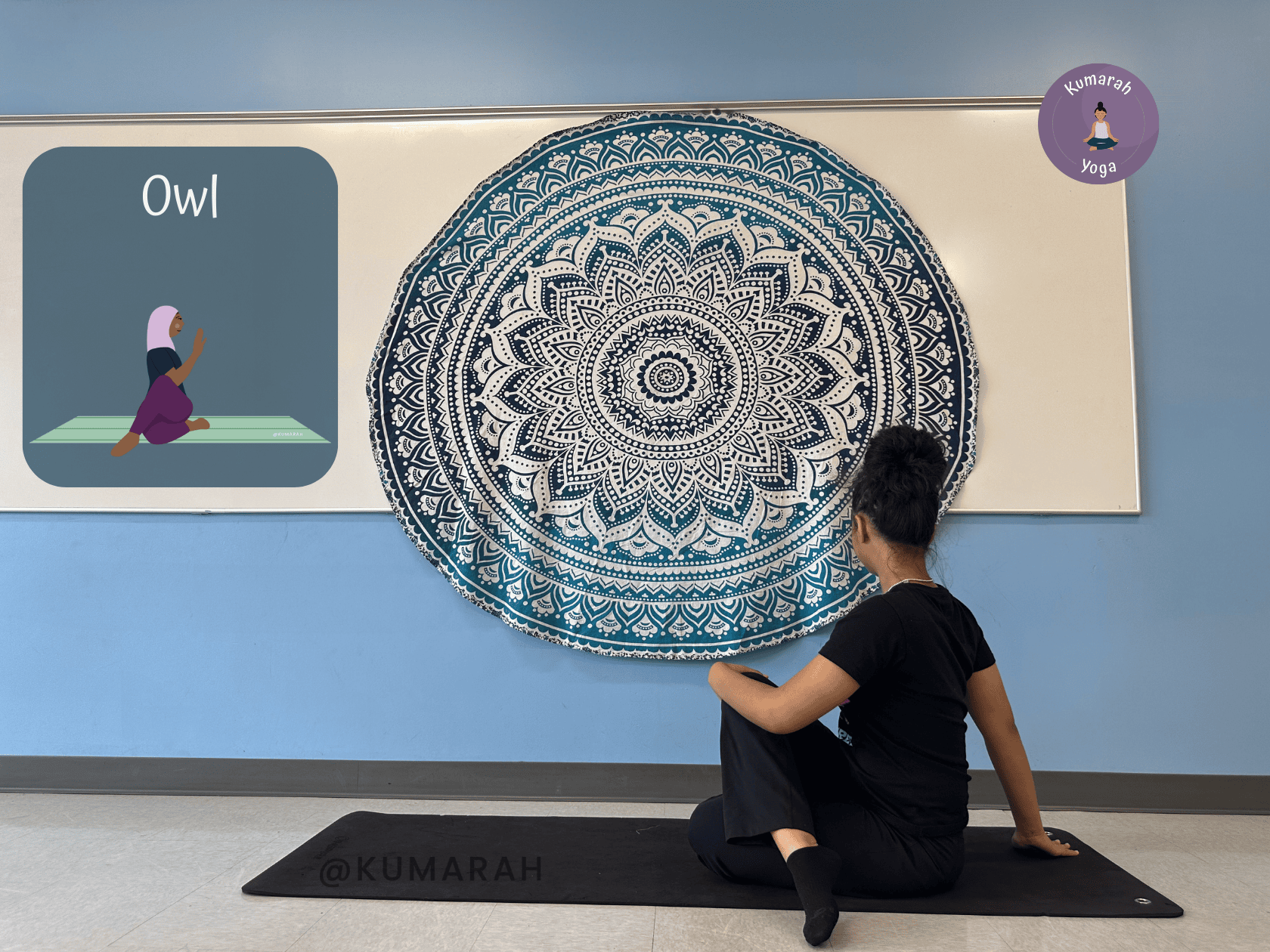
Hear — owl pose
“Now, let’s use our ears. What do you hear? I hear the fan. You might hear a friend breathing or a sound outside.”
Owl pose, listening like an owl. Owls turn their heads to hear better, which is a built-in excuse to get very still and very quiet.
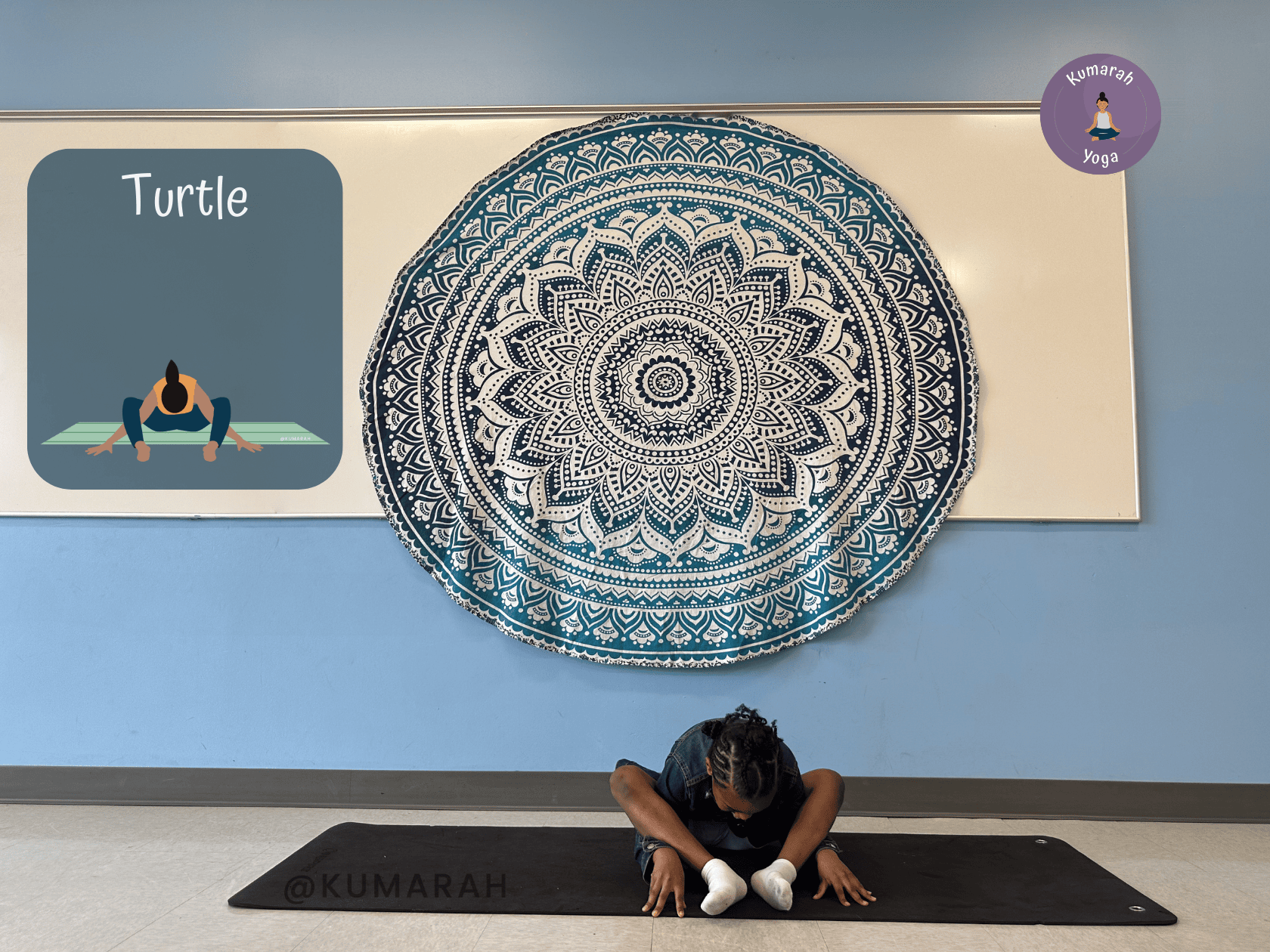
Touch — turtle pose
“Let’s use our hands. What can you feel? I can feel my soft shirt. You can touch your desk or your fuzzy socks.”
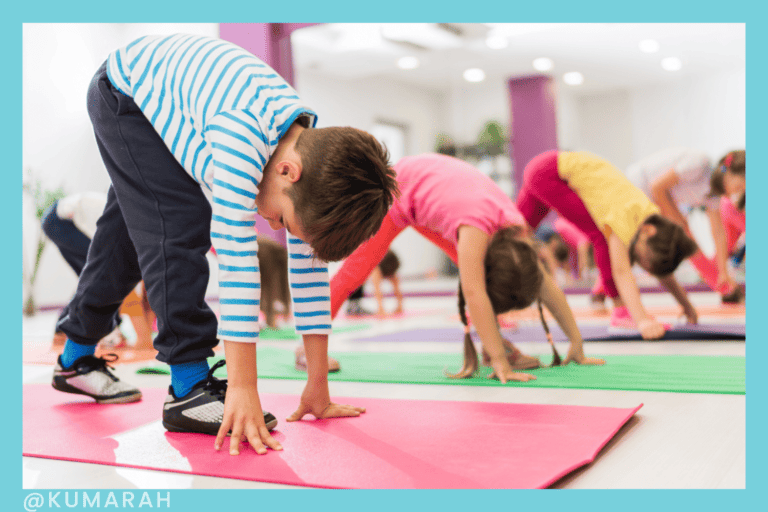
Turtle pose, touching the earth. Hands and feet flat on the floor, feeling what’s under them.
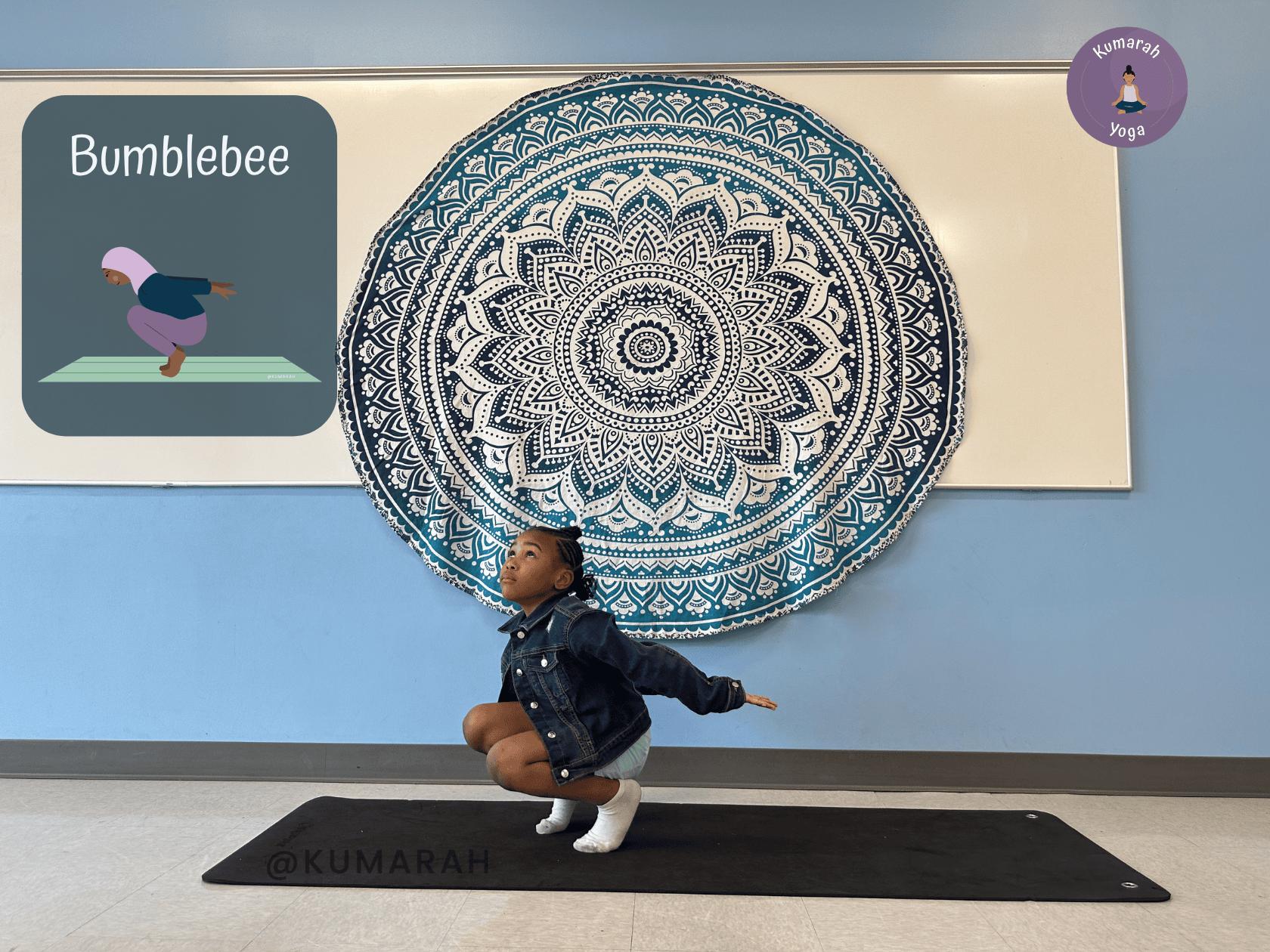
Smell — bumblebee pose
“Let’s use our nose. What do you smell? I smell my coffee. Maybe you can smell a crayon or lunch.”
Bumblebee pose with a bumblebee nose, smelling a flower. If you have a safe scent item, bring it out here.
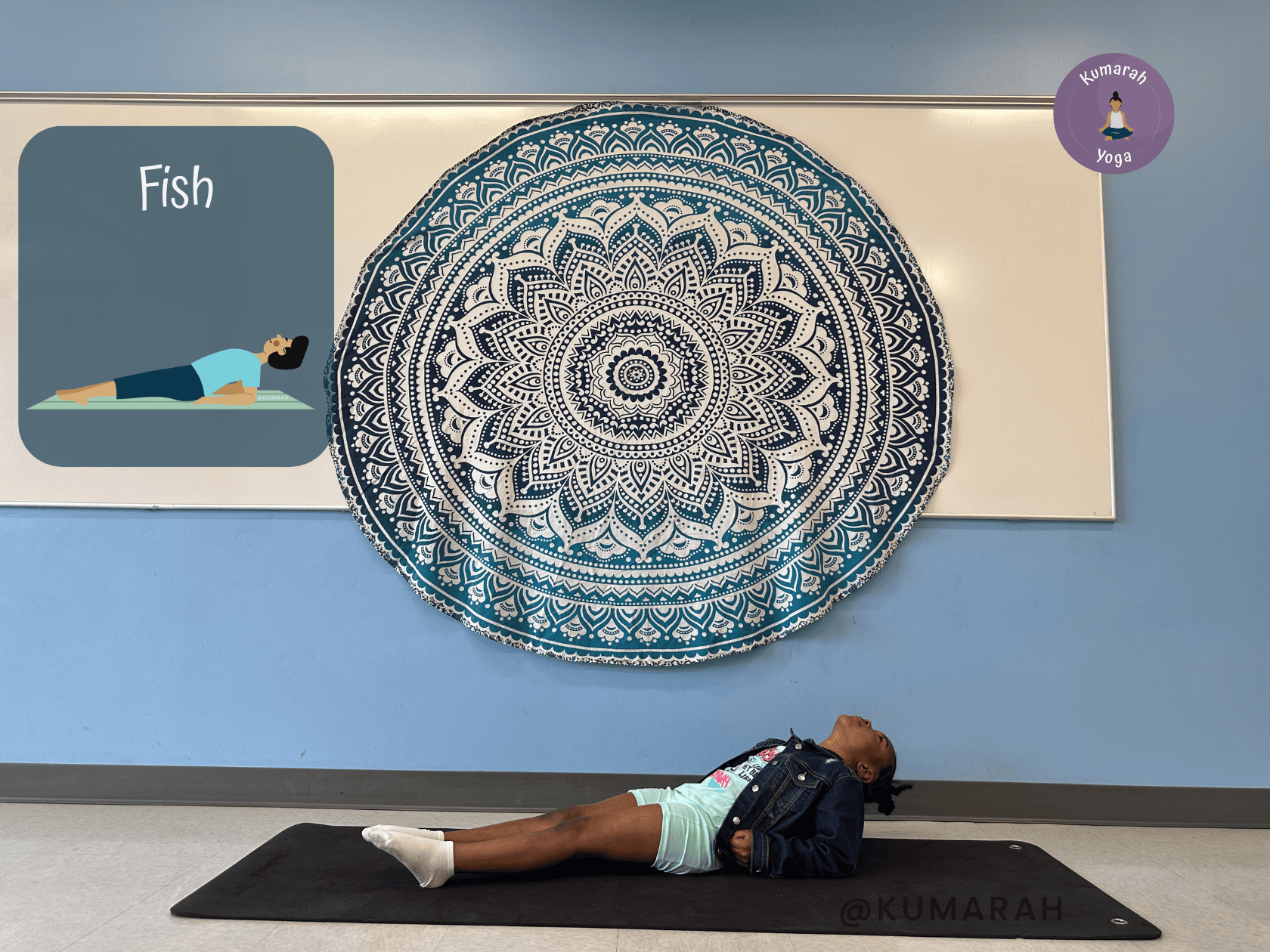
Taste — fish pose
Taste is the one we have to give a warning over.
Just imagine what you’d like to taste right now. (Don’t lick your neighbor. Don’t lick your hand.)
Fish pose, tasting the water, works well for this — it gives them something to do with an imagined taste, and nobody has to put anything in their mouth.
If you’ve planned ahead and want to use a real snack, you absolutely can — just handle allergies and choking risk first, and check with families. But when you haven’t planned ahead, or you’re in the middle of a hard moment and there’s no snack in sight, imagining works fine. Both versions are real. One is the prepared lesson; the other is what you do at 2pm on a Tuesday.
If your kids like moving through animals like this, my Animal ABC yoga pose cards run the whole alphabet the same way.
Two printables, two different jobs
I’ve got two versions of this, and they aren’t interchangeable.
The short one — the one on this page. Five things you see, four breaths, three things you touch, stop. This is the version you run when a child is already upset. It’s short on purpose. Keep it somewhere you can reach it fast.
The full one — five senses down to one. This is the version they run, once they can. Use it as a warm-up, a cool-down, or as a re-entry worksheet: I’ve recovered from my meltdown, and here’s my way back into class.
That distinction is the whole thing. The adult runs the short version during. The child runs the full version before or after. Same technique, two jobs, and knowing which one you’re in front of is most of the skill.
The free printable download also includes the sensory wander pages – one with ideas, and a blank one for when your kids have more time to fully explore a new area.
If you only remember one thing
You don’t have to get all the way to one.
You count for them. You name yours first. You keep the pen. And when they’ve come back far enough to sit with you and look at a room, you stop — even if the worksheet says there are two more steps.
The steps were never the point. Coming back to our own bodies and minds was.