
The words we choose have a profound impact, especially when working with children. For educators, counselors, and yoga instructors, language is one of the most powerful tools for creating a safe, supportive, and effective learning environment.
When we use mindful, positive language, we do more than manage behavior; we empower children to understand their own nervous systems, develop self-regulation, and build confidence.
Children’s brains are wired for connection and safety. When they feel threatened or overwhelmed, their fight-or-flight response activates, making learning and self-control nearly impossible.
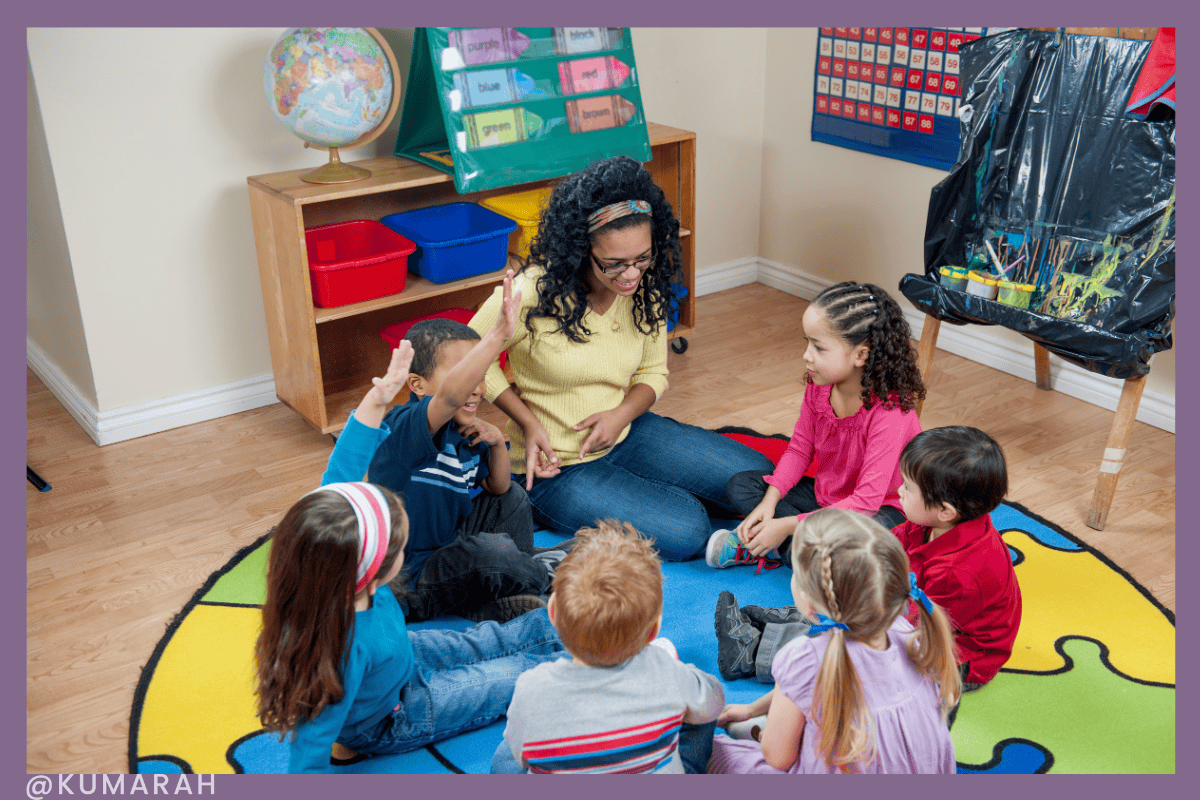
Mindful language—phrasing that is direct, specific, neutral, and process-focused—helps soothe the nervous system. It creates predictability and trust, signaling to a child’s brain that they are safe. This approach shifts the focus from compliance to collaboration, teaching children how to calm themselves rather than simply demanding they do so.
This guide explores a powerful framework for implementing mindful language: Reinforcing, Reminding, and Redirecting. By using these techniques, you can help children build a toolkit of calming strategies and foster a positive, resilient classroom culture.
The Power of Reinforcing Language
Reinforcing language is the foundation of a mindful classroom. It involves verbally noticing and affirming the positive behaviors and efforts you want to see. This technique should make up about 75% of your instructional language. By consistently highlighting what students are doing well, you build their self-esteem and give them a clear roadmap for success. The key is to be concrete, specific, and neutral, focusing on the process rather than a perfect outcome.
Why it Works: Specific praise helps children understand exactly what they are doing right, making it more likely they will repeat the behavior. It also builds intrinsic motivation. Instead of seeking your approval, they learn to value the effort and its results for themselves.
Do Say vs. Don’t Say
- Don’t Say: “Good job, everyone!”
- Why it’s less effective: This is too vague. Children may not know what they did that was “good.”
- Do Say: “I notice so many of you are sitting up tall with focused bodies. That helps everyone feel ready to learn.”
- Why it works: This is specific, describes the desired behavior, and explains its benefit to the community.
- Don’t Say: “Liam is sitting perfectly. Everyone look at Liam.”
- Why it’s less effective: This compares children, which can create feelings of inadequacy or resentment. It also implies a single “perfect” way to be.
- Do Say: (To Liam privately or as a general group observation) “You are working hard to keep your body calm and in your own space. I can see you are focused.”
- Why it works: It focuses on the individual’s effort and avoids comparison.
- Don’t Say: “I’m so proud of you for being quiet.”
- Why it’s less effective: This ties the child’s behavior to your personal feelings, which can create pressure to please you rather than understand the expectation.
- Do Say: “I hear quiet voices and gentle breathing. It makes our room feel calm and safe.”
- Why it works: It is a neutral observation that connects the behavior to a positive, shared outcome.

The Art of Reminding Language
Even in the most positive environments, children will forget expectations. They are still learning and developing. Reminding language is a gentle, direct way to state the goal or desired behavior without judgment. It often involves using yourself as an example and explaining the “why” behind a rule or action. This empowers children to self-correct by giving them the information they need to succeed.
Why it Works: Children, especially from ages 8 to 10, are motivated by understanding the logic behind rules. Explaining that “we stay on our mats to keep our bodies safe” provides a valid reason for the expectation. Gentle reminders also preserve a child’s dignity, giving them the chance to remember and adjust on their own.
Do Say vs. Don’t Say
- Don’t Say: “Remember what I said about staying on your mat?”
- Why it’s less effective: The answer is likely “no.” This can feel accusatory and puts the child on the defensive.
- Do Say: “Check your space. We keep our hands and feet on our own mat to make sure everyone stays safe.”
- Why it works: This is a clear, non-judgmental reminder of both the action and its purpose.
- Don’t Say: “You need to breathe slower to look like me.”
- Why it’s less effective: All bodies are different, and this phrasing invites direct, and potentially discouraging, comparison.
- Do Say: “Notice how my belly gets bigger when I breathe in. Slow breathing sends a calm message to our brains.”
- Why it works: It uses you as a model without demanding mimicry and explains the internal benefit.
- Don’t Say: “Practice makes perfect!”
- Why it’s less effective: Perfection is not the goal. This can create anxiety and a fear of failure.
- Do Say: “Keep trying! Your brain is learning every time you practice, even when it feels tricky.”
- Why it works: It praises the process of learning and normalizes difficulty.
The Necessity of Redirecting Language
When unsafe or disruptive behaviors occur, redirecting language is your tool for firm, clear, and immediate course correction. This is your last resort, used sparingly but decisively. The most effective redirection tells a child exactly what to do, rather than what not to do. The brain tends to focus on the action word, so saying “Walk, please” is far more effective than “No running!” Keep your tone even and your instruction a statement, not a question.
Why it Works: Redirecting language stops an unwanted behavior while immediately providing the desired alternative. By stating the action and its reason (“Go back to your mat so we have enough space to move safely”), you maintain authority while reinforcing community expectations in a respectful way. Asking a child to “try it again” the right way is a powerful tool for practicing safe and kind behavior.
Do Say vs. Don’t Say
- Don’t Say: “Don’t be so loud!”
- Why it’s less effective: It focuses on the negative behavior and doesn’t provide a clear alternative.
- Do Say: “Pause. Use a quiet voice. When you are quiet, I will call on you.”
- Why it works: It gives a clear sequence of actions that will lead to success.
- Don’t Say: “Why can’t you just stay in your spot?”
- Why it’s less effective: This is a rhetorical question that can sound shaming. It demands an answer the child likely doesn’t have.
- Do Say: “Stop. Go back and use walking feet to your mat. We need to stay in our spots to keep everyone safe.”
- Why it works: It is a direct, neutral command that includes a “try it again” moment and reinforces the safety rule.
- Don’t Say: “Because I said so.”
- Why it’s less effective: This ends the learning opportunity and can create a power struggle.
- Do Say: “Stop. Pushing can hurt someone. Use your words to ask for more space.”
- Why it works: It names the unsafe action, explains why it’s not okay, and provides a pro-social alternative.
A Toolkit of Mindful Phrases
Here is a categorized list of phrases you can adapt for your classroom.
Group Cues:
- “I see many friends are ready with their eyes watching and bodies still.”
- “100% of the class is tracking the speaker. That helps us start right away.”
- “Notice the calm energy in the room. We created that together with our quiet bodies.”
Safety Cues:
- “Check that you have enough space to stretch your arms without touching a neighbor.”
- “We move slowly and carefully to listen to what our bodies need.”
- “Stay on your mat to keep your body and other bodies safe.”
Breath Cues:
- “Place a hand on your belly and feel it get bigger like a balloon as you breathe in.”
- “Let your breath be slow and smooth, like a gentle wave.”
- “Can you feel the air coming out of your nose? Is it warm or cool?”
Effort & Process Praise:
- “You are really focusing on your balance. I can see you working hard to stay steady.”
- “I notice you took a deep breath when you got frustrated. That’s a great calming tool.”
- “It’s okay if you wobble. That’s your body learning how to get stronger.”
Transition Cues:
- “In five more breaths, we will put our materials away.”
- “When I ring the chime, let the sound be your signal to find a quiet seat.”
- “Listen for your name, then walk slowly to your spot.”
Simple Mind-Body Calming Activities
Language is most powerful when paired with practice. These simple, kid-friendly activities help children connect with their bodies and learn to self-soothe.
1. Rub Your Tummy, Tap Your Head:
- Script: “Place one hand on your belly and one on top of your head. Gently rub your tummy in a circle and lightly tap your head. This can feel a little silly! It helps our brain focus on two things at once. Now switch hands. How does that feel?”
2. Thumb-to-Finger Touch:
- Script: “Hold one hand out. Touch your thumb to your pointer finger. Now touch your thumb to your middle finger. Then your ring finger. Then your pinky. Let’s do it again, slowly. Feel the touch of your thumb on each finger.”

3. Feel Your Breath:
- Script: “Hold your hand flat under your nose, like a little shelf. Close your mouth and breathe quietly through your nose. Can you feel the warm air on your hand when you breathe out? Let’s feel five warm breaths together.”
4. Balloon Belly Breaths:
- Script: “Put both hands on your belly. As you breathe in through your nose, imagine you’re filling up a big balloon in your tummy. Feel your hands rise. As you breathe out, let the air slowly leak out of the balloon and feel your hands lower.”
5. Star Hand Breathing:
- Script: “Spread one hand out like a big star. With your other pointer finger, trace up your thumb as you breathe in, and trace down the other side as you breathe out. Trace up your pointer finger as you breathe in, and down as you breathe out. Continue for all five fingers.”
6. Shoulder Roll and Sigh:
- Script: “Breathe in and lift your shoulders all the way up to your ears. Squeeze them tight! Now, breathe out with a big sigh—’Haaaa’—and let your shoulders drop down. Let’s do that two more times to let go of any tension.”
7. Slow-Motion Walk:
- Script: “We’re going to walk across the room in super slow motion, like we’re walking on the moon. Lift one foot very slowly. Feel your foot on the floor. Now lift the other one. Notice every tiny movement in your body.”
8. Five Senses Scavenger Hunt:
- Script: “Let’s pause and use our senses. Silently, look for 5 things you can see. Now, listen for 4 things you can hear. Feel 3 things with your body (like your shirt, the chair). Notice 2 things you can smell. And finally, can you taste 1 thing (even just your own mouth)?”
Building a Routine
Children thrive on predictability. Integrating these techniques and activities into a consistent routine is key.
- Start with a Simple Routine: Begin each class or day with a 2-minute calming ritual. For example:
- Ring a chime to signal the start.
- Lead three Balloon Belly Breaths.
- Guide a quick Thumb-to-Finger Touch.
- Use Reflection Prompts: After an activity, ask questions to help students integrate the experience.
- “What did you notice in your body during that activity?”
- “Where in your body did you feel calm?”
- “When is another time you could use your balloon breath?”
By intentionally choosing our words, we give children the invaluable gift of self-awareness and emotional resilience. We move beyond managing behavior and begin to truly teach the whole child, empowering them with strategies that will support their well-being for a lifetime.
Ready to learn more? Join the Mindfulness Tools for Kids and Classroom mini course to gain access to the curriculum based on these concepts. Dive in today and get started bringing actual calm to your home with kids or classroom with students.











Excellent ideas! Thank you so much 🙏🏻
You are very welcome! Happy to help bring some calm and mindfulness to your life with kids 🙂