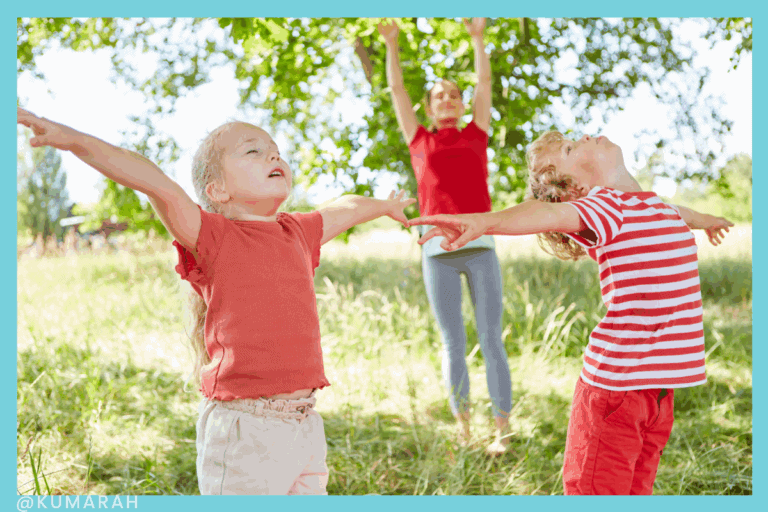
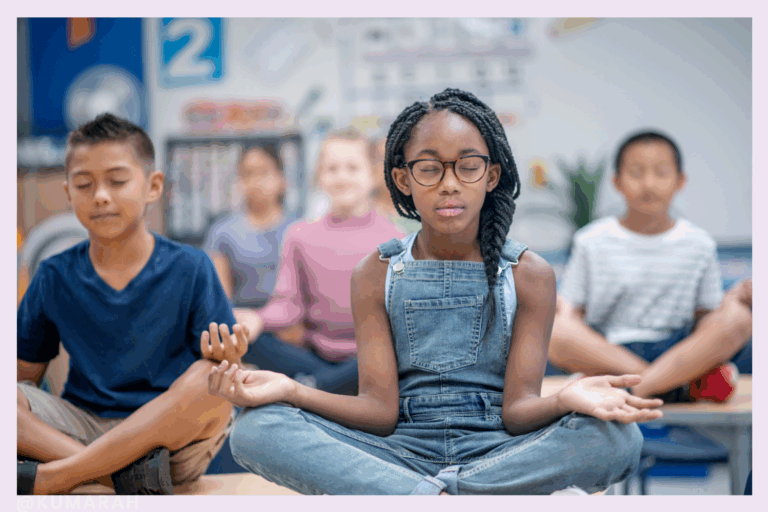
The hardest part of family yoga usually isn’t the kids. It’s the grown-ups who want their child to do it the “right” way. A lot of parents who come to a parent-and-child class have done yoga themselves, and they want their 3- or 4-year-old to do each pose exactly the way it’s “meant” to be done.
So I start every family class with a little disclaimer about how kids grow and develop: their body proportions are different from ours, and their balance and strength are still developing. Then I give the grown-ups my one rule: praise your child for trying! If they copy me or you and it looks even 5% like the pose, give them praise.
They’ll self-adjust eventually. We can give small cues for one body part at a time, like “lift your arms all the way!” or “try it with one leg straight!” But moving them physically, or telling them “it’s not like that,” isn’t what’s best for them in the moment.
Our goal is to let kids explore new movements and body awareness on their own. As they grow, they’ll build those muscles and mirroring skills with practice. Our job right now is to build their confidence in controlling their own bodies.
This family yoga lesson is for kids about 3 to 5 and their grown-ups (older siblings can join in too). The theme is gratitude and connection, and it’s built around the picture book The Gratitude Jar by Katrina Liu. Most of it is partner poses, so kids and grown-ups are working together the whole time.
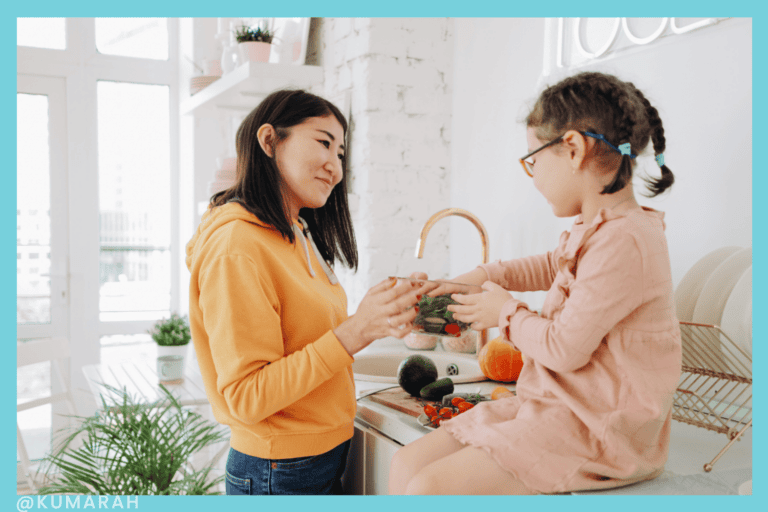
What you need
- A copy of The Gratitude Jar by Katrina Liu
- A small jar for each grown-up and kid pair (a jam jar or baby food jar works, or ask families to bring one), or one big jar for the group
- Colored slips of paper and something to write with
- An orange or an orange ball
- A singing bowl or breathing ball, if you have one
- Stuffed animals (optional, for the greeting)
- A parachute (optional, see below)
- Mats or a soft floor
Start with names and one thing you’re grateful for
Go around the circle: name, age, and one thing you’re grateful for. You can also have each kid share their favorite animal, or pick a stuffed animal from a basket, and the whole group does that animal’s pose.
Add a pose or a little movement to each name. If you just go around saying names and ages, nobody’s listening by the third person.
It might be hard to come up with something you’re grateful for right away. That’s okay.
Warm up
A gentle, modified Sun Salutation A, everybody moving together:
- Upward mountain (tadasana)
- Waterfall (reach back)
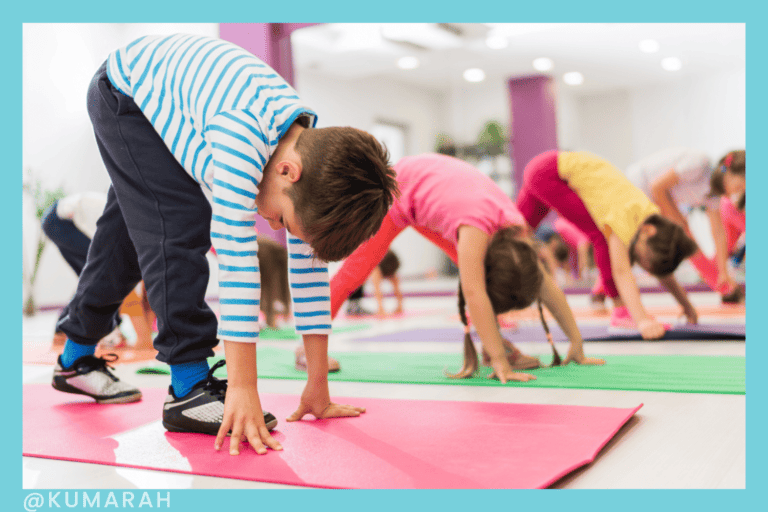
- Forward fold (touch your toes)
- High plank
- Down dog
- Frog (hop your feet up)
- Forward fold
- Upward mountain
Repeat it 2 or 3 times. Add Warrior 2 or tree pose at the end for a little balance practice. With little ones, I do this to “Dance for the Sun” by Kira Willey, or grab it for free or her site here.
Connect: back-to-back breathing and back tracing
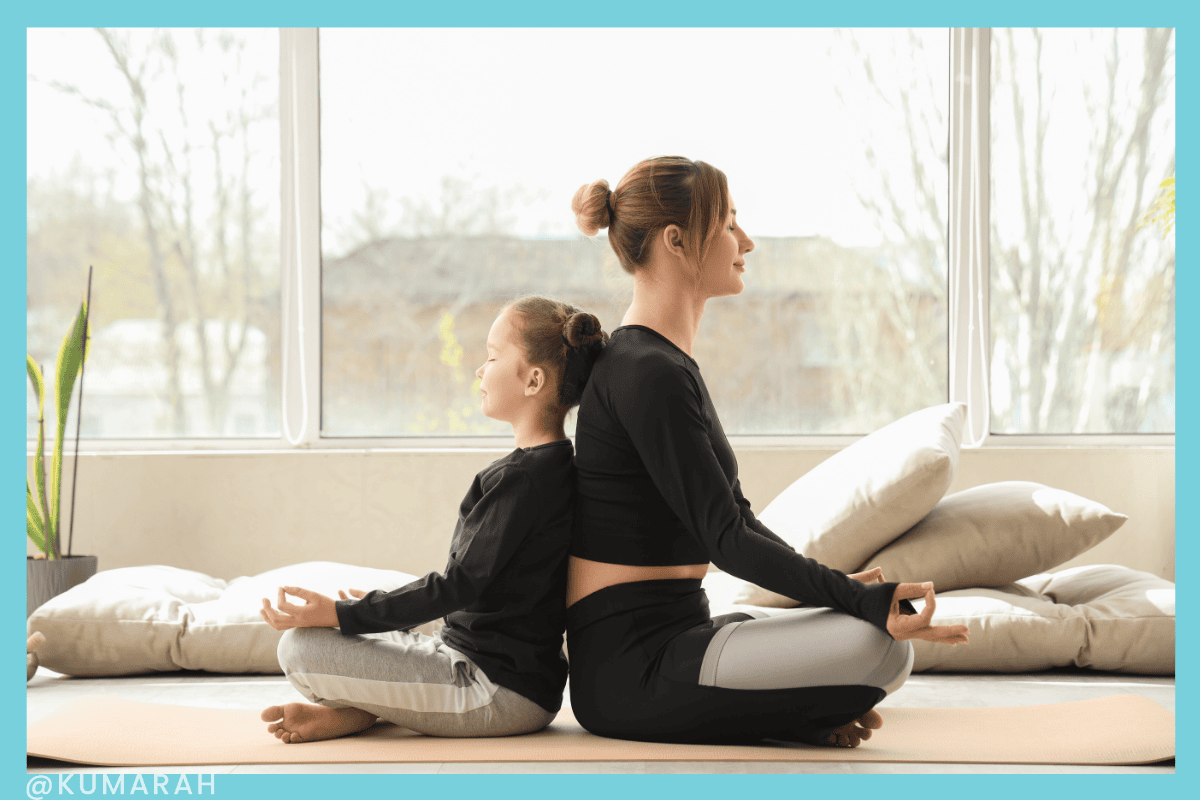
Back-to-back breathing. Sit back to back with your partner and feel each other breathe.
Back tracing. One person faces away. The other gently draws a picture on their back, like a flower, a heart, a mountain, or the sun. Kids who can read and write can draw a word: a name, or something they’re grateful for. Tell them what to draw, or let them choose and have their partner guess.
Learn the partner poses first
Practice these before the story, because the story uses most of them.
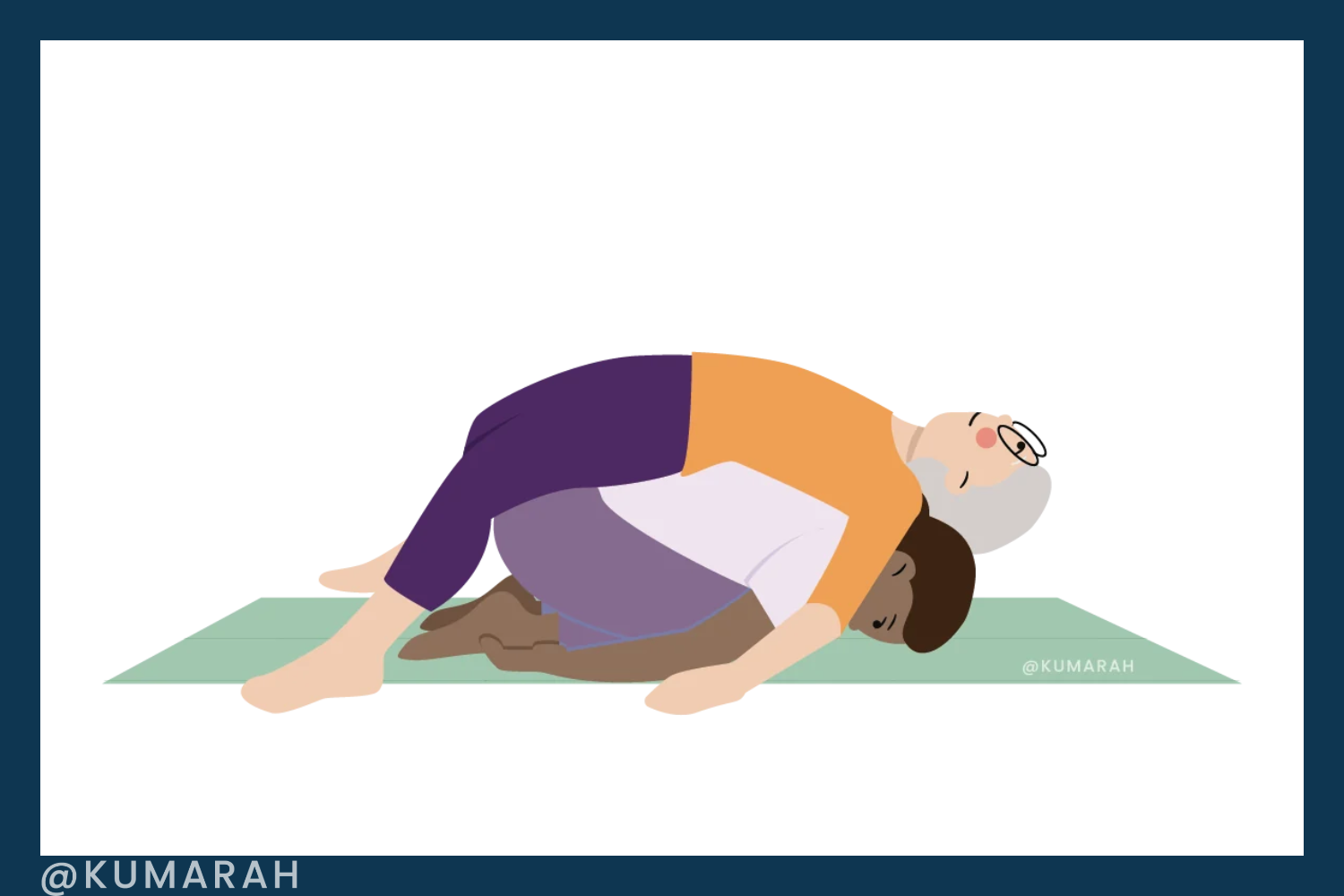
- Lizard on a rock. The grown-up is the rock in child’s pose. The kid is the lizard, lying on the grown-up’s back. Kids choose face up or face down, depending on their balance. Most will go face down to hug their grown-up.
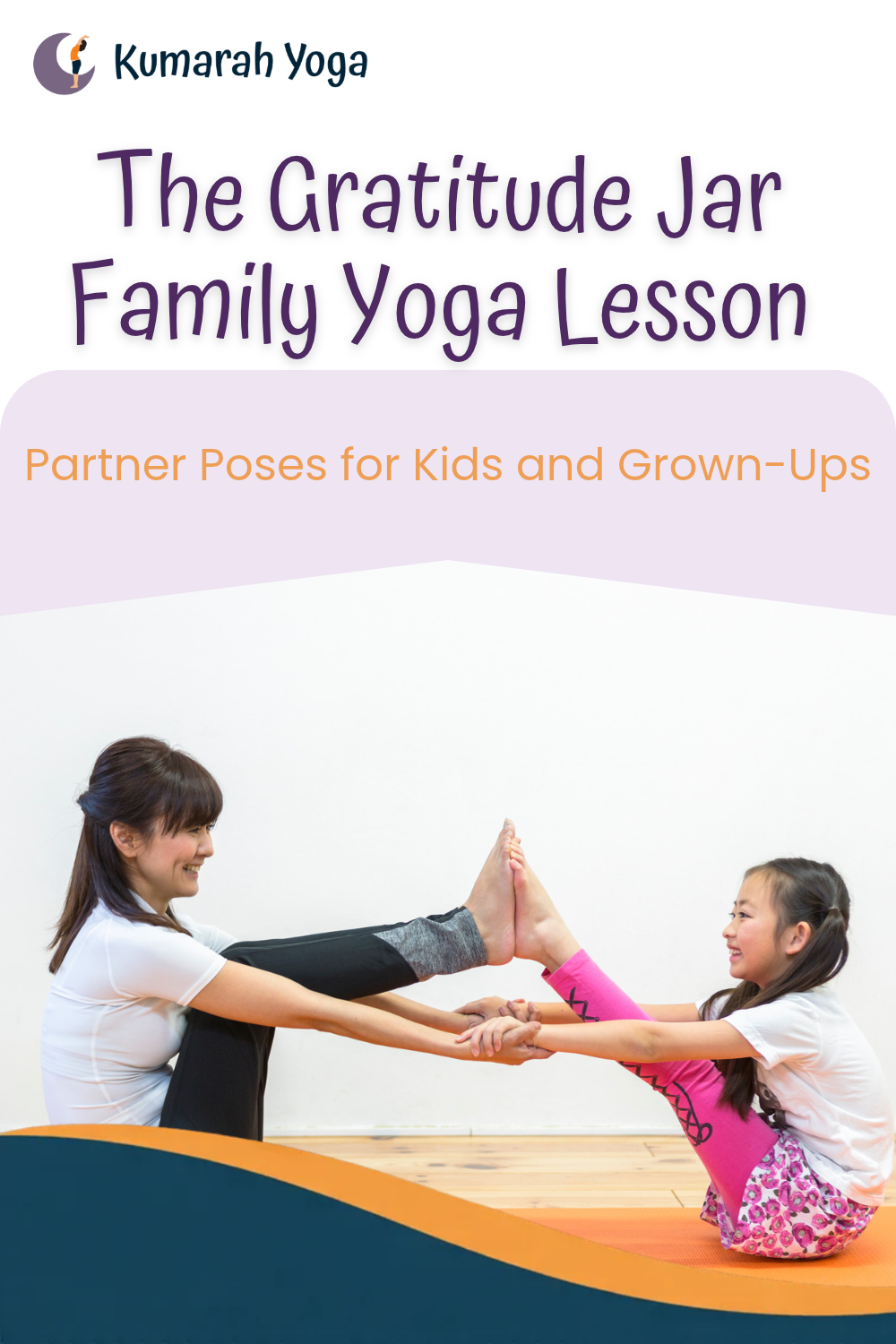
- Double boat or flower. Face each other in boat pose. For flower, open the legs a little wider: hands on the outside of the feet with feet in the middle, or the other way around, depending on how flexible everyone’s hamstrings are.
- Double down dog (optional, best for kids 7–10). The grown-up does down dog with hands and feet on the floor. The kid puts their hands on the grown-up’s back or shoulders and does down dog. Kids with strong enough shoulders can put their hands on the floor and their feet up on the grown-up’s back.
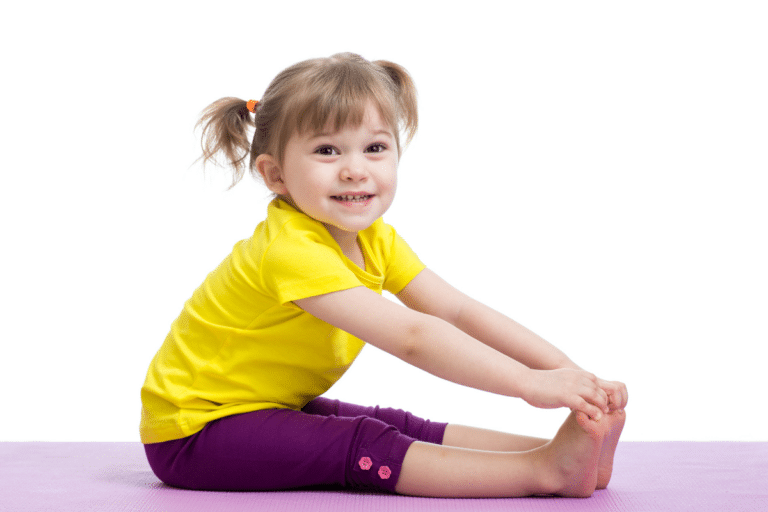
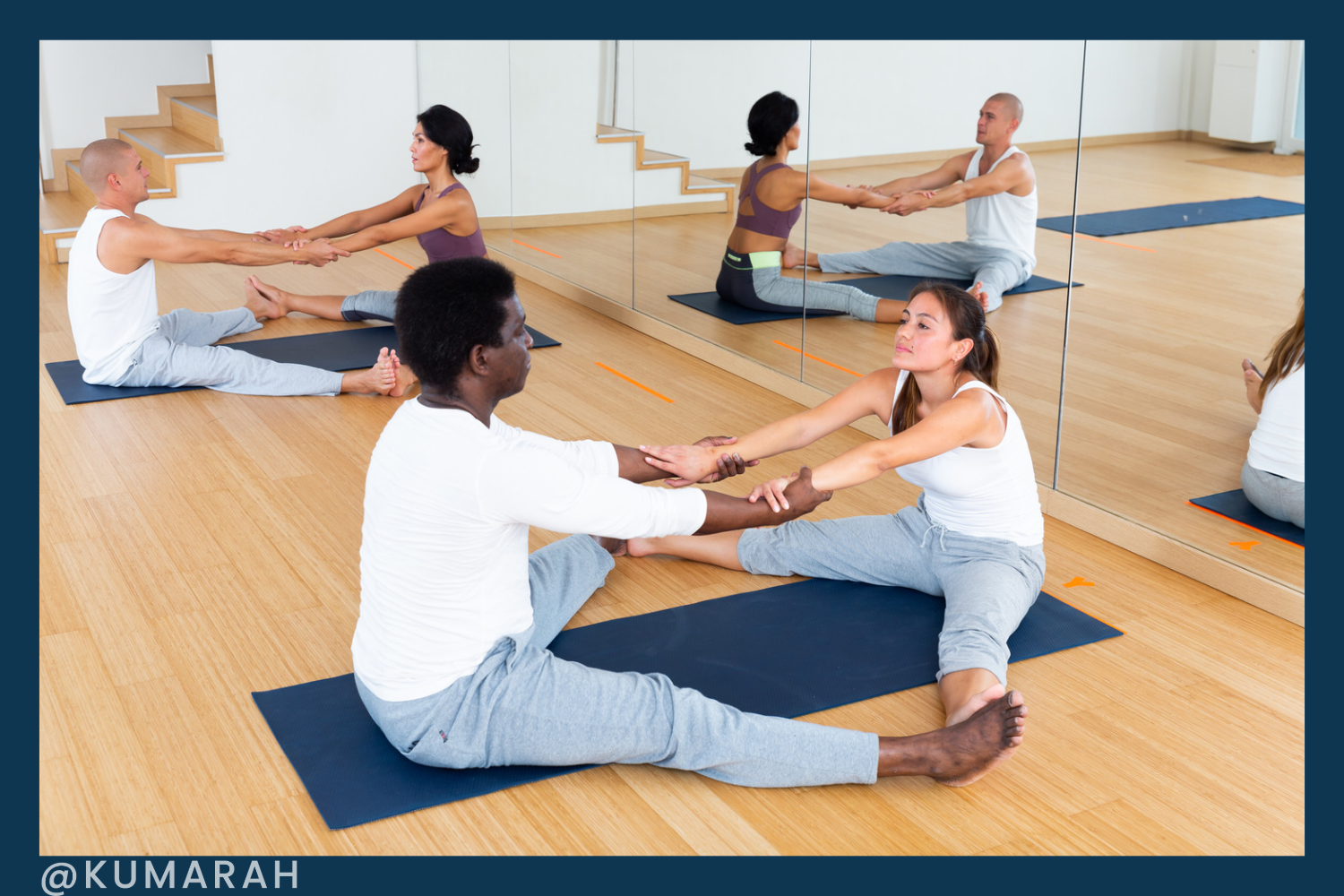
- Seesaw. Sit facing each other in a seated forward fold, legs together or in a V. Reach for each other’s hands and gently stretch forward and back.
- Lean on me shoulder stretch. Face each other, reach your arms out, and lean forward with your hands on each other’s shoulders. Or hold forearms and stretch that way.
- Open heart pose (optional, best for kids 7–10). Both face the same direction. One person puts their hands behind their back, and the other holds their wrists while they gently lean forward. Then switch. Ideally the grown-up is the one holding the kid up, depending on everyone’s size, strength, balance, and cooperation.
- Rooftops. Face each other, hands together and up, and lean in at the shoulders to make a partner house.
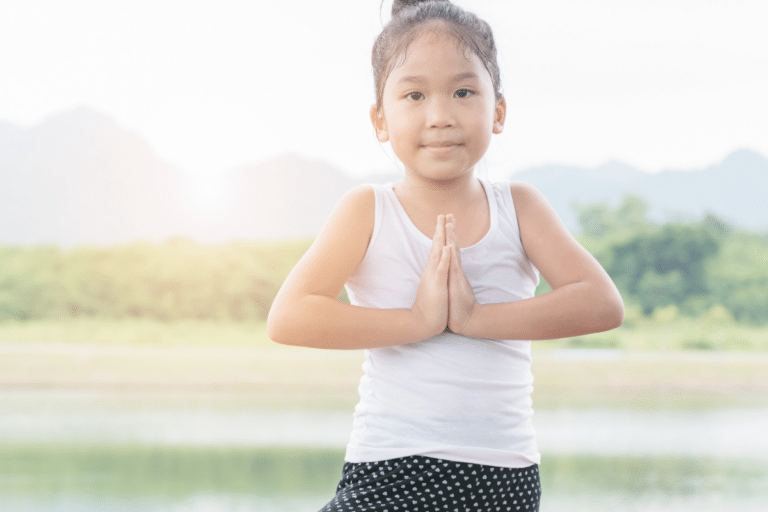
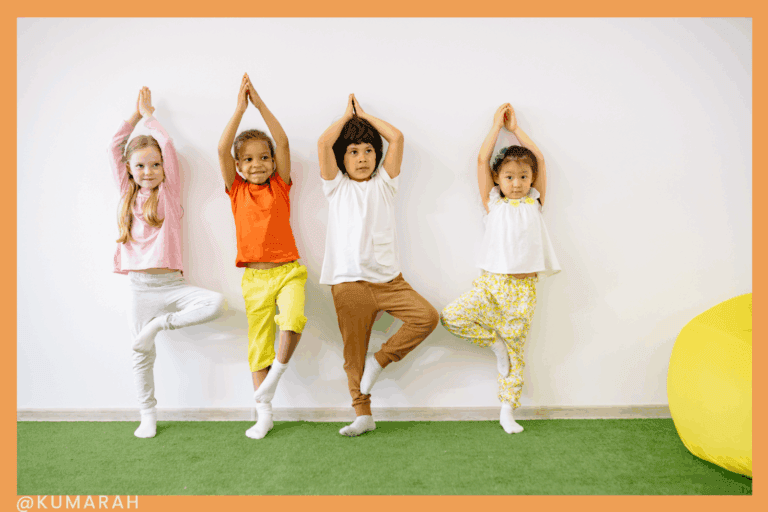
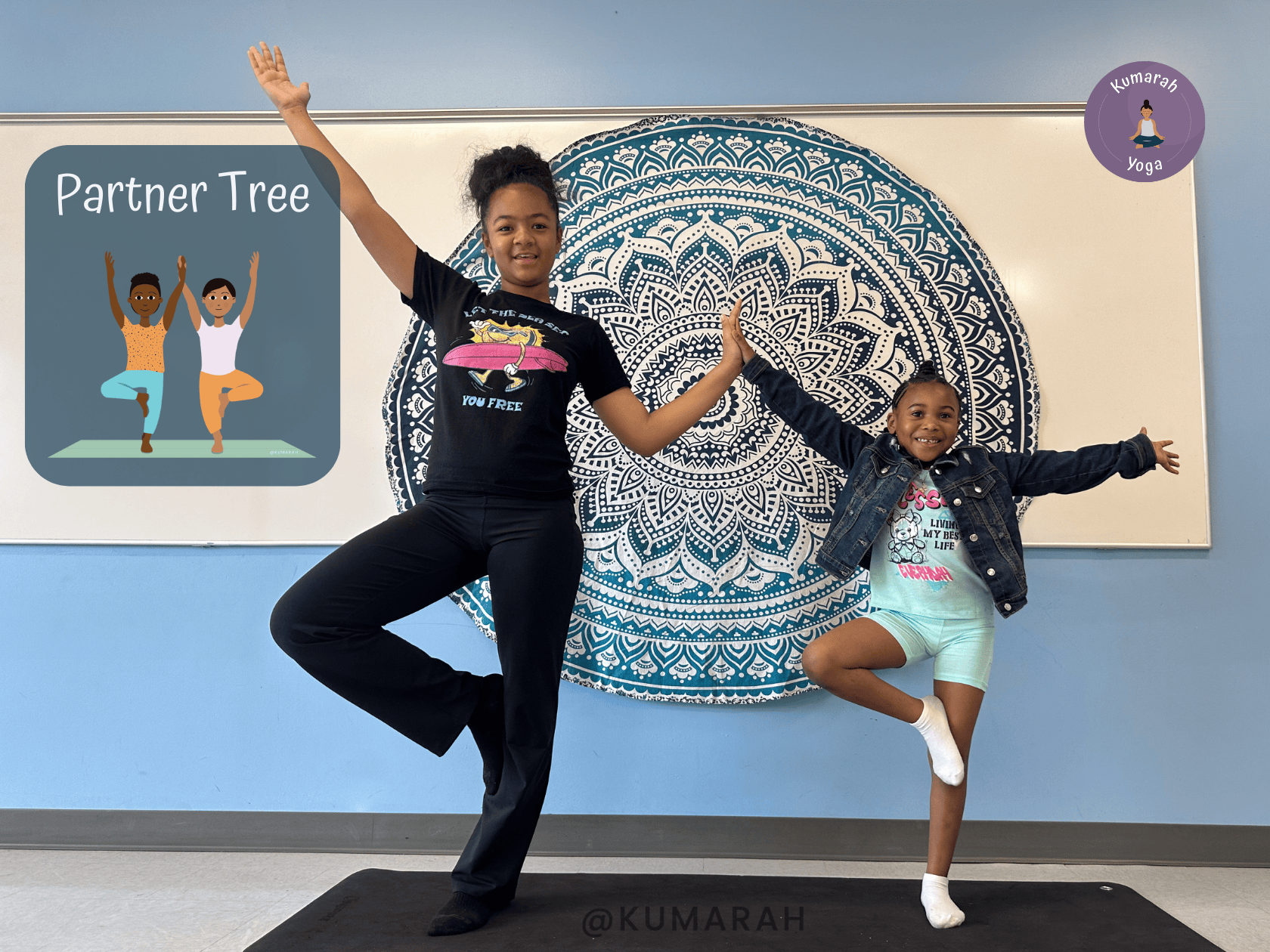
- Partner tree. Stand side by side and balance in tree together.
- Back-to-back pretzel (optional, best for kids 7–10). Sit back to back. Reach your arms around to your partner’s opposite knee and twist. Then go to the other side.
Read The Gratitude Jar, with a pose for each page
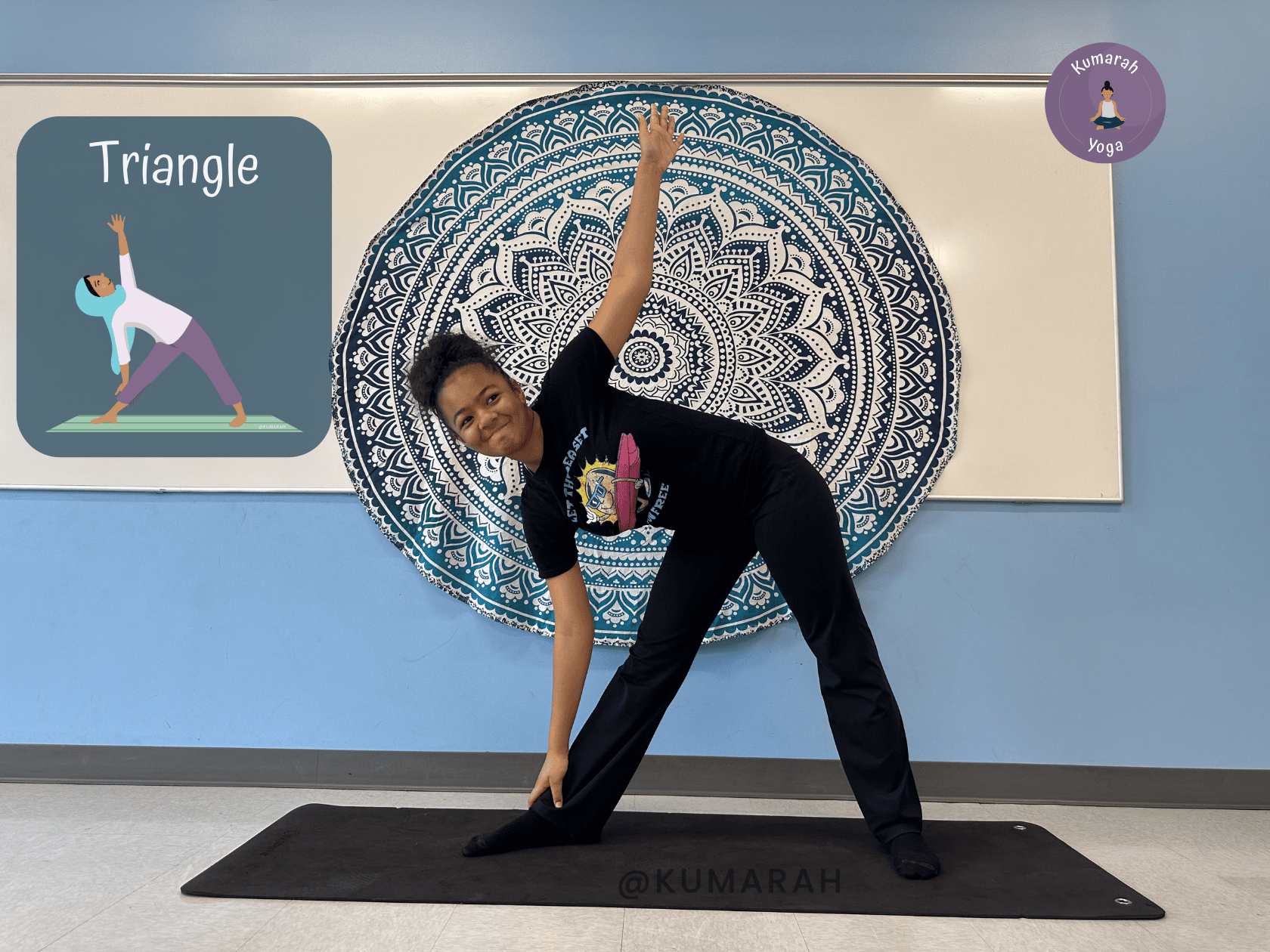
Birthday Hat (Triangle Pose)
Emma got the pink bracelet at the birthday party, and that’s not fair! Make a birthday hat with triangle pose. Or just share: if you got a bracelet, what color would you want? How might you feel if you didn’t get it?
House (Rooftops)
Sarah’s house is so much bigger. Face each other, hands together and up, and lean in at the shoulders to make a partner rooftop. Take a few steps away from each other to make the stretch deeper.
Partner Pizza
Leftovers again? She wishes they were having pizza. Do a wide-legged fold facing each other, holding hands. It’s more of a diamond, but pretend it’s a pizza. Talk about what pizza you’d have.
Seashell (Lizard on a Rock)
Jackson had the coolest seashell from his summer trip. The grown-up curls into child’s pose, round like a seashell on the seashore, and the kid lies on their back as the lizard.
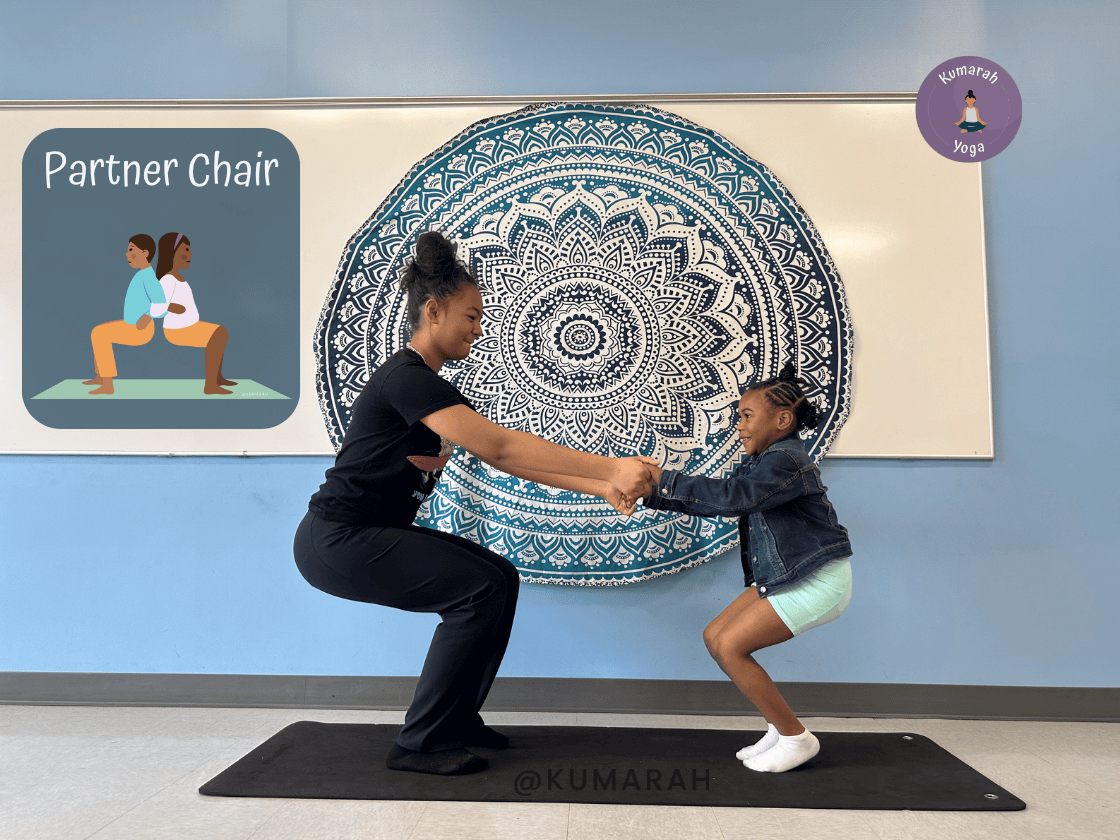
Jar (Partner Squat)
Mom carries in a big jar. Face each other, hold hands, and see if you can both stay in a squat.
Bunk Beds (Stacked Crab)
Optional, best for kids 7–10. Everyone writes or draws something they’re grateful for, like a warm bed to sleep in. The grown-up does crab pose. The kid puts their feet on the grown-up’s knees and their hands on their shoulders, and the grown-up lifts up. It’s easier than it looks once your joints are stacked.
Sunshine (Upward Mountain)
Mom is grateful for the sunny weather. Reach up tall.

A Hug
Nina is grateful for her sister. Give your partner a hug.
Share What Goes in Your Jar
On Thanksgiving Day, they’ll read everything in the jar. Tell your partner 2 or 3 things you’d put in yours.
Lemon Tree (Partner Tree)
Stand side by side and balance in tree together.
Library (Seesaw)
Sit facing each other and hold hands. Seesaw forward and back, opening and closing like a book. Or do a wide-legged forward fold and rotate side to side, like a windmill.

Homemade Dumplings (Mat Roll-Up)
Grandma’s homemade dumplings! Roll your partner up in the yoga mat. It’s not really a dumpling, but kind of. Or do lizard on a rock.
Turkey Pose (Optional)
Read to the end of the story, and finish with turkey pose. Make your arms into wings and say a gobble gobble!
Make your own gratitude jar
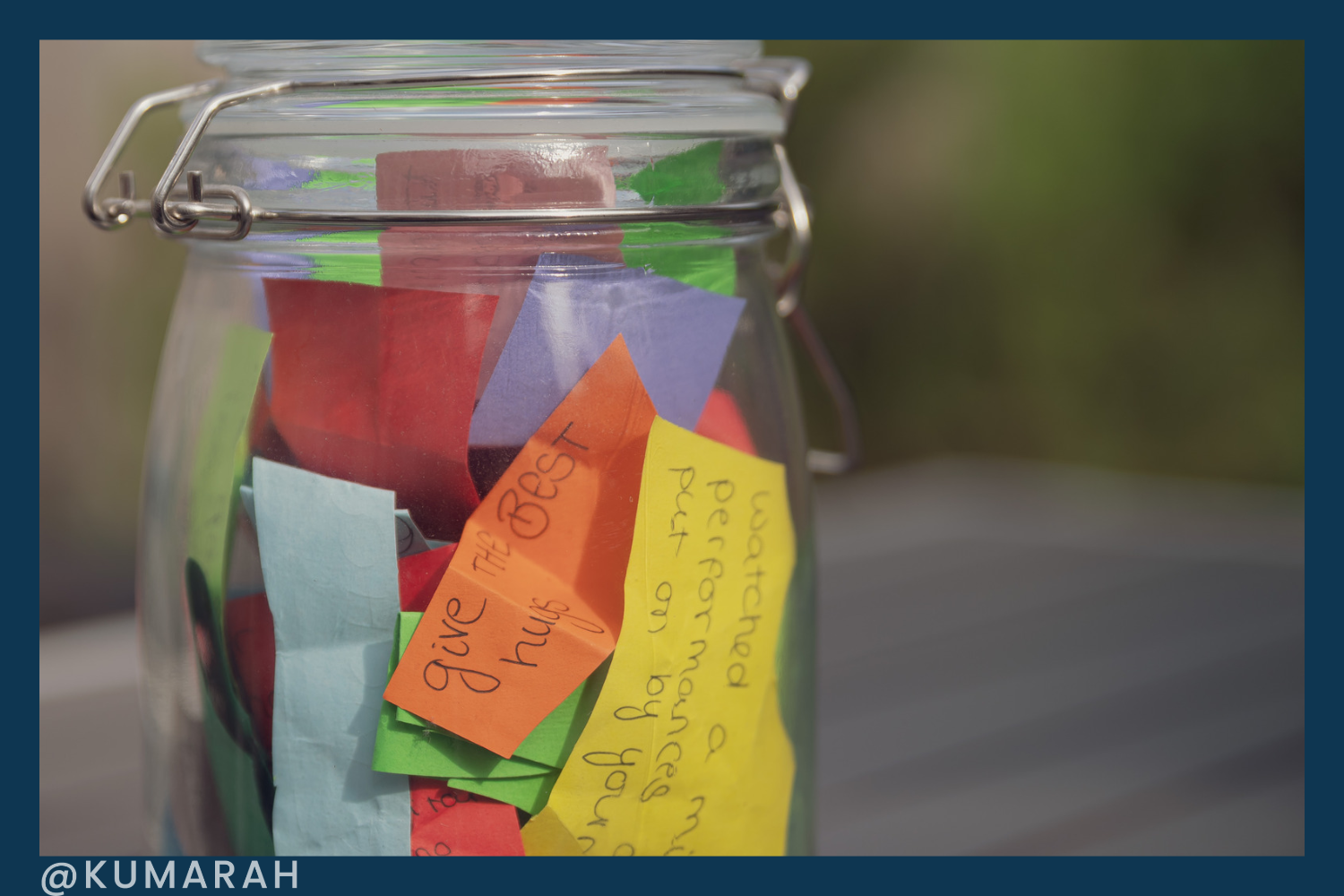
In a class, give each grown-up and kid pair a small jar: a jam jar, a baby food jar, or one they bring from home. I bring colored slips of paper. The child names the things they’re grateful for, and the grown-up writes them down. Then the child puts the slips in the jar.
Next, they pick one out at a time, read it, and make up an action or a pose to match. Families can keep doing this at home.
For a bigger class, or a class without grown-ups, we fill one jar all together. The actions and poses may be silly, but that’s half the fun.
The answers from little kids are always hilarious. When we asked my 3 year nephew what he was grateful for one year, he said very seriously, “ham.”
Game: Orange You Grateful
Sit in a circle with an orange or an orange ball. Pass it to the next person using only your feet, in assisted boat or assisted butterfly with your feet together to pick it up. When you have the orange, share one thing you’re grateful for.
Optional: the parachute
A parachute is so much fun, and it can get really high energy. I only suggest it for groups that can let the energy get high and then bring it low again. It works best with lots of grown-ups holding the edges while the kids crawl underneath or do a pose under it. Really little kids may refuse to come back out if they’re having too much fun!
A few parachute ideas:
- Shake it at different levels: low, high, in the middle, slow, fast.
- Toss one stuffed animal in the middle, make a quiet parachute, then on 3, fling it up and watch the animal bounce.
- Lift the parachute, pull it down into a dome, and let one or two kids at a time hide underneath, then hop up when it rises.
- Keep it to 4 or 5 kids who move at about the same level. Runners and crawlers together means crashes.
- Have a plan to calm them down before you put it away, and a song ready to bring them back to their mats.
Gratitude meditation
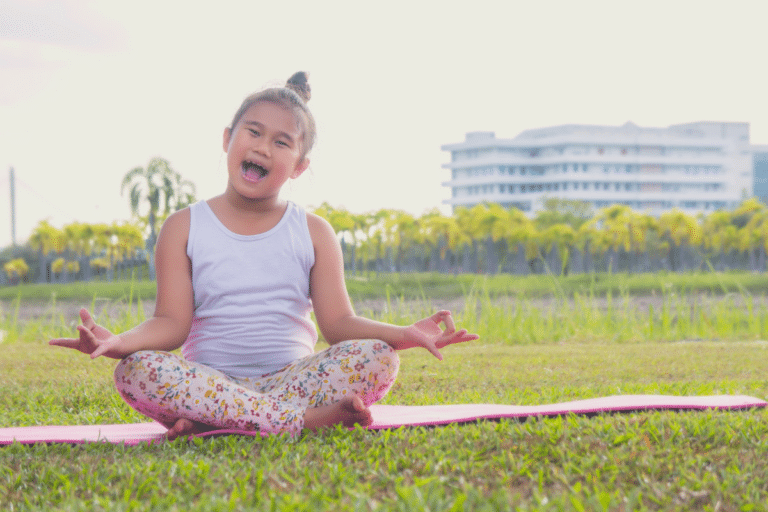
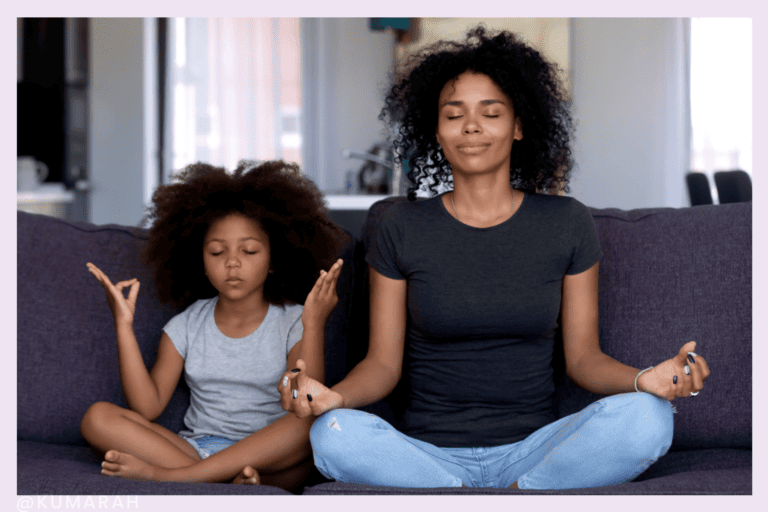
At the end of our gratitude yoga session, let’s take a moment to sit comfortably with your kids. You can sit cross-legged on the floor or in any position that feels good for both of you. Close your eyes gently and take a deep breath in through your nose, and then exhale slowly through your mouth. Feel your body relax with each breath.
Now, imagine a little jar that you hold close to your heart. This jar is special because it collects all the things you are grateful for. Visualize opening the jar and let your mind fill it up with moments from today that made you happy or moments you’re thankful for. It could be the sound of laughter, the warmth of a hug, or even the feeling of air in your lungs.
As you continue to breathe in and out, think about each of these moments and feel the gratitude grow inside you. If you’re with your child, take turns sharing a few things that you placed in your imaginary jar. Let those grateful feelings be like a warm glow filling your entire body.
When you’re ready, slowly open your eyes and give each other a smile and hug. Remember that your gratitude jar is always with you, ready to be filled with even more happy memories. Take this warm, thankful energy with you as you go about your day. Namaste.
With toddlers (ages 1 to 3)
Partner poses are hard when the grown-up and the kid are so different in size, so keep these simple.
- Greeting: names and ages, and each kid picks a stuffed animal and does its pose.
- Warm-up songs: “Tick Tock Yoga Clock” (Karma Kids Yoga) and “All I Wanna Do Is Dance” (Kira Willey). Grown-ups can hold their toddler and dance with them.
- Breathing: pom pom tennis (blow a pom pom or cotton ball back and forth across the mat), and trace-5 breathing, where the kid traces the grown-up’s fingers, or the other way around.
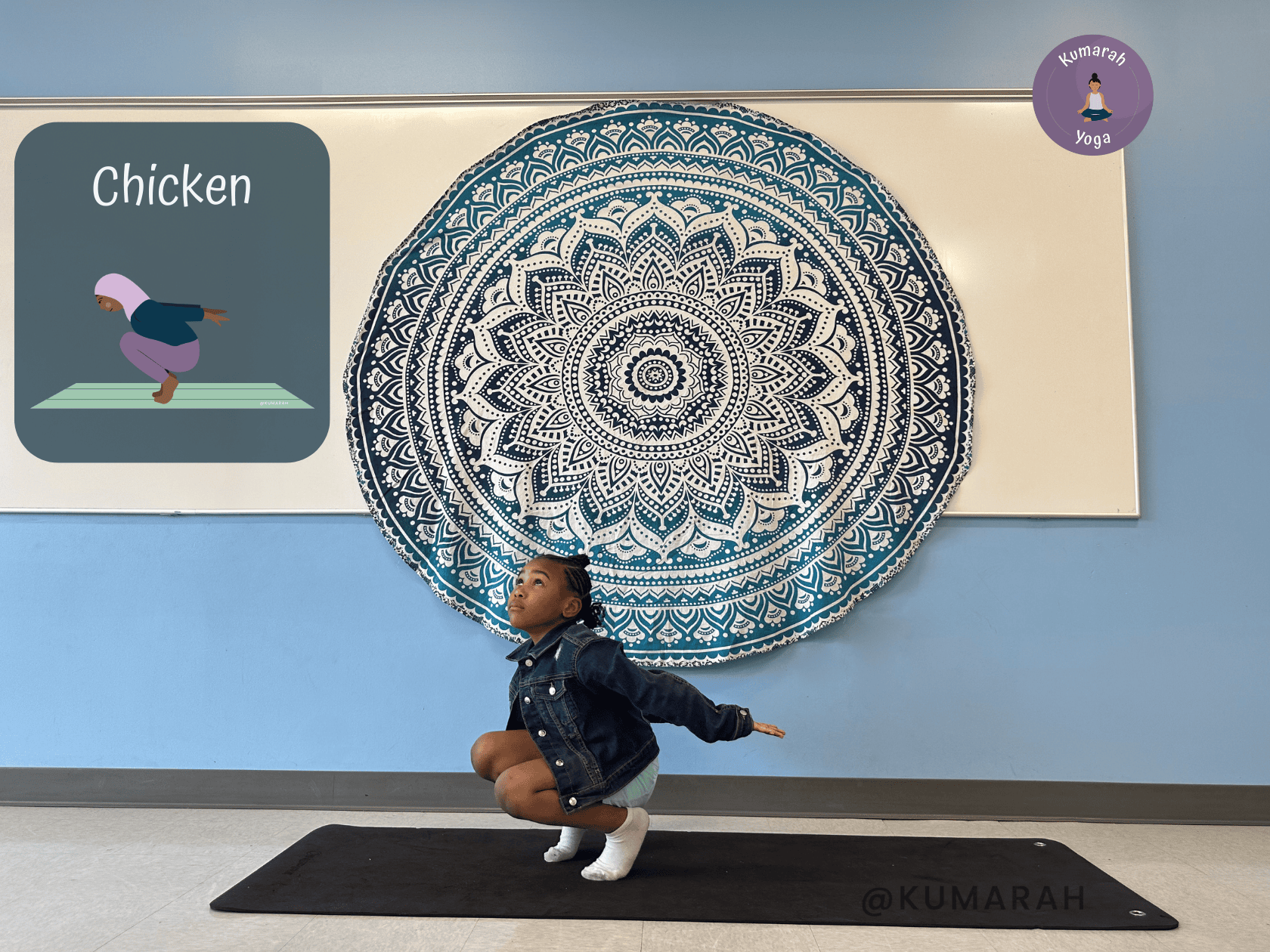
- Partner poses: lizard on a rock; stacked boats (the grown-up in boat with the kid on their lap, rowing); puppy under down dog (kids crawl under their grown-up’s down dog); Warrior 2 with the kid on your hip; Superman (the grown-up lies down in candle pose and flies the kid on their feet).
- Horsey pose: the kid sits on the grown-up’s back while they’re on all fours. Skip it for grown-ups with back issues or a pregnancy. Instead, do goddess pose and bounce the kid on your thigh.
- Savasana: heads on tummies. The grown-up lies down and the kid rests their head on their grown-up’s tummy, arm, or shoulder.
- Craft: trace a hand and make a turkey, or a flower or mandala, and the grown-up writes what the kid is grateful for.
More books for family gratitude yoga
- Gratitude Is My Superpower by Alicia Ortego — a good book for practicing thanks and positivity
- The Family Book by Todd Parr — a great story showing the diversity in all families
- The Napping House by Audrey Wood — a fun cumulative story about a house that is napping and the characters in it
- Hug Time by Patrick McDonnell — a kitten who wants to hug every animal in the world. Do each animal’s pose, then a hug.
Want a printable version of this lesson?
Get it today in the Empowered Educators community, along with more than 20 other yoga-with-a-book lesson plans, ready to go for seasons and holidays all year. Join with a monthly or yearly membership, and you’ll get a new book-based lesson every month, with pose ideas, meditation scripts, games, craft ideas, and more.
More gratitude and family yoga
- Kids Yoga and Mindfulness for Teaching Gratitude
- Creative Gratitude Activities to Inspire Kids Every Day
- Discover the Joy of Parent and Me Yoga for You and Your Child
- Mindfulness Games for Kids: Enticing Partner Games that Teach Mindfulness
- Kids Thanksgiving Themed Yoga and Mindfulness Lesson with Free Pose Poster